

Four Articles about Big Data.
PART II — Hadoop System Technology
PART IV — Digital Transformation
PART I — Big Data Technologies — Cloud Computing, Hardware and Software
Big Data become real by convergence of various technologies.
Among then:
- Cloud Computing
- Hardware and Software
- Hadoop Technology System
Besides that, two technological paradigms will bring growth for Big Data, which are:
- Edge Computing
- Digital Transformation
Big Data's goal is to gaining insights for decision-making.
Besides capturing and storing the data, one must understand trends, discover patterns, detect anomalies, and get a deep understanding of the problem being analyzed and the questions that must be answered.
Big Data requires innovative technologies, parallel processing, distributed computing, scalability, learning algorithms, real-time queries, distributed file systems, computer clusters, cloud storage, and support for a wide variety of data.
Without a suitable computational structure, it is not workable to develop Big Data solutions.
With all this volume of data being generated by societal media, sensors, satellites, cameras, the Internet among others, it is essential to give meaning to this data and seize opportunities that may arise.
Big Data is the sum of various technologies, and in this article we will summarize some of them for your understanding.
1 — Cloud Computing
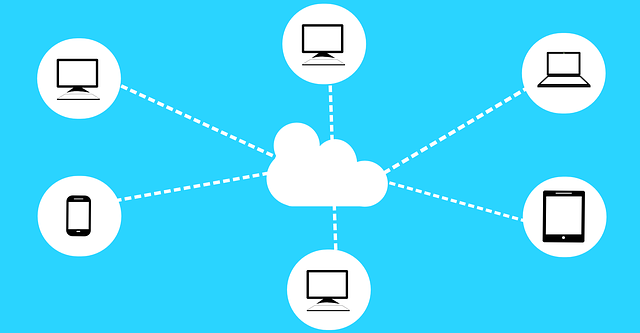
Cloud Computing has quickly changed personal and professional computing. Enabling individuals and small businesses to have the same technologies (restricted to larger companies) available to compete as equals in the digital world.
Cloud applications are extended to many fields of technology, from the simplest, such as file storage, to the most sophisticated such as server virtualization and enterprise computing services.
The most common services offered by Cloud Computing are:
1- IaaS (Infrastructure as a Service) — Get only Hardware (Virtual Machines, Servers, Storage).
2 — PaaS — (Platform as a Service) — Get the Computational Environment (Database, Web Servers, Development Tools).
3 — SaaS — (Software as a Service) — Obtain Software on Demand (CRM, email, virtual desktops, game, administrative systems).
4 — XaaS — (Anything as a Service) — Get everything you need in Information Technology to ensure that the business work.
CURIOSITIES
- We use some cloud services for personal computing, such as Dropbox, for files, Google Photos, and email services like Gmail and Hotmail.
- The leading providers of cloud services are Amazon, Microsoft, Google, RackSpace, Luna Cloud, Dimension Data, IBM, HP, DELL and many others.
- Some Cloud Computing companies offer complete Big Data services, with hardware and software platform installations for applications development.
- A cloud service that emerged for Big Data is the DaaS (Data as a Service) called data marketplaces, where you sell and buy data and even analyze it for immediate use.
2 — Hardware and Software Technologies
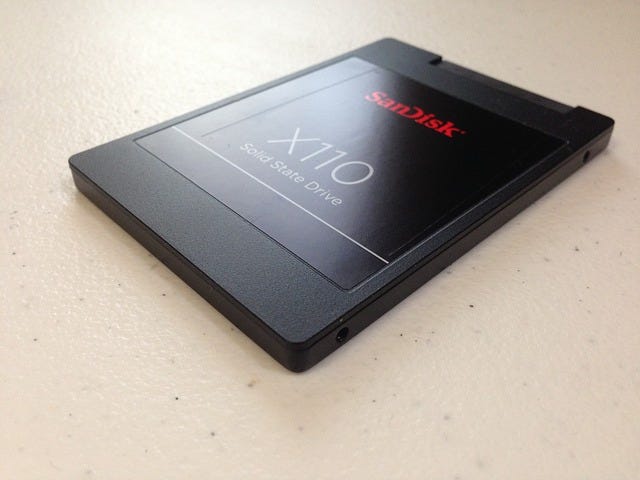
Cloud computing, software technologies such as Hadoop, Machine Learning, and hardware technologies such as SSDs and GPUs has sped up Big Data applications because of their low cost.
Hardware Technologies
Computer clusters for cloud services vanish in size with the use of SSDs (hard drives solid state), and take up storing data, replacing the drives on computers.IT are small and have a fantastic speed of reading and writing.
GPUs play a critical role in speeding up applications on platforms like AI, cars, drones, and robots.
Software Technologies
Data needs Analysis tools to test them, and Computer Science has been bringing Big Data solutions that use Artificial Intelligence (Machine Learning) allowing applications to areas of fraud, gaming, languages, among others.
Programming languages such as R and Python (Jupyter Notebook) are essential, and new paradigms such as Databricks Spark have revolutionized the Big Data market.
User-specific tools have come up, making life easier for data analysts, such as Tableau for Data Visualization and Trifacta for Wrangling (cleaning and data organization).
CURIOSITIES
- Hardware: New technologies SSDs allow access at the speed of 40 GigaBits per second or 125 MB transfers per minute.
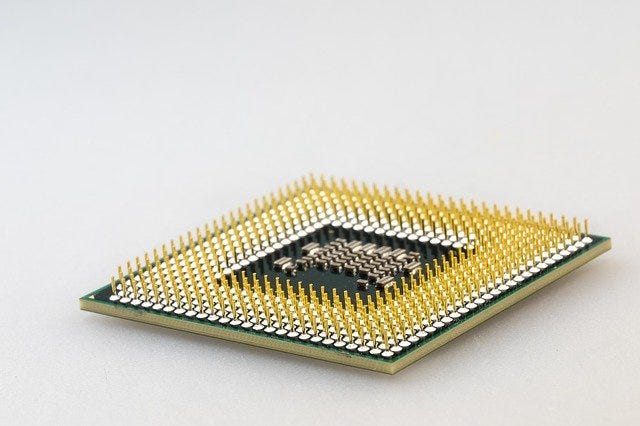
- Hardware: GPUs (Graphics Processing Units) along with a CPU (processor) speed up Big Data applications and applications.
- IBM offers Big Data services for both Hardware and Software, and Watson Computer for Cognitive Computing, which addresses solutions to problems with large volumes of data.
- Software: In the last few years a lot of visualization tools have appeared for data analysis, such as Tableau, for use by non-programmers.
- Software: NoSQL Databases oriented to unstructured data analysis have matured in recent years supporting Big Data applications.
Support the Author's work and Subscribe to email.
More information about this article
This article has been selected from the book "Big Data for Executives and Market Professionals — Second Edition".

Read the other Articles: