
June 1, 2026
The Application Security North Star: Building a Program with Purpose
When joining a new company or creating an application security program from scratch, it is incredibly exciting to jump right in and start…

Alex Farhadi
8 min read
When joining a new company or creating an application security program from scratch, it is incredibly exciting to jump right in and start rolling out tools. But before deploying a single scanner, it is crucial to define a "North Star" — a clear vision of what your security program looks like when it is fundamentally "done".
Having a North Star sets your direction. It tells you where you are going and how to get there. When you are deep in the weeds of CI/CD pipeline issues or complex threat models, it is easy to lose sight of the big picture. Your North Star ensures every tool and process serves a broader purpose.
Below is a baseline North Star for modern software companies. Naturally, this list will shift based on your specific business. If you only host static websites, this list is absolute overkill. If you secure nuclear launch codes or cryptocurrency exchanges, this list is just the beginning. But for the vast majority of modern engineering teams, this framework covers the critical phases of the Software Development Life Cycle (SDLC).
Pillar 1: Empowering the Builders (Training & Education)
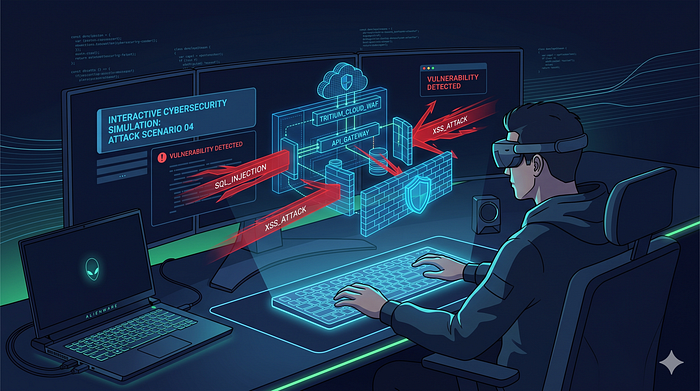
Security cannot be a siloed function; it has to scale. The ultimate goal of this pillar is enabling developers to truly own the security of their code.
- Foundational Education & Live Exploits: Establishing a baseline of knowledge is essential, starting with core concepts like OWASP training for all developers. But to make this knowledge stick, the security team should regularly demonstrate real-world, live attacks. When a vulnerability is reported — whether through a bug bounty or an internal finding — walking the engineering team through the exact exploit path transforms an abstract threat into a tangible lesson. It helps developers truly understand the mindset of an attacker and the specific threats their applications face.
- The Security Champions Program: Instead of relying solely on the security team to catch every flaw, a North Star program cultivates "Security Champions" embedded directly within engineering squads. These are developers who receive specialized training, advocate for secure coding practices in their daily standups, and act as the first line of defense for peer code reviews.
- Modern Developer Enablement: Annual compliance videos do not prevent breaches. Education means providing developers with the right context at the right time. This includes teaching them how to scrutinize AI-generated code from modern IDEs for logic flaws, and giving them the knowledge to run local security checks before they ever push a commit.
Pillar 2: Shifting Left (Design & Threat Modeling)

This phase is about identifying risks before a single line of code is written. Fixing a fundamental architectural flaw late in the game is incredibly expensive; catching it during design is practically free.
Executing the Threat Model
To make threat modeling an effective operational process, you must define the parameters around how and when it happens:
- When it happens: Threat modeling should occur early in the design phase, before any heavy development begins. It should also be re-triggered dynamically whenever there are major architectural changes, high-risk modifications (like overhauling authentication), or when the business decides to handle a new type of sensitive data.
- Who is involved: It is a cross-functional exercise. You need the Product Manager (to define the business intent and acceptable risk), the Lead Engineers/Architects (who understand the deep technical implementation and constraints), and a Security Champion or Security Engineer (to facilitate the session, ask the hard questions, and challenge assumptions).
- What needs to be created first (Prerequisites): Before the team gathers, specific artifacts must exist, though this process must be tuned to the velocity of the business. For a fast-moving startup, this might be a quick whiteboard sketch and an informal list of data types. For a large enterprise, you likely need more formality, such as detailed Data Flow Diagrams (DFDs) mapping out components and trust boundaries, alongside a formal data inventory and documented business logic. At a minimum, you need a design document of what is being built. Regardless of the format, without a shared baseline understanding of what is being built, the session devolves into an unproductive brainstorming meeting.
Outcomes of a Threat Model
Once the session is executed, the threat model should yield concrete requirements that shift security left:
- Engineering Engagement & Education: The session itself is a powerful training ground. By walking through potential exploits and defenses together, you organically educate the engineering team on the specific threats their system faces. It is the perfect time to teach them how to write security-focused unit tests, design security-based application metrics, and anticipate attacker behavior before writing code.
- Catching Compliance & Architectural Flaws Early: If your application will store credit card numbers or SSNs, you will likely need table-level encryption to satisfy PCI compliance. Identifying this requirement during the design phase prevents a massive refactor just weeks before launch.
- Informing Product Timelines: Threat modeling helps unearth requirements that impact the business. Imagine designing a system that holds NFTs on a user's behalf. The financial risk is immense. A threat model would identify the need for an external penetration testing firm to review the application in addition to internal testing. The product team needs to know this upfront so they can budget the time and understand that critical findings might delay the launch.
- Designing Custom Security Observability: What custom application metrics need alarm thresholds? For example, if you are designing a multi-tenant B2B SaaS application, an application security metric could track users attempting to access resource IDs that belong to a different tenant. Setting an alarm threshold for this specific metric alerts the security team to an attacker actively probing for Broken Object Level Authorization (BOLA) vulnerabilities, rather than a user simply encountering a standard 404 error.
- Defining Critical Log Events: Identify which specific actions require immediate security triage. For example, logging instances where a user attempts to modify their JWT to impersonate another user is a strong indicator of an active probing attack.
Pillar 3: The Secure Pipeline (Development & CI/CD)
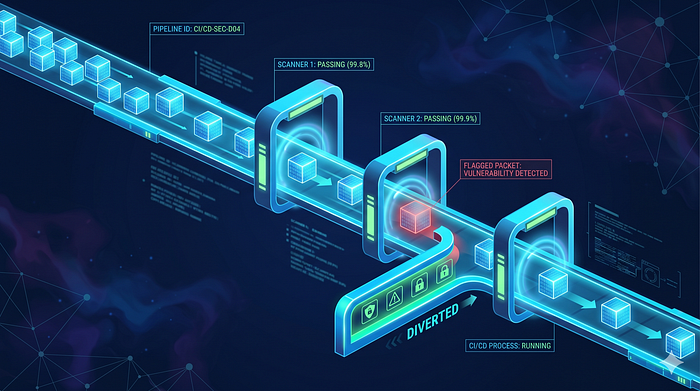
The North Star for development is continuous, automated security. Every single change that moves toward production must pass through automated guardrails.
- Infrastructure as Code (IaC) Scanning: Cloud security starts in the pipeline. By scanning Terraform, Kubernetes manifests, or other IaC templates before deployment, you prevent cloud misconfigurations (like overly permissive IAM roles or publicly exposed buckets) from ever reaching the cloud environment.
- Software Composition Analysis (SCA): Using tools like Dependabot to automatically identify and flag known vulnerabilities in third-party libraries and open-source dependencies.
- Static Application Security Testing (SAST): Utilizing platforms like GitHub Advanced Security to scan custom code for classic security flaws such as SQL injection or improper access checking.
- AI-Assisted PR Reviews: Leveraging AI tools to review pull requests for contextual security logic errors that standard regex-based scanners might miss.
- Security-Focused Unit & Integration Testing: Automated tests are critical, especially around authentication. If a developer creates a new API endpoint, the pipeline should automatically verify that the endpoint requires user authorization. If it lacks an authorization check (and isn't explicitly allowlisted), the pull request should fail.
- Pre-Release Penetration Testing: Automated tools are fantastic for finding syntax issues, but they do not understand business logic. A mature pipeline should include a process where the internal security team performs manual, targeted penetration testing on high-risk features or complex architectural changes before they are permitted to ship to production. The need for this should be identified within the threat modeling phase.
- Dynamic Scanners (DAST): You can integrate Dynamic Application Security Testing (DAST) scanners into the pipeline to probe running applications in staging environments. However, in my experience, they rarely provide enough high-fidelity value to justify the overhead and false positives. Time is generally better spent focusing heavily on SAST, SCA, and rigorous developer-driven testing.
Pillar 4: The Shield (Production Deployment & Monitoring)
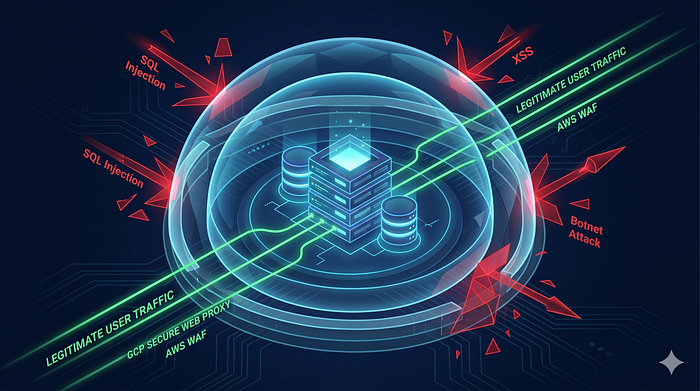
Once the application is live, the focus shifts to defending the runtime environment and maintaining deep visibility.
- Web Application Firewalls (WAF): Deployed at the edge to inspect incoming HTTP/HTTPS traffic and block common web exploits like SQL injection, cross-site scripting (XSS), and known malicious IP signatures before they ever hit your application code.
- Bot Protection: Crucial for distinguishing between legitimate human traffic and automated scripts attempting credential stuffing, inventory hoarding, or aggressive site scraping.
- Rate Limiting (Edge Layer): Absorbing volumetric attacks and preventing abuse of public-facing endpoints (like login pages or public APIs) by restricting the number of requests a single IP can make within a given timeframe.
- Origin Protection: It does not matter how robust your edge defenses are if an attacker can bypass them and hit your servers directly. A North Star deployment ensures the origin is completely hidden from the public internet. For example, if you have Cloudflare sitting in front of an AWS Elastic Load Balancer (ELB) routing to your NGINX servers, your AWS Security Groups must be configured to strictly drop all inbound internet traffic except for Cloudflare's published IP ranges. If you leave the ELB open to the entire internet, attackers will simply scan for your origin IP and bypass your WAF entirely.
- Cloud Ecosystem Posture: Utilizing Cloud Security Posture Management (CSPM) tools like Wiz to continuously monitor the live environment for drift, such as an RDS instance accidentally being made public.
- Bug Bounty Programs: Even with rigorous testing and pipeline controls, vulnerabilities will occasionally slip through into production. Operating a public or private Bug Bounty program acts as a continuous, crowdsourced safety net, incentivizing external security researchers to responsibly disclose flaws before malicious actors can exploit them.
- SIEM & Log Alerting: Centralizing application logs within a Security Information and Event Management (SIEM) system or dedicated alerting platform is the baseline for runtime visibility. The goal here is to write high-fidelity detection rules based on your application's business logic. For example, a high-priority SIEM rule could trigger if an authenticated user generates a rapid succession of 403 Forbidden errors against administrative API endpoints (indicating active privilege escalation fuzzing), or if a single account logs in from two geographically impossible locations within a five-minute window.
- Application Metric Alarms: Beyond log aggregation, you must also trigger alarms based on custom, security-specific application metrics. This includes alerting on excessive login attempts across the platform (credential stuffing) or abnormal spikes in data export requests by a single user (data exfiltration).
- Application-Layer Enforcement: Implementing complex, application-based rate limiting for actions that cannot be easily handled at the edge — such as limiting the number of high-value actions an authenticated user can take within a specific timeframe.
Navigating Toward the North Star
A North Star is not something you achieve overnight; it is a multi-year roadmap. When you first establish an application security program, you might start with nothing more than a basic WAF and a SAST tool, and that is perfectly fine. The true value of this framework is intentionality.
By defining exactly what your security program looks like when it is "done," you ensure that every quarter, every sprint, and every new tool deployed is a deliberate step forward rather than a reactive patch to the latest fire. Ultimately, a successful application security program is not about throwing as many hurdles in front of developers as possible. It is about building a system that seamlessly integrates into the engineering culture, operating as a quiet engine of trust so the business can move fast without breaking things.