
Before diving in, make sure to read my previous article: Red Flags That Your Password Is Stolen. Recognizing the signs early is what gives the steps below their urgency.
Hackers move fast once they have your credentials, often selling them on the dark web or using them within minutes of a breach. Whether your password was leaked in a data breach, cracked through phishing, or exposed by a social engineering scheme, your response in the first few hours matters enormously.
The first move is obviously to change your compromised password immediately. If you've reused that password anywhere else, you need to update those accounts too. Take this opportunity to create strong and unique passwords for every account.
Enabling two-factor authentication adds a second layer of verification. Even if someone has your password, they can't get in without secondary authorization.
If your exposed password was for a financial account, keep a close eye on your bank statements, credit card activity, and any other financial accounts that could be affected. Report anything suspicious immediately, and freeze or secure the account if needed.
Sometimes, the password leak isn't the root problem. If your credentials were captured through a keylogger, spyware, or malicious software, simply changing your password won't fix the issue. The attacker could just capture the new one.
Run a full scan using a trusted antivirus or malware detection tool. Make sure your system is clean before you continue logging into sensitive accounts. If something is detected, remove the threat immediately, update your system and software, and reconsider what sensitive data you've accessed on that device.
If your email or social accounts were compromised, there's a good chance others could be affected too as attackers often use hacked accounts to send phishing messages, spread malicious links, and impersonate you. Let your contacts know as soon as possible so they don't fall for follow-up attacks.
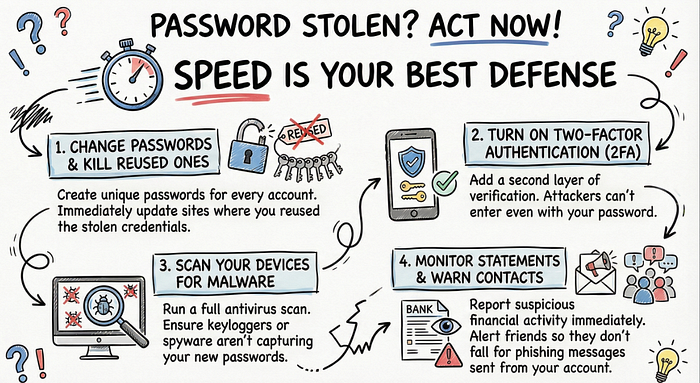
The biggest mistake people make isn't getting hacked, it's reacting too slowly. Every minute attackers have access increases the chances of deeper compromise, lateral movement, or financial damage.
So, you've secured your accounts, but how do you avoid falling into the same trap again?
In the next article, I'll break down how to spot a phishing attempt before it tricks you, so you can stop these attacks at the source instead of reacting after the damage is done.