
In 2026, ransomware has evolved into a full-scale business disruption strategy. It targets operations, reputation, regulatory standing, and shareholder value — not just IT infrastructure. Incidents affecting organizations such as Colonial Pipeline and MGM Resorts demonstrated that ransomware can:
- Halt national infrastructure
- Shut down hospitality and gaming systems
- Trigger public relations crises
The defining factor in these incidents was not solely technical capability — it was leadership response. This is why Executive Tabletop Exercises (TTX) have become a strategic priority for boards and C-suite leaders. They prepare decision-makers to respond effectively under crisis conditions before a real attacker forces the issue.
What Is an Executive Tabletop Exercise?
An executive tabletop exercise is a structured, discussion-based simulation designed to test leadership readiness during a cyber crisis. Unlike technical penetration testing or red team engagements, tabletop exercises focus on:
- Strategic decision-making
- Regulatory compliance
- Legal exposure
- Financial impact
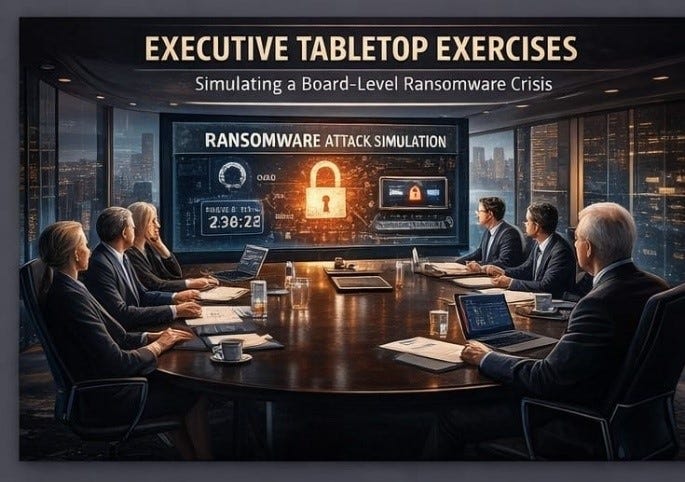
Participants typically include:
- Board Members
- CEO
- CIO / CISO
- CFO
- General Counsel
The objective is not to test systems — it is to test governance, coordination, and crisis leadership.
Why Board-Level Simulation Is Critical in 2026
1. Increased Regulatory Accountability
Global cybersecurity regulations now demand rapid breach disclosure and demonstrable governance oversight. Boards are expected to:
· Understand cyber risk exposure
· Monitor preparedness
· Oversee incident response plans
Failure to demonstrate readiness may result in regulatory penalties, reputational damage, and shareholder litigation.
2. Evolution of Modern Ransomware
Today's ransomware groups operate with enterprise-like efficiency. Groups such as LockBit and BlackCat have adopted:
- Double extortion (encryption + data leak threats)
- Data exfiltration prior to encryption
This means leadership must prepare for a multidimensional crisis — technical, legal, financial, and reputational.
3. High-Stakes Decisions Under Time Pressure
During a live ransomware event, executives must quickly answer complex questions:
- Should we pay the ransom?
- Are we legally permitted to pay?
- Are backups intact and reliable?
These decisions cannot be improvised. They require clarity, coordination, and pre-defined strategy.

Designing a Realistic Board-Level Ransomware Scenario
An effective tabletop exercise should simulate escalating pressure in structured phases.
Phase 1: Detection and Operational Disruption
- Systems begin failing
- Employees report inaccessible files
- SOC confirms ransomware activity
Leadership must decide:
- Do we isolate systems immediately?
- Do we shut down operations?
- When is the board formally notified?
- Who leads the response?
This phase tests escalation procedures and crisis activation protocols.
Phase 2: Data Exfiltration Confirmed
Attackers provide evidence of stolen sensitive data. Now the crisis expands beyond availability to confidentiality.
Executives must assess:
- What data was accessed?
- Are customers or partners affected?
- What regulatory reporting timelines apply?
- What is our legal exposure?
This phase reveals coordination strength between legal, security, and compliance teams.
Phase 3: Public Disclosure and Media Pressure
The attacker publishes claims on a leak site. Media inquiries begin. At this point, the organization faces reputational risk.
Leadership must determine:
- What is the official public statement?
- Do we confirm details or limit disclosure?

- How do we maintain stakeholder confidence?
- Who serves as spokesperson?
Communication clarity becomes critical to maintaining trust.
Phase 4: Ransom Demand and Negotiation
The attackers issue a financial demand.
The board must evaluate:
- Cost of ransom vs cost of downtime
- Insurance coverage limitations
- Legal implications of payment
This stage tests ethical judgment, risk tolerance, and alignment between executive leadership.
Adding a Controlled Red Team Dimension
To increase realism, organizations often integrate a structured red team element into tabletop exercises.
This may include:
- Simulated phishing entry vector
- Realistic ransom notes
- Mock data leak portal screenshots
- Injected regulatory inquiries
- Simulated stock price impact
- Timed decision deadlines
Red team facilitators can introduce unexpected scenario injects such as:
- Insider involvement suspicion
- Backup corruption discovery
- Public relations misstatement
- Insurance coverage dispute
This approach enhances psychological realism and mirrors the unpredictability of real-world attacks.
Key Performance Indicators for Executive Tabletop Exercises
A tabletop exercise must generate measurable insights. Organizations should evaluate:
1. Decision-Making Speed
How quickly was the crisis escalated and structured?
2. Role Clarity
Were responsibilities clearly understood across leadership?
3. Communication Consistency
Was messaging aligned internally and externally?
4. Regulatory Awareness
Did leadership understand disclosure timelines and obligations?
5. Financial Impact Assessment
Was there clear understanding of business interruption costs?
Common Gaps Revealed During Board-Level Exercises
Organizations frequently discover:
- Lack of formal ransomware payment policy
- Ambiguity in escalation authority
- Poor legal-technical coordination
- Overconfidence in backup systems
Identifying these gaps in simulation significantly reduces real-world impact.
Frequency and Governance Integration
Best practice in 2026 suggests:
- Annual board-level ransomware simulation
- Exercises following major infrastructure changes
- Simulation after mergers and acquisitions
- Review following regulatory updates
Cyber risk is dynamic. Governance practices must evolve accordingly.
Strategic Benefits Beyond Compliance
Executive tabletop exercises deliver value beyond regulatory satisfaction.
They enhance:
- Board cyber literacy
- Cross-functional collaboration
- Crisis communication preparedness
- Investor and stakeholder confidence
- Cyber insurance negotiation positioning
Most importantly, they build organizational resilience.
From Incident Response to Strategic Resilience
Ransomware cannot be entirely prevented. However, its impact can be significantly reduced through preparedness. Executive tabletop exercises shift the organizational mindset from reactive to proactive.
They enable leadership to:
- Anticipate decision dilemmas
- Reduce confusion during crises
- Align legal and operational response
- Protect reputation under pressure
- Demonstrate mature governance
Conclusion: Leadership Preparedness Is the Ultimate Defence
In 2026, cybersecurity is a board-level responsibility. The most resilient organizations are not those that assume they will never be attacked — but those that prepare leadership to respond decisively when they are. Executive tabletop exercises transform ransomware from an unpredictable catastrophe into a manageable strategic risk. Technology builds defences. Prepared leadership builds resilience. And in today's threat landscape, resilience defines competitive advantage.