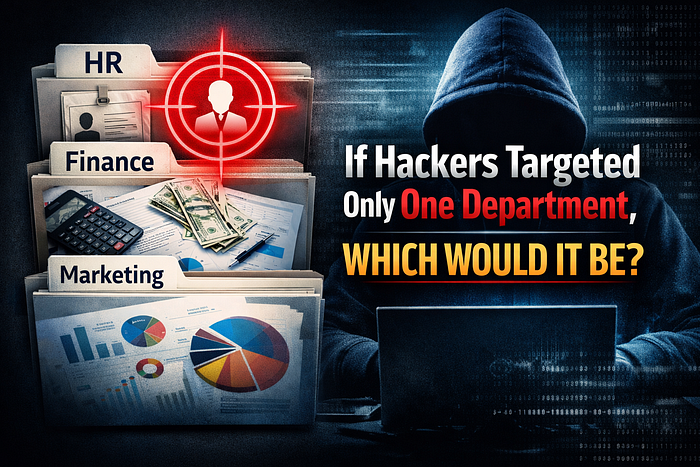

If hackers were limited to attacking just one department within a company, which would they choose? At first glance, IT might seem like the obvious answer. However, the reality is far more strategic — and often unexpected. Cybercriminals don't just look for technical vulnerabilities; they focus on the easiest path to valuable data, system access, or financial gain. Understanding where these risks lie helps businesses strengthen their defenses more effectively.
Why Hackers Don't Always Target IT First
There is a common assumption that attackers go straight for IT systems. In reality, most organizations heavily invest in securing their IT infrastructure through firewalls, endpoint protection, intrusion detection systems, and other advanced tools. This makes direct attacks on IT systems more complex and time-consuming.
Hackers, on the other hand, prefer efficiency. Instead of attempting to breach well-protected systems, they often exploit human error, weak processes, or departments that handle sensitive information but lack strong cybersecurity awareness. This approach increases their chances of success with less effort.
Human Resources: The Most Likely Target
Among all departments, Human Resources (HR) is often the most attractive target for cybercriminals. The reason is simple — HR manages a vast amount of sensitive data while frequently interacting with external parties.
HR teams handle employee records that include personally identifiable information (PII), bank details, salary data, and more. A breach in this department can lead to identity theft, financial fraud, and even insider threats.
Additionally, HR professionals regularly communicate with job applicants, making them more vulnerable to phishing attacks disguised as resumes or job applications. Without proper security checks, malicious attachments or links can easily enter the system.
Finance: A High-Value Target for Direct Financial Gain
If the attacker's goal is immediate financial benefit, the finance department becomes a prime target. One of the most common attack methods here is Business Email Compromise (BEC), where cybercriminals trick employees into transferring funds or sharing confidential financial information.
These attacks are often highly sophisticated. Hackers may impersonate executives, vendors, or business partners using convincing email tactics. Since finance teams routinely handle payments and approvals, such fraudulent requests can easily appear legitimate.
A single successful attack can result in significant financial loss, making finance departments particularly high-risk.
Marketing and Sales: Overlooked Yet Vulnerable
Marketing and sales teams are not always seen as high-risk, but they are increasingly targeted. These departments rely on multiple tools, platforms, and third-party integrations — often with varying levels of security.
They also interact frequently with external audiences, download files, and manage customer data. This exposure increases the likelihood of malware infections, credential theft, and data leaks.
Moreover, compromised marketing accounts can be used to distribute malicious links or phishing campaigns, extending the impact of an attack far beyond the organization.
The Real Weakness: People, Not Departments
While certain departments may be more appealing targets, the real vulnerability lies in human behavior rather than organizational structure. Social engineering attacks — such as phishing, pretexting, and baiting — exploit trust, urgency, and lack of awareness.
A single mistake, like clicking on a malicious link or sharing sensitive information, can provide attackers with access to the entire network. Once inside, they can move across departments, escalate privileges, and cause widespread damage.
This highlights the need for cybersecurity to be treated as a company-wide responsibility, not just an IT function.
Strengthening Cybersecurity Across All Departments
To effectively reduce risk, organizations must adopt a comprehensive approach to cybersecurity. This includes:
- Regular security awareness training for all employees
- Conducting simulated phishing exercises to identify vulnerabilities
- Implementing role-based access controls
- Continuous monitoring and threat detection
- Establishing secure communication practices across departments
By equipping every team with the knowledge and tools to identify and respond to threats, businesses can significantly minimize their attack surface.
Conclusion
If hackers were forced to choose just one department, Human Resources would likely be at the top due to its access to sensitive data and frequent external interactions. However, finance, marketing, and other departments are also highly vulnerable in different ways.
The reality is that cybercriminals do not limit themselves — and neither should your security strategy. Cybersecurity must extend beyond IT and become an integral part of every department within the organization.
To safeguard your business from emerging cyber threats, partner with Digital Defense — your trusted cybersecurity expert.