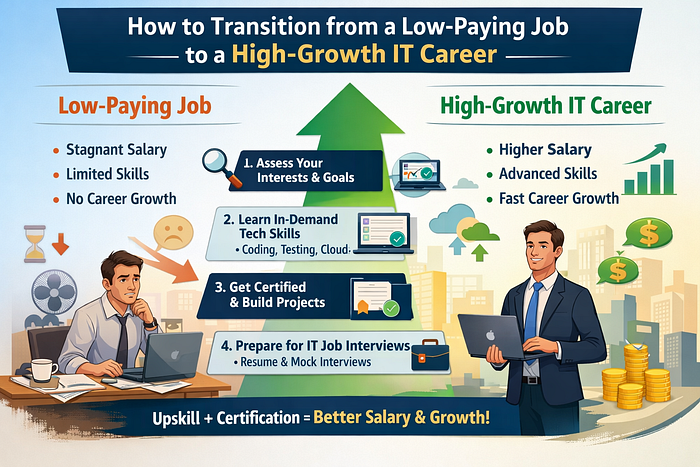
How Can You Transition from a Low-Paying Job to a High-Growth IT Career?
Introduction
Many professionals today find themselves stuck in low-paying jobs with limited growth opportunities. The desire for better salary, career stability, and future prospects often leads them to explore the IT industry.
The good news is that transitioning into a high-growth IT career is absolutely possible — even if you come from a non-IT background. With the right strategy, skills, and consistency, you can build a successful and rewarding career in tech.
Why IT is a High-Growth Career Option
The IT industry continues to grow rapidly due to digital transformation across industries. Roles in areas like Data Analytics, Cloud Computing, AI, and Development offer:
- High salary potential
- Strong job demand
- Career flexibility
- Global opportunities
This makes IT one of the most attractive career options today.
Step 1: Identify the Right Career Path
Before jumping into learning, it's important to choose the right domain based on your interest and strengths.
- If you like data and analysis → Data Analytics
- If you enjoy coding → Development
- If you prefer systems and infrastructure → Cloud/DevOps
Choosing the right path ensures long-term consistency and success.
Step 2: Build Relevant Skills
Once you decide your path, focus on learning the required skills.
For example:
- Data Analytics → SQL, Excel, Power BI, Python
- Development → HTML, CSS, JavaScript, backend technologies
- Cloud → AWS, Azure fundamentals
- DevOps → Docker, CI/CD tools
Focus on job-ready skills, not just theoretical knowledge.
Step 3: Learn Through Practical Projects
Practical experience is the key to breaking into IT.
Work on:
- Real-time projects
- Case studies
- Mini applications
Projects help you build confidence and demonstrate your skills to recruiters.
Step 4: Create a Strong Resume and Portfolio
Your resume should highlight your skills, projects, and certifications.
Also, create a portfolio using platforms like GitHub or a personal website. This shows recruiters your practical capabilities.
Step 5: Start Applying Strategically
Don't wait until you feel "perfect." Start applying once you have basic skills and a few projects.
Apply through:
- Job portals
- Referrals
Be consistent and keep improving based on feedback.
Step 6: Upskill While Working
If you are currently working, you don't need to quit your job immediately. You can upskill alongside your job by dedicating a few hours daily.
Consistency matters more than the number of hours.
Common Challenges and How to Overcome Them
Time Management Issues
Balance work and learning by following a fixed schedule.
Self-Doubt
Believe in your ability to learn and grow. Many have successfully made this transition.
Financial Pressure
Upskill while working to maintain financial stability.
Why This Transition is Worth It
Moving into IT can significantly improve your:
- Salary
- Career growth
- Job satisfaction
- Work-life balance (in many roles)
It's an investment in your future.
Conclusion
Transitioning from a low-paying job to a high-growth IT career is not easy but it is achievable. With the right mindset, structured learning, and consistent effort at Credo Systemz — Software Courses with 100% Placement Support, you can successfully make the switch.
Start small, stay focused, and keep improving. Your journey may take time, but the results will be worth it