

I dont.
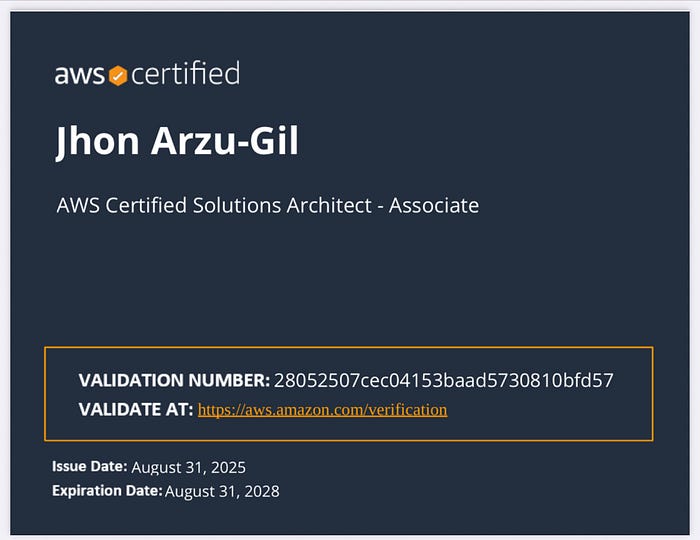
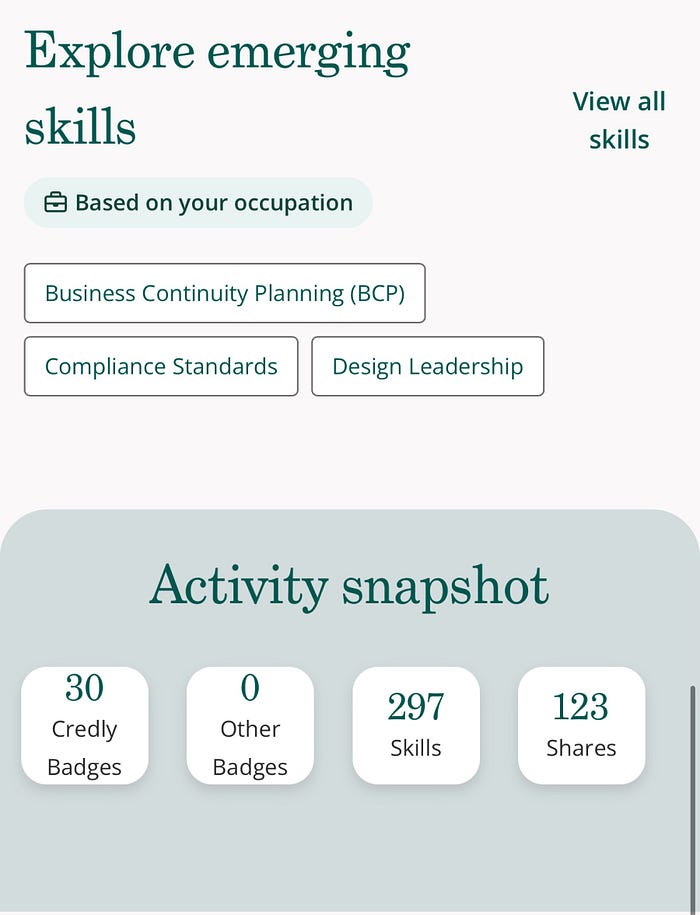
For me, earning 32+ IT certifications has been one of the most transformational parts of my journey in tech. It wasn't about collecting logos or stacking credentials just to look impressive on LinkedIn. It was about building a structured, disciplined, real-world understanding of technology from the ground up.
Along the way, I earned certifications across cloud computing, networking, support, automation, DevOps, data, AI, machine learning, and analytics. That includes credentials tied to AWS, Azure, IBM, SAP, CompTIA, Linux, and more. My transcript reflects certifications and training in areas like Azure Fundamentals, AWS Cloud Practitioner, AWS Solutions Architect — Associate, CompTIA A+, CompTIA Network+, Docker, cloud essentials, machine learning, data science, SAP Analytics Cloud, and an IBM Application Developer Apprenticeship grounded in coding, DevOps, and continuous delivery. .
What did I really learn from all of that?
A lot more than technical definitions.
- Certifications gave me structure, but the real value was in the discipline
One of the biggest things certifications taught me was how to learn with intention.
A lot of people want to get into tech, but they get overwhelmed because the field is so broad. There are too many paths, too many tools, too many opinions, and too much noise online. Certifications gave me a roadmap. They helped me break huge subjects into manageable chunks and focus on one domain at a time.
Instead of saying, "I want to learn cloud," I could say, "Let me master cloud fundamentals first, then architecture, then security, then automation."


That structure matters.
It trained me to stop learning randomly and start learning strategically.
2. Fundamentals beat hype every time
One of the strongest lessons I learned is that the fundamentals are still king.
Before you can design cloud architecture, you need to understand networking. Before you can troubleshoot production issues, you need to understand operating systems. Before you can talk about AI at a high level, you need to understand data, infrastructure, tooling, and how systems work together.
Certifications like CompTIA A+ and Network+ helped reinforce that foundation by covering troubleshooting, operating systems, hardware, wired and wireless networking, network security, and support skills. .
Those early certifications might not sound as flashy as AI or cloud architecture, but they teach you how technology actually works underneath the surface.

And once your fundamentals are strong, learning advanced concepts becomes much easier.
3. Cloud computing is not just "someone else's computer"
That joke gets repeated a lot, but serious cloud learning taught me how incomplete that idea really is.
Cloud is architecture. Cloud is scalability. Cloud is cost optimization. Cloud is identity and access management. Cloud is security, governance, automation, resilience, and service design.
Through cloud certifications and coursework, I learned the practical business side of cloud adoption, including service models, security, migration, operations, compliance, and designing scalable distributed systems. My AWS and Azure credentials reflect that progression from foundational cloud fluency to architecting secure and fault-tolerant solutions. . .
The deeper I got into cloud, the more I realized that good cloud engineers are not just technical people. They are business-minded problem solvers.
The question is never just, "Can we deploy this?"
The real question is, "Can we deploy this securely, reliably, affordably, and in a way that supports business goals?"
4. Security is not optional — it touches everything
Another major lesson: security is not its own isolated department anymore.
Security is in networking.
Security is in cloud.
Security is in DevOps.
Security is in software design.
Security is in data.
Security is in access control.
Security is in how you think.
Training in network security, privacy by design, cloud security, and architecture taught me that the best professionals don't bolt security on at the end. They build with it from the beginning. My coursework and credentials repeatedly emphasize security, compliance, governance, and privacy-aware design. .
That changed how I approach development and infrastructure. I started seeing security less as a checklist and more as a design principle.
5. Automation is one of the highest-value skills in IT
The more certifications I earned, the more obvious this became: people who can automate are incredibly valuable.
Why?
Because automation turns knowledge into leverage.
If you know how to script, automate configurations, streamline workflows, reduce repetitive tasks, and improve consistency, you become more than just a person who can do the work manually. You become someone who can multiply output.
My training touched automation in multiple forms, including Docker, DevOps practices, cloud orchestration, Python for IT automation, scripting, and IBM automation coursework. .
That reinforced something I now strongly believe:
Manual skill gets you started.
Automation helps you scale.
6. AI and machine learning make more sense when you understand the layers beneath them
A lot of people want to jump straight into AI because it's exciting, and I understand that. But my certifications taught me that AI becomes far more meaningful when you already understand data, infrastructure, cloud platforms, and software development.
Through my machine learning and data science credentials, I learned that AI is not magic. It depends on data quality, tooling, deployment decisions, infrastructure, evaluation, and a realistic understanding of what models can and cannot do. My IBM machine learning, data science, and AI certifications reflect that applied path.

That's a powerful realization because it removes the hype and replaces it with skill.
AI is not just about prompting tools.
It's about building systems that can use intelligence responsibly and effectively.

7. Certifications alone do not make you an expert
This may be the most important lesson of all.
A certification can prove exposure.
A certification can validate understanding.
A certification can show discipline.
But a certification by itself does not replace hands-on experience.
The real growth happened when I applied what I learned to actual projects: developing applications, working in continuous delivery environments, building websites, solving business problems, thinking through cloud architecture, and creating technical solutions that people could actually use. My IBM Application Developer Apprenticeship specifically validated coding ability, DevOps practices, and client-facing professional skills in a real work environment.
That taught me to respect both sides of the equation:
Certifications build the map.
Experience teaches you how to drive.
8. Communication is a technical skill
This is something many people underestimate.
As I progressed through certifications and technical training, I realized that the ability to explain a problem, justify a solution, present clearly, document properly, and communicate with stakeholders is often what separates good professionals from great ones.
My apprenticeship and other credentials explicitly included communication, collaboration, presentation, problem-solving, and decision-making, which reinforced that technical excellence alone is not enough.
The best technologists are not just builders.
They are translators.
They can take complex systems and make them understandable to clients, managers, users, and teams.

9. Learning compounds
This may be the most rewarding lesson from earning 32+ certifications: learning stacks.
Your first certification feels hard because everything is new.
Your fifth teaches you how to study better.
Your tenth starts connecting to the first five.
Your twentieth changes how you think.
Eventually, you stop seeing certifications as separate topics and start seeing the larger system:
cloud connects to networking,
networking connects to security,
security connects to identity,
identity connects to architecture,
architecture connects to automation,
automation connects to DevOps,
DevOps connects to delivery,
delivery connects to business value.
That's when tech starts to click on a deeper level.
10. The journey changed my identity, not just my résumé
Yes, certifications strengthened my résumé.
Yes, they made me more competitive.
Yes, they helped validate my skills.
But the biggest change was internal.
They made me more confident tackling unfamiliar problems.
They made me more disciplined.
They made me more strategic.
They taught me how to keep going when a topic felt difficult.
They trained me to become a lifelong learner in an industry that never stops changing.
That mindset is probably worth more than any individual badge.
Final Thoughts
If there's one message I'd leave with anyone pursuing certifications, it's this:
Don't chase certifications just to collect them.
Use them to build yourself.
Use them to create a foundation.
Use them to discover what you enjoy.
Use them to sharpen your thinking.
Use them to become more useful in the real world.
My 32+ IT certifications taught me cloud, networking, security, AI, automation, analytics, and development. But more than anything, they taught me how to learn, how to think, and how to grow in tech with purpose.
And honestly, that lesson is the one that matters most.
⸻