
Before learning how to hack systems, I realized something more important — I didn't fully understand how they actually worked. Everyone wants to learn hacking, but very few start by understanding how systems really work. This is where my journey with the TryHackMe Pre-Security Path began not with exploits, but with fundamentals.
In this write-up, I will walk through the key concepts I learned and how they shaped my understanding of cybersecurity. What started as curiosity turned into a shift in perspective — from using systems to truly understanding them.
🚀 Overview
The Pre Security Path on TryHackMe provides a comprehensive introduction to cybersecurity by covering the core building blocks required to understand how systems work, how they are attacked, and how they are defended.
Instead of focusing on solving individual tasks, this journey helped me develop a security mindset, understanding systems from both an attacker's and defender's perspective.
The Pre Security Path is structured into multiple modules, each focusing on a key area of cybersecurity fundamentals:
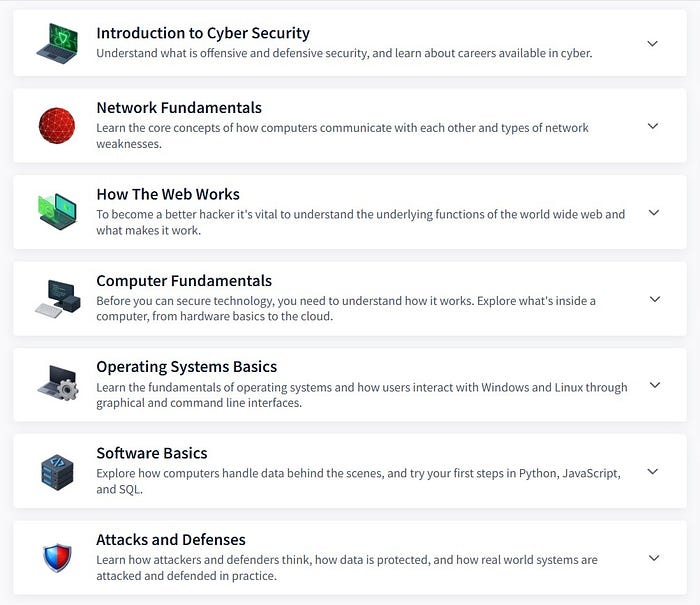
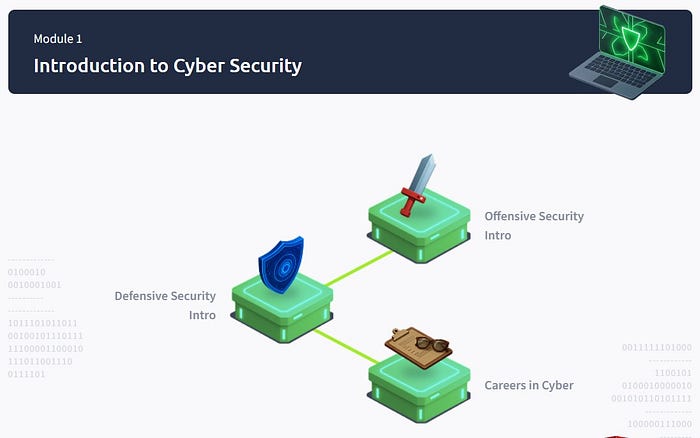
🧭 Introduction to Cyber Security
Cybersecurity is broadly divided into two domains: offensive and defensive security.
Offensive security focuses on identifying vulnerabilities and exploiting them, while defensive security is concerned with protecting systems, detecting threats, and responding to incidents.
This module also introduced the different career paths in cybersecurity, highlighting roles such as penetration testers, SOC analysts, and security engineers.
Understanding these areas helped me see how cybersecurity is not just about tools, but about different roles working together to secure systems.
It shifted my mindset from just learning concepts to understanding how systems can be attacked and defended in real-world scenarios.
🌐 Networking Fundamentals
Networking is the backbone of cybersecurity, as all systems communicate over networks.
This module covers how data travels, how networks are structured, and where potential weaknesses can exist.
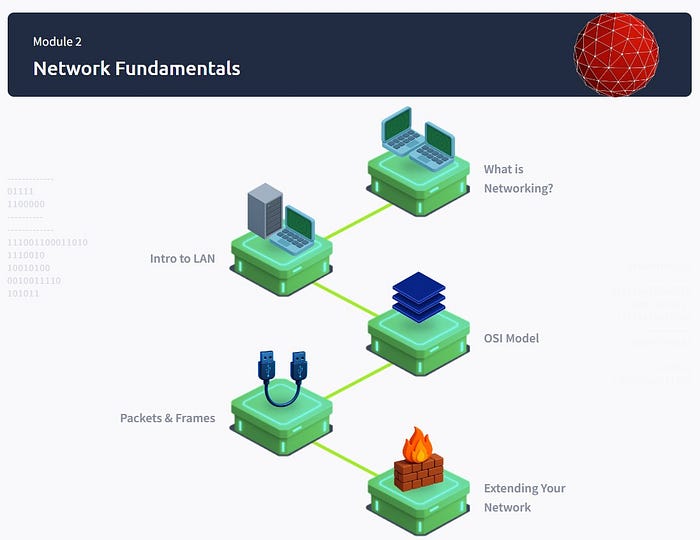
In this module, I learned how data travels across networks, including concepts such as local area networks (LAN), the OSI model, and how data is divided into packets and frames.
Understanding these concepts helped me see how communication happens between systems and where it can be intercepted or manipulated.
This gave me a clearer understanding that security is not just about protecting systems, but also about securing the data flow between them.
🌍 How The Web Works
The web is one of the most common attack surfaces in cybersecurity, making it important to understand how it functions.
This module focuses on how users interact with websites, how requests are processed, and how different components of the web work together.
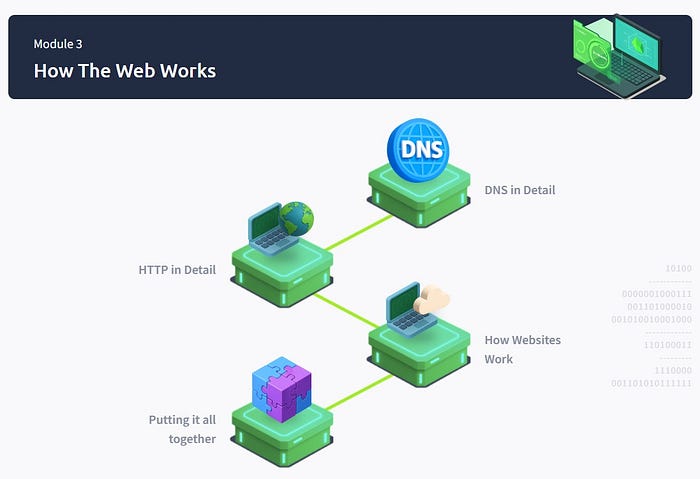
The module introduced key concepts such as DNS, HTTP/HTTPS, and how websites process user requests.
DNS translates domain names into IP addresses, allowing systems to locate servers on the internet. HTTP and HTTPS handle the communication between the client and the server.
Understanding the request-response cycle helped me realize that most web-based attacks occur by manipulating these requests.
This gave me a clearer perspective on how web applications function and why they are one of the most targeted areas in cybersecurity.
💻 Computer Fundamentals
Before securing systems, it is important to understand how computers function internally.
This module focuses on the core components of a computer system and how different technologies work together to support modern computing environments.
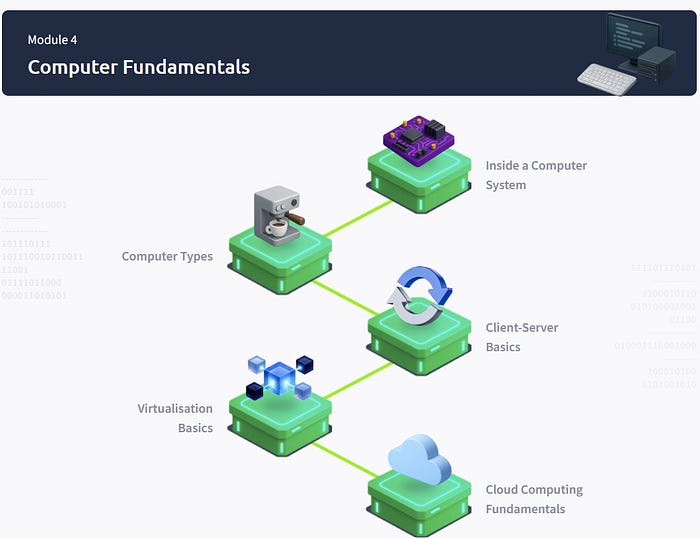
This module introduced key components such as the internal structure of a computer system, different types of computers, and how systems communicate using the client-server model.
I also learned about virtualization, which allows multiple systems to run on a single machine, and cloud computing, where resources are delivered over the internet.
Understanding these concepts helped me see how modern systems are built and how different layers of infrastructure work together.
This made it clear that cybersecurity is not limited to software, but extends across the entire computing environment.
🪟🐧 Operating Systems Basics
Operating systems act as the interface between users and hardware, making them a critical component in any system.

In this module, I explored both Windows and Linux environments, along with how users interact with systems through graphical interfaces and command-line tools.
Learning basic Linux commands and working with the command line gave me a deeper understanding of how systems are controlled and managed.
I also learned about permissions, authentication, and system-level security, which are essential for preventing unauthorized access.
This helped me understand that most real-world attacks involve interacting directly with the operating system.
🛠️ Software Basics
Software basics focus on how data is represented, processed, and managed by computer systems.
Understanding these concepts is important because most vulnerabilities occur at the application and data level.
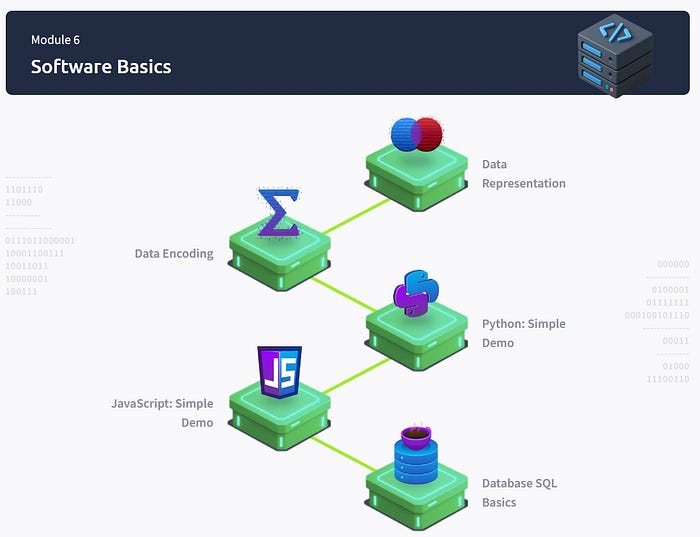
In this module, I learned how computers represent data in binary form and how encoding standards such as ASCII and Unicode are used to process characters.
I also explored basic programming concepts through Python and JavaScript, which showed how applications handle logic and user input.
Additionally, I learned how databases work and how SQL is used to store and retrieve structured data.
This helped me understand that many security vulnerabilities arise from improper handling of data, user input, and application logic.
🛡️ Attacks and Defenses
Cybersecurity is built on understanding both how attacks occur and how systems are defended.
This module focuses on the core principles of security, along with the mindset of both attackers and defenders.
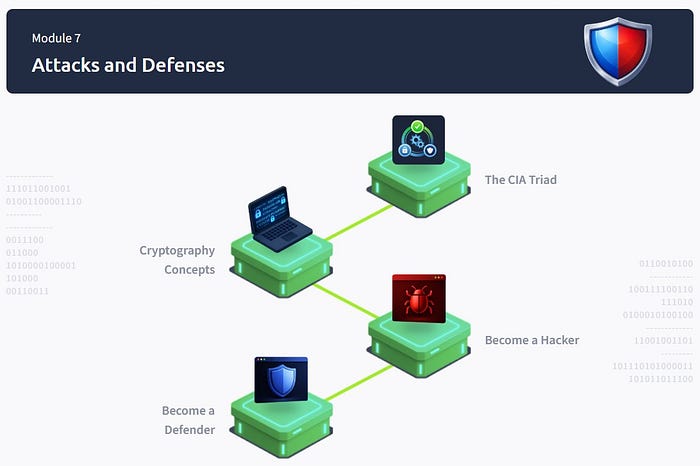
In this module, I learned about the CIA triad, which forms the foundation of cybersecurity: confidentiality, integrity, and availability.
I also explored basic cryptography concepts such as encryption and hashing, which are used to protect data and ensure its integrity.
Understanding the attacker mindset helped me see how vulnerabilities are identified and exploited, while the defender perspective focuses on monitoring, detection, and response.
This reinforced the idea that cybersecurity is a continuous process of balancing attack and defense to protect systems effectively.
🧠 Final Takeaway
Overall, the TryHackMe Pre Security Path helped me build a strong foundation in cybersecurity by focusing on core concepts rather than just tools.
It allowed me to understand how systems work, how they are attacked, and how they can be protected.
More importantly, it helped me develop a mindset to approach cybersecurity from both an attacker's and defender's perspective.
This is just the beginning of my journey, and I'm excited to continue learning and exploring deeper areas of cybersecurity.