A practical playbook for engineers, security professionals, and engineering leaders who want to build security into the development lifecycle — not bolt it on at the end.
ntroduction: What Does "Shift Left" Actually Mean?
For decades, security operated like a customs checkpoint at the end of a long road. Developers wrote code, QA tested it, ops deployed it, and somewhere near the finish line, a security team would scan the application, find vulnerabilities, and send everything back for rework. By that point, fixing the issues was painful, expensive, and often delayed releases by weeks.
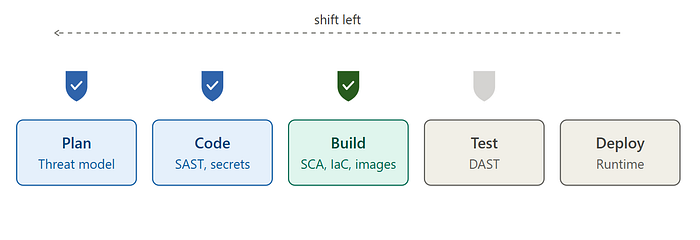
Shift Left Security flips this model. Instead of treating security as a final gate, it embeds security checks, controls, and thinking into the earliest stages of the software development lifecycle (SDLC) — design, coding, building, and testing. The "left" refers to the leftmost (earliest) part of the typical SDLC timeline diagram.
The core idea is simple: the earlier you find a security issue, the cheaper and faster it is to fix. A vulnerability caught in an IDE while a developer is still typing costs minutes to fix. The same vulnerability caught in production can cost thousands of dollars, regulatory fines, customer trust, and engineering hours.
According to research by IBM and the Ponemon Institute, defects discovered in production can cost up to 100x more to fix than those caught during design. Shift Left Security is how modern engineering teams attack that economics problem.
Why Shift Left Security Matters Now
Several forces have made this approach essential rather than optional:
1. The pace of modern development. Teams ship multiple times per day. Waiting for a quarterly penetration test is incompatible with continuous delivery.
2. The expanding attack surface. Cloud-native applications use hundreds of open-source libraries, container images, IaC templates, and third-party APIs. Each is a potential entry point.
3. Supply chain attacks. Incidents like SolarWinds, Log4Shell, and the XZ Utils backdoor showed that vulnerabilities in dependencies and build pipelines can compromise thousands of organizations at once.
4. Regulatory pressure. Frameworks like the EU Cyber Resilience Act, NIST SSDF, and PCI DSS 4.0 explicitly require security to be integrated throughout the SDLC.
5. Developer-to-security ratios. A typical organization has roughly one security engineer for every 100 developers. The math doesn't work without automation and developer enablement.
Core Principles of Shift Left Security
Before tools and pipelines, shift-left rests on a few foundational ideas:
Security as code. Policies, controls, and checks are version-controlled, peer-reviewed, and automated — just like application code.
Developer empowerment, not gatekeeping. Developers are given the tools, training, and feedback to fix issues themselves rather than waiting for a security team to find and triage them.
Automation over manual review. Repetitive checks — known vulnerabilities, misconfigurations, secrets in code — are handled by tooling so humans can focus on threat modeling and architecture.
Continuous feedback loops. Issues are surfaced where developers already work: pull requests, IDEs, chat. The longer the feedback loop, the less likely the fix.
Security is everyone's job. The security team becomes an enabler and consultant, not a bottleneck.
Common Use Cases
Shift Left Security is not one tool or technique — it's a philosophy applied across multiple touchpoints:
- Source code analysis to catch insecure coding patterns (SQL injection, XSS, hardcoded credentials).
- Dependency scanning to identify vulnerable open-source libraries before they reach production.
- Secret detection to prevent API keys, passwords, and tokens from being committed.
- Infrastructure as Code (IaC) scanning to catch misconfigurations in Terraform, CloudFormation, and Kubernetes manifests.
- Container image scanning to find vulnerabilities in base images and packaged dependencies.
- API security testing to validate authentication, authorization, and input handling.
- Threat modeling during design to anticipate attack vectors before any code is written.
- License compliance to ensure open-source usage doesn't create legal exposure.
Practical Implementation: A Step-by-Step Roadmap
Here is a pragmatic sequence for rolling out Shift Left Security. You don't need to do it all at once — most successful programs phase this in over 6–18 months.
Step 1: Assess Your Current State
Map your existing SDLC. Document where security checks happen today, who runs them, and how long the feedback loop is. Identify your highest-value applications and the riskiest gaps. Without this baseline, you can't measure progress.
Step 2: Establish Threat Modeling Early
Before a single line of code is written for a new feature, run a lightweight threat modeling session. Frameworks like STRIDE (Spoofing, Tampering, Repudiation, Information disclosure, Denial of service, Elevation of privilege) help structure the conversation. Tools like OWASP Threat Dragon or Microsoft Threat Modeling Tool can document outputs. The goal is not perfection — it's getting developers and architects to ask "how could this be abused?" before building it.
Step 3: Secure the IDE and Pre-Commit Hooks
Push checks as far left as possible — into the developer's editor.
- Install IDE plugins that flag insecure patterns in real time (Snyk, SonarLint, Semgrep).
- Configure pre-commit hooks using tools like
pre-commitandgitleaksto block secrets before they're committed. - Add
.editorconfigand linting rules that enforce secure defaults.
Sample .pre-commit-config.yaml:
repos:
  - repo: https://github.com/gitleaks/gitleaks
    rev: v8.18.0
    hooks:
      - id: gitleaks
  - repo: https://github.com/pre-commit/pre-commit-hooks
    rev: v4.5.0
    hooks:
      - id: detect-private-key
      - id: detect-aws-credentials
Step 4: Add Static Application Security Testing (SAST) to CI
SAST analyzes source code for known vulnerability patterns. Run it on every pull request and block merges on critical findings.
Popular options include Semgrep (fast, customizable rules), SonarQube (broad language coverage), CodeQL (deep semantic analysis, free for open source), and Checkmarx (enterprise).
A minimal GitHub Actions example:
name: Security Scan
on: [pull_request]
jobs:
  semgrep:
    runs-on: ubuntu-latest
    steps:
      - uses: actions/checkout@v4
      - uses: returntocorp/semgrep-action@v1
        with:
          config: p/owasp-top-ten
Step 5: Software Composition Analysis (SCA) for Dependencies
Most modern applications are 70–90% open-source code. SCA tools inventory dependencies and check them against vulnerability databases (CVE, GHSA, OSV).
Tools to consider: Snyk, Dependabot, Renovate, OWASP Dependency-Check, Trivy. Set policies that fail builds on critical CVEs and auto-create PRs for safe upgrades.
Step 6: Secret Scanning in the Pipeline
Even with pre-commit hooks, secrets sometimes slip through. Add a CI step that scans commits and historical git history.
- name: Run Gitleaks
  uses: gitleaks/gitleaks-action@v2
  env:
    GITLEAKS_LICENSE: ${{ secrets.GITLEAKS_LICENSE }}
Pair this with a secret rotation playbook — finding a leaked secret is only useful if you have a fast process to rotate it.
Step 7: Infrastructure as Code (IaC) Scanning
Misconfigured cloud infrastructure is one of the leading causes of breaches. Scan your Terraform, CloudFormation, ARM, Pulumi, and Kubernetes manifests before they apply.
Tools: Checkov, tfsec, Terrascan, KICS, Kubescape. Example with Checkov:
- name: Checkov IaC Scan
  uses: bridgecrewio/checkov-action@master
  with:
    directory: infrastructure/
    framework: terraform
Step 8: Container Image Scanning
If you ship containers, scan them at build time and again before deployment. Look for OS package vulnerabilities, application dependencies, exposed secrets, and misconfigurations.
Tools: Trivy, Grype, Clair, Anchore. A typical step:
- name: Trivy Image Scan
  uses: aquasecurity/trivy-action@master
  with:
    image-ref: 'myapp:${{ github.sha }}'
    severity: 'CRITICAL,HIGH'
    exit-code: '1'
Step 9: Dynamic Application Security Testing (DAST) in Staging
DAST tools probe a running application for vulnerabilities the way an attacker would. Run automated DAST scans against your staging environment as part of the pipeline.
Tools: OWASP ZAP, Burp Suite Enterprise, StackHawk, Nuclei. For APIs specifically, look at Schemathesis or 42Crunch.
Step 10: Build Security Culture and Training
Tools without culture produce ignored alerts. Invest in:
- Regular secure coding training tailored to your tech stack.
- Security champions programs — embedding a part-time security advocate in each engineering team.
- Postmortems that include security learnings, not just availability ones.
- Recognition for developers who fix or report security issues.
A Sample Shift-Left Pipeline
Here's what a consolidated CI/CD pipeline looks like with these layers stacked together:
name: Secure CI Pipeline
on:
  pull_request:
    branches: [main]
jobs:
  security-checks:
    runs-on: ubuntu-latest
    steps:
      - uses: actions/checkout@v4
        with:
          fetch-depth: 0  # Needed for full history scans
      # 1. Secret scanning
      - name: Gitleaks
        uses: gitleaks/gitleaks-action@v2
      # 2. SAST
      - name: Semgrep
        uses: returntocorp/semgrep-action@v1
        with:
          config: p/owasp-top-ten
      # 3. Dependency scanning
      - name: Snyk
        uses: snyk/actions/node@master
        env:
          SNYK_TOKEN: ${{ secrets.SNYK_TOKEN }}
      # 4. IaC scanning
      - name: Checkov
        uses: bridgecrewio/checkov-action@master
        with:
          directory: infrastructure/
      # 5. Container scanning
      - name: Build image
        run: docker build -t myapp:${{ github.sha }} .
      - name: Trivy
        uses: aquasecurity/trivy-action@master
        with:
          image-ref: 'myapp:${{ github.sha }}'
          severity: 'CRITICAL,HIGH'
          exit-code: '1'
      # 6. SBOM generation
      - name: Generate SBOM
        uses: anchore/sbom-action@v0
        with:
          image: 'myapp:${{ github.sha }}'
          format: 'cyclonedx-json'
Each step runs in parallel where possible to keep feedback under 10 minutes — a critical threshold for developer experience.
Advanced Topics
Once the basics are in place, mature programs explore the following:
Policy as Code
Codify security and compliance policies as machine-enforceable rules. Open Policy Agent (OPA) with the Rego language is the de facto standard. Policies can gate Kubernetes admission, Terraform plans, CI/CD steps, and even runtime decisions.
Example Rego policy preventing public S3 buckets:
package terraform.s3
deny[msg] {
  resource := input.resource.aws_s3_bucket[name]
  resource.acl == "public-read"
  msg := sprintf("S3 bucket '%s' must not be publicly readable", [name])
}
Software Bill of Materials (SBOM)
An SBOM is a machine-readable inventory of every component in your software. The CycloneDX and SPDX formats are the two main standards. Generating, signing, and storing SBOMs is now required by the US Executive Order 14028 for federal software vendors and is rapidly becoming a customer expectation more broadly.
Supply Chain Security and SLSA
The SLSA framework (Supply-chain Levels for Software Artifacts) defines maturity levels for build integrity. Combined with tools like Sigstore (cosign for signing artifacts, Rekor for transparency logs, Fulcio for keyless signing), teams can produce verifiable evidence that their software was built from the source they claim and not tampered with.
Runtime and "Shift Right" Complement
Shift Left is necessary but not sufficient. Some classes of issues — business logic flaws, runtime privilege escalation, anomalous behavior — only manifest in production. Modern programs pair shift-left with shift-right practices: runtime application self-protection (RASP), eBPF-based observability (Falco, Tetragon), and continuous attack surface monitoring. The combined approach is sometimes called "shift smart" or "secure by design throughout."
AI-Augmented Security in the SDLC
Large language models are starting to play a meaningful role in shift-left programs: triaging SAST findings to reduce false positives, suggesting remediation code in pull request comments, generating threat models from architecture diagrams, and writing custom Semgrep or Rego rules from natural language. Treat these as accelerators for security engineers, not replacements — and be deliberate about what code or data you send to third-party models.
Developer Experience as a Security Metric
The most common reason shift-left programs fail is that they make developers' lives miserable. Track signals like mean time to remediate, false positive rate per tool, and developer satisfaction with security tooling. A scanner that produces 500 noisy alerts per build is worse than one that produces 5 actionable ones.
Common Pitfalls to Avoid
Tool sprawl. Buying every category of scanner without integration creates alert fatigue and dashboard chaos. Consolidate where you can.
Blocking everything as critical. If every finding fails the build, developers will find ways around your controls. Tier your policies — block on critical, warn on high, track everything.
Ignoring the legacy. New code gets all the attention while legacy services with the highest risk go unscanned. Apply shift-left retroactively to your most critical assets.
Security in isolation. If the security team owns the tools but engineers don't have access to results, nothing improves. Findings should land in the same systems developers already use — GitHub PRs, Jira, Slack.
Forgetting the humans. Tools don't catch design flaws, business logic vulnerabilities, or social engineering. Threat modeling, training, and code review remain irreplaceable.
Metrics That Matter
Measure your shift-left program with metrics that capture both security outcomes and developer experience:
- Mean time to remediate (MTTR) for security findings, broken down by severity.
- Percentage of vulnerabilities caught pre-production versus post-production.
- Pipeline duration — security checks should not balloon CI times beyond reasonable limits.
- False positive rate per tool, tracked over time.
- Coverage — what percentage of repositories, images, and IaC templates are scanned.
- Escape rate — vulnerabilities that reached production that should have been caught earlier.
- Developer sentiment — surveyed quarterly.
Conclusion
Shift Left Security is not a product you buy or a checkbox you tick. It's a sustained shift in how engineering organizations think about risk — moving from late-stage gatekeeping to early, automated, developer-friendly controls woven into the fabric of how software gets built.
The teams that do this well share a few traits: they treat security as a quality attribute rather than a compliance burden, they invest in developer experience, they automate ruthlessly, and they keep humans focused on the problems that automation can't solve. The payoff is software that is genuinely more secure, released faster, with happier engineers and lower remediation costs.
If you're starting your own journey, pick one step from the roadmap above — perhaps secret scanning or SCA — and implement it well across your most important repositories. Build credibility with a small win, then expand. Shift Left is a marathon, not a sprint, and every step left is a step toward more resilient software.
If you found this useful, I'd love to hear how your organization is approaching Shift Left Security — what's working, what isn't, and what tools you'd recommend. Drop a comment below.
#DevSecOps #ShiftLeft #ApplicationSecurity #CyberSecurity #SoftwareEngineering