
Platforms often invest enormous resources in growth, acquisition, and loyalty programs. But sometimes the biggest opportunity lies in something simpler: "Making sure the system actually works the way customers believe it does."
A real experience with Booking.com Genius
For years I have been a frequent user of Booking.com.
Like many travelers, I accumulated Genius Level 2 status in their loyalty program. I never paid much attention to it — it simply happened over time as I booked hotels through the platform.
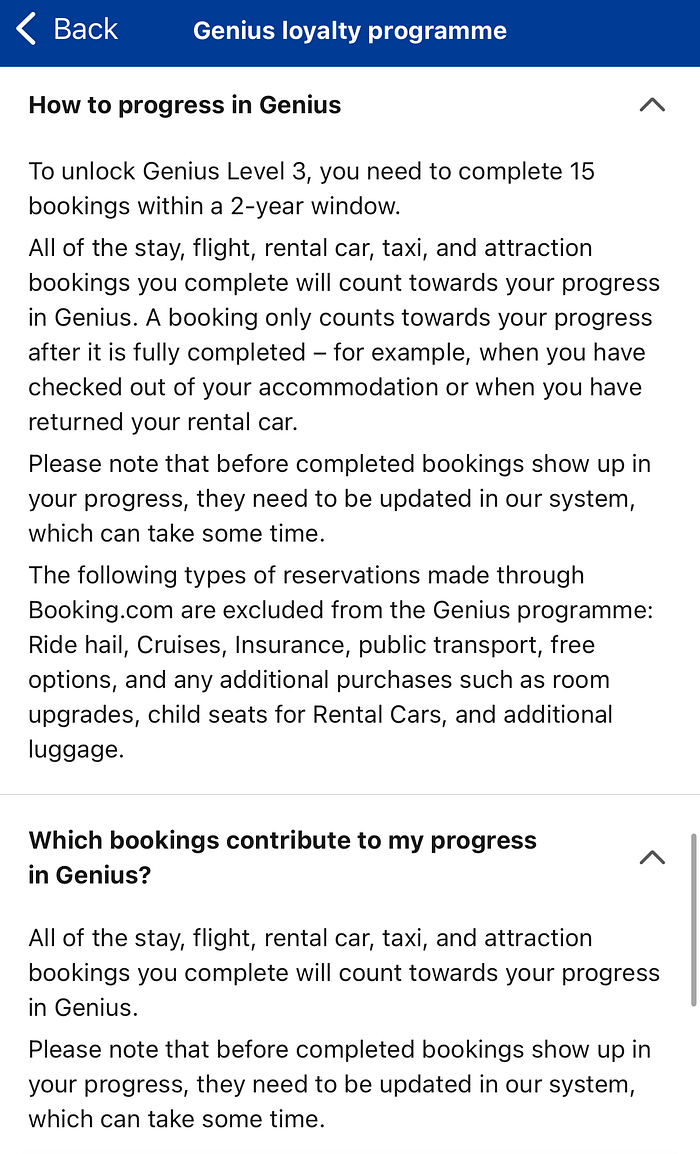
But earlier this year I noticed that Booking.com offers Genius Level 3, their highest loyalty tier. According to the app, to reach it you need 15 bookings within two years.
That sounded achievable. I travel frequently, and I thought: Why not commit to the platform and see if I can reach it?
So I decided to intentionally try.
That decision quickly turned into one of the most confusing customer experiences I've had with a major platform.
The Rules Seemed Simple
The loyalty page in the app states that:
- You need 15 bookings within two years
- Each booking counts toward your progress
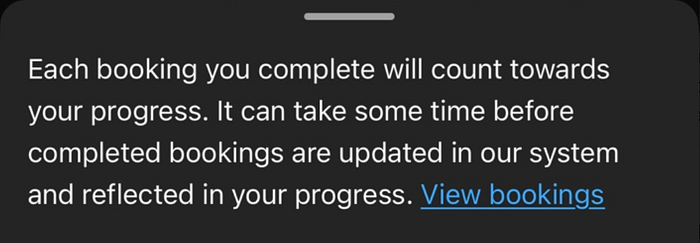
Straightforward. A booking should be a booking — whether it's a hotel, a car rental, or another travel service offered by the platform.
I checked my progress bar and saw that two bookings were already counted.
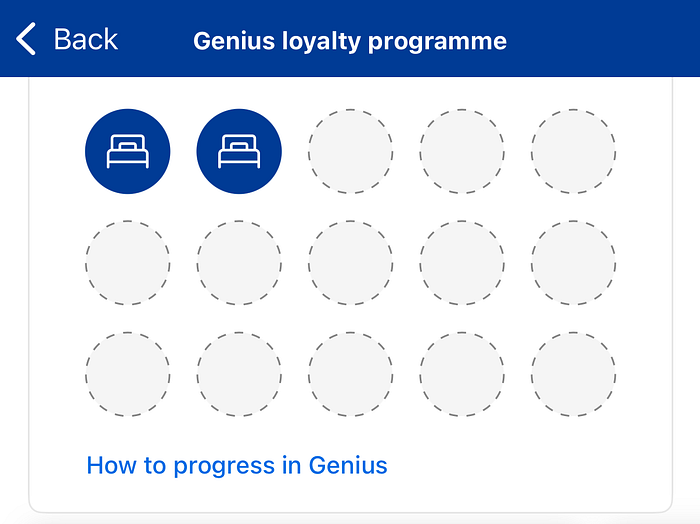
Great. That meant I just needed 13 more.
So I started booking upcoming travel through Booking.com.
The Bookings I Made
Here are just a few examples:
- Hotel near Beijing Daxing Airport (completed in April 2025)
- Hotel stay in Thailand (February–March 2026)
- Car rental in Zurich via Booking.com
- Hotel in Zurich for March 2026
By any reasonable interpretation, that's four completed bookings.
But when I checked the Genius progress bar again… Nothing changed. Still two.
Where Did My Bookings Go?
When I opened the Genius progress page, the system said:
"You have 2 bookings to complete."

Clicking that message brought me to the bookings page. But something strange happened there.
Instead of listing the bookings separately, Booking.com grouped multiple reservations together into one trip:
- Thailand hotel
- Zurich car rental
- Zurich hotel
Three bookings were collapsed into a single item. But the loyalty program clearly says each booking should count.
So why were three bookings appearing as one? And why weren't they reflected in the progress toward Genius Level 3?
Customer Support Made It Worse
At that point I assumed it might simply be a technical bug.
So I called customer support. The call lasted almost one hour. What happened during that call was honestly more surprising than the bug itself.
The first support agent couldn't see half my bookings
For example:
- Beijing hotel booking — not visible in their system
- Zurich car rental — not visible
- Some hotel bookings — visible
So the agent was looking at an incomplete picture of my account. Her response was essentially:
"If it's not visible in the system, there's nothing we can do."
Then Another Hidden Rule Appeared
During the call, another detail surfaced.
Apparently:
If you make a booking under your account but enter another person's email in the reservation, the booking may not count toward Genius progress.
In my case, I had done this once — using my husband's email so he could manage the hotel check-in details during our trip.
But this rule is not clearly communicated in the loyalty program explanation.
And even if it applied to that one booking, it still doesn't explain the others.
The Most Surprising Advice
After almost an hour on the phone — including escalation to a supervisor — I finally received the official recommendation.
The supervisor said:
"You need 15 bookings. Make all 15 and then call us back, and we'll see what we can do."
Let that sink in.
The system already fails to count multiple bookings. Support cannot see some reservations. But the advice is to complete the entire loyalty challenge first and only then investigate.
That's Not How Loyalty Works
A loyalty program exists to create trust and commitment between a customer and a brand.
Customers choose to stay loyal because they believe:
- the system is transparent
- the rewards are predictable
- the company values their engagement
But when the rules are unclear and support cannot explain them, the opposite happens.
Instead of increasing loyalty, the program creates uncertainty and frustration.
Why This Matters
This experience raises several important questions about platform loyalty programs:
1. Transparency If bookings are excluded from loyalty progress, customers should clearly understand why.
2. Consistency If the rule is "each booking counts," then grouping multiple bookings into one trip should not affect loyalty tracking.
3. Customer Support Capability Support agents should have full visibility into customer activity — otherwise they cannot help resolve issues.
4. Trust A loyalty program only works if customers trust the system that tracks their loyalty.
The Irony
Ironically, I was actually trying to be loyal.
I deliberately chose to book through Booking.com — even though in some cases booking directly with hotels can be cheaper.
But after this experience, I'm asking myself a simple question:
Why would I make 15 bookings on a platform if the first four don't even count?
A Message to Booking.com
Booking.com is one of the largest travel platforms in the world.
And this issue might be something small — a UI bug, a tracking error, or a mismatch between different booking systems.
But if that's the case, it deserves investigation.
Because loyalty programs should make customers feel valued.
Not confused.