
You can sit through a board update and hear "green" five times. That still doesn't tell you whether the company is safe, whether the controls work, or whether the report is flattering the room.
That is the pressure you already feel. The board wants calm answers. Management wants trust. You need to know if the picture is real, or if it only looks tidy.
This matters for directors and executive teams alike. You need a sharper way to test the status before you accept the color.
TL;DR
- Green should mean the risk is understood, monitored, and inside appetite, not just that the dashboard looks clean.
- Ask what evidence supports the status. Activity counts are not the same as reduced exposure.
- Push management to name what could change the rating overnight.
- Make ownership and escalation explicit. If nobody can decide or spend, green is weak comfort.
- If the answers sound polished but thin, ask for better evidence or a better governance model.
What Green Actually Means in a Cyber Report, and What It Might Be Hiding
Green is useful only if it means something concrete. It should mean the risk is known, the controls are tested, and the business can live with the exposure for now.
A lot of teams use green to describe motion. Patches went out. Training was assigned. Meetings happened. That is activity, not assurance.
A green label can hide repeat incidents, weak recovery, vendor exposure, or controls that were never tested under pressure. It can also hide a reporting habit, where the team talks about the work done instead of the risk still left on the table.
Ask what green is based on
You need plain evidence. Ask what data, thresholds, and control tests support the rating. Ask when the controls were last tested, what failed, and what changed since the last review.
Activity is not the same as exposure.
If management gives you a long list of tasks, stop them there. You want facts, not a tour of the ticket queue.
Ask what could turn it yellow overnight
A strong team can tell you where the warning lights are. A weak team can only tell you where the dashboard sits today.
Ask what would change the rating fast. A vendor outage, a major audit finding, a failed recovery test, a new system rollout, or a live incident should all move the color. If they cannot name the triggers, they are probably looking at the snapshot, not the trend.
The First Questions Should Test Business Impact, Not Technical Detail
Your job is not to decode the tool. Your job is to understand what the risk does to the business.
If you want a deeper baseline, start with questions every director should ask the CISO. The point is the same. You are looking for business effect, ownership, and recovery, not jargon.
What business damage could happen if this risk hits
Ask for the outcome, not the failure mode. If the answer is weak, you do not have a usable risk view.
You want management to tie the issue to revenue, downtime, customer trust, legal exposure, or weak financial controls. That is what the board can govern. A technical fault matters only after it becomes a business event.
A simple way to keep the discussion tight is to ask:
- What would stop moving?
- What would this cost?
- Who would notice first?
- How long would recovery take?
If those answers are vague, the report is not ready for the board.
Which systems or vendors would make this worse
Some risks stay small until they hit the wrong dependency. Identity, payments, reporting, cloud, and core vendors can turn a contained event into a company-wide problem.
Ask which system is the real choke point. Ask which third party could spread the damage. Ask what would happen if that vendor failed on a bad day. Vendor concentration often looks fine until you need it to be flexible, and it isn't.
Press on Ownership, Accountability, and Escalation Before You Trust the Color
Green is weak comfort when no one is clearly on the hook. That is where many boards get caught. The report looks neat, but the ownership is blurry.
A clean answer names one accountable executive, one budget holder, and one escalation path. Shared concern is not the same as shared accountability. If everyone owns it, no one owns it.
Use defining decision rights as the lens here. You need to know who can decide, who can spend, and who has to be told when the status shifts.
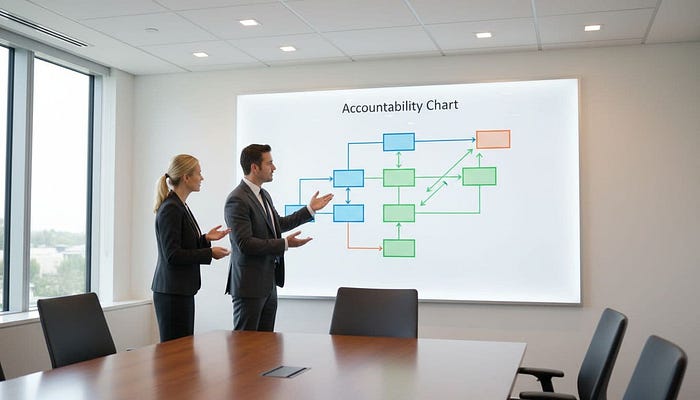
Who is accountable if the risk worsens
Ask for the single accountable executive by name and role. Then test whether that person has real authority.
Can they re-rank priorities? Can they move budget? Can they force action across teams? If not, they are a messenger, not an owner.
How fast would you tell us if the picture changed
You need a timeline, not a promise. Ask what the trigger is, who calls whom, and how fast the CEO, audit chair, and full board hear about a material shift.
If management says, "We'd keep you informed," keep pressing. You want trigger points, timing, and a clear rule for escalation. That is what protects the board when the story changes overnight.
Use One Simple Test for Whether the Green Rating Deserves Your Trust
A board-ready answer should pass three tests. What is known, what is being governed, and what is being tested.
That is the filter. If one of those parts is missing, the color is carrying too much weight.
If you want a fast self-check on whether your board is getting real oversight or just symbolic reporting, use See Where Your Board Actually Stands.
What do we know, what are we assuming, and what is still missing
Ask management to separate facts from assumptions. You want to hear what is measured, what is estimated, and what still needs proof.
A strong answer admits gaps. A weak answer hides them under tidy language. That is the difference between clarity and comfort.
What would a board-ready answer look like
A board-ready answer is short. It says what matters now, what the tradeoff is, and what decision is needed.
If the answer takes ten minutes to explain, it may not be ready. If it ends in more reporting, without a decision, it is probably not ready either.
What to Do When the Answer Sounds Smooth but Thin
Polished language can cover thin evidence. Do not reward it.
Ask for the data, the test results, the trend lines, and the ownership notes. Ask for recent incidents, even the small ones. Ask what changed after the last issue, not what the issue was called.
If the same gaps keep showing up, the problem is not the dashboard. It is the operating model.
Sometimes the fix is better reporting. Sometimes it is a sharper governance process. Sometimes it is a bigger change in leadership, scope, or advisory support. When the gap is serious, Move Past Technical Noise and Strengthen Board Oversight before the next board cycle starts.
Ask for evidence, not reassurance
A direct request for proof tells you more than a long debate. Ask for the last test, the last failure, and the last decision that changed something.
Decide whether you need a better report or a bigger change
If the report is weak but the underlying work is sound, fix the report. If the evidence is weak, the ownership is fuzzy, and the answers stay polished, you need more than a new slide deck.
Related Reading
If you want a wider lens on board cyber oversight, these are worth your time:
- Cyber Risk and Fiduciary Duty for Directors
- Board Cyber Risk Advisor: Clarify Risk Appetite and Escalation
- Cybersecurity Governance Advisor for Boards
Frequently Asked Questions
What should directors ask when cyber risk is green?
Ask what the rating is based on, what could change it, who owns the risk, and what business harm it could cause. Green only matters when it rests on evidence.
Is a green cyber dashboard enough for the board?
No. A green dashboard can hide stale data, weak recovery, or poor ownership. You need proof, not color.
What if management gives polished answers with no detail?
Ask for testing results, recent incidents, and escalation triggers. If those are missing, the report needs work.
How often should directors challenge cyber status?
Every time the board gets a status update. If the risk is real, the questions should stay real too.
Conclusion
Directors are there to test the story, not repeat it. That matters most when cyber risk is green, because green can mean control, or it can mean comfort.
Keep asking for business impact, ownership, and escalation. Those are the questions that turn a status color into real oversight.
If you want a clearer view of the risk beneath the report, start there and do not let the color do the thinking for you.