
I assumed hacking started after:
- learning JavaScript properly
- understanding backend logic
- mastering tools like Burp Suite
So every time I opened a live web app, I felt like an outsider. I could click things, but I didn't know what to look for.
The turning point wasn't a tool or a tutorial. It was realizing that hackers don't start by hacking.
They start by reading.
I Was Looking at Websites the Wrong Way
For a long time, I saw websites the same way normal users do.
Login page. Dashboard. Profile settings. Logout.
That's it.
But a web app isn't a collection of pages. It's a system that takes input, makes decisions, and returns output.
Once I started seeing it that way, everything slowed down — in a good way.
Instead of asking:
"Where is the vulnerability?"
I started asking:
"What is this app trying to do for the user?"
That question alone changed how I looked at everything.
Every Input Is an Opportunity to Understand the App
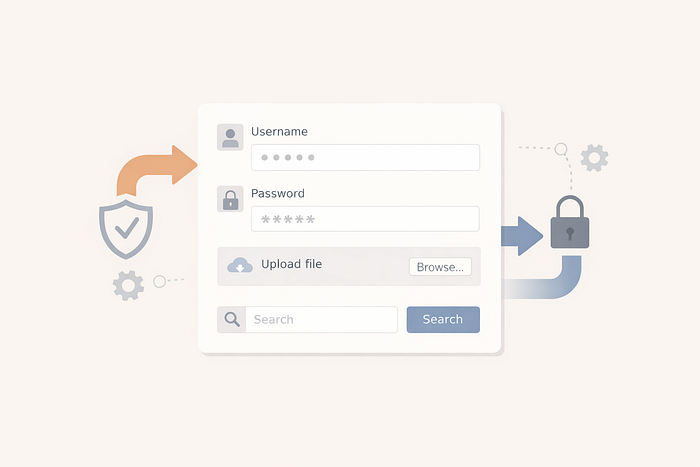
Forms used to intimidate me.
Now, they're the first thing I pay attention to.
Login forms. Search bars. File uploads. Profile update fields.
Each one is an agreement:
"You give us data, we'll do something with it."
You don't need technical knowledge to question that.
What happens if the field is empty? What happens if the input is longer than expected? What happens if you submit something unusual — but still valid?
You're not trying to break anything yet. You're trying to understand how the app reacts.
Most beginners rush past this step. That's why they miss obvious issues.
URLs Reveal More Than the UI Ever Will
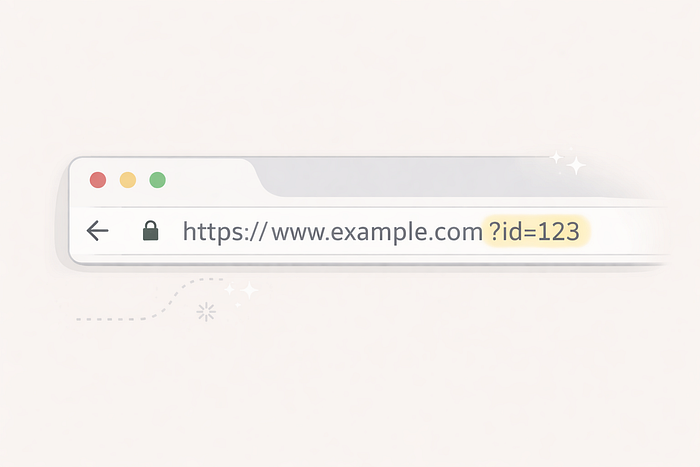
One of the earliest lessons I learned was this:
The interface lies. The URL rarely does.
When I started paying attention to URLs, patterns began to show up.
Numbers that looked like user IDs. Parameters that controlled actions. Endpoints that hinted at features not shown in the UI.
I wasn't exploiting anything. I was just reading carefully.
If a URL changes when you click something, that's a clue. If a number increases or decreases, that's a clue.
You don't need tools to notice this — just patience.
Buttons Are Just Suggestions, Not Rules
This was a mindset shift that took time to sink in.
If a button is disabled, hidden, or missing, it doesn't automatically mean the action is protected.
Frontends are built for users. Servers are built for logic.
A lot of beginners assume:
"If I can't click it, I can't access it."
Hackers assume:
"The server decides, not the button."
You don't need to bypass anything immediately. Just recognize the difference.
Understanding that separation is more important than knowing any vulnerability name.
Errors Are Not Failures — They're Feedback
Earlier, error messages made me nervous.
Now, they make me slow down.
"Unauthorized." "Invalid request." "Something went wrong."
Each message tells you something:
- a check exists
- a condition failed
- a boundary was crossed
Even generic errors matter.
They confirm behavior.
A quiet app that responds consistently is far more interesting than one that looks polished.
Think in Roles, Not Pages
One of the most useful mental models I've picked up is thinking in roles.
Guest User Admin Support
Every feature exists for a reason. Every restriction exists for a reason.
Instead of jumping between pages, I started asking:
"Which role is allowed to do this?"
And more importantly:
"Which role should not be able to?"
Many serious issues come from role confusion, not advanced exploitation.
This is where logic beats technical skill.
You Don't Need to Be Technical to Start Thinking Like a Hacker
This part matters.
A lot of people quit early because they think they're "not technical enough."
That belief delayed me far more than the lack of skill ever did.
Hacking, especially in the beginning, is about:
- noticing patterns
- questioning assumptions
- slowing down
Code helps later. Tools help later.
But curiosity is the real entry point.
If you can read behavior, you can read a web app.
And once you can read it, learning the technical parts finally makes sense.
Final Thought
You don't need permission to look closely.
You don't need to understand everything to start.
Open a web app. Use it slowly. Ask simple questions.
That's how hacking actually begins — quietly, patiently, and without drama.