

Two hundred years ago, people believed traveling at 60 km/h would tear the human body apart. Doctors warned of suffocation. Experts insisted the mind couldn't process scenery that fast.
They were wrong.

150 years ago, human flight was dismissed as fantasy — something reserved for birds and myth. Then the Wright brothers left the ground at Kitty Hawk, and the impossible became engineering.
100 years ago, speaking across continents in real time sounded like sorcery. Today, global communication rides on fiber optics, satellites, and protocols built on decades of work from companies like AT&T and Bell Labs — so seamlessly that we complain when a call drops for two seconds.
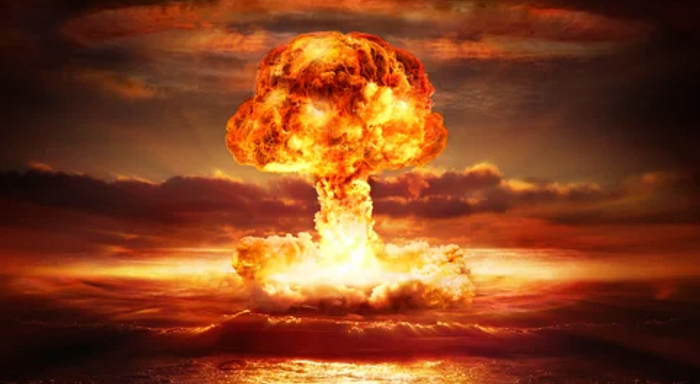
85 years ago, the idea of a single weapon destroying an entire city was unthinkable — until the Atomic bombings of Hiroshima and Nagasaki proved that scientific breakthroughs don't always arrive as blessings.
70 years ago, landing on the Moon was impossible. Then NASA put humans on the lunar surface during Apollo 11 Moon Landing. What had been science fiction became a televised event watched by hundreds of millions.
50 years ago, instant communication between Antarctica and the Arctic was unimaginable. Today, the internet — born from projects like ARPANET — connects even the most remote outposts on Earth.
40 years ago, the idea that nearly all human knowledge could be accessed freely, instantly, and from anywhere seemed absurd. Now, platforms like Google Search and Wikipedia have made information not just accessible, but overwhelming.
35 years ago, a communication device small enough to fit in your pocket yet powerful enough to connect you globally sounded like science fiction. Then came the iPhone and its competitors — turning every pocket into a command center.
30 years ago, storing terabytes of data on something the size of a thumb was unthinkable. Today, flash memory and solid-state drives have made that mundane, driven by companies like Samsung and SanDisk.
25 years ago, watching a full-length movie on a handheld device seemed ridiculous. Now, platforms like Netflix stream high-definition video to devices smaller than a paperback.
20 years ago, making a million dollars by recording yourself doing something silly in front of a camera sounded like a joke. Then YouTube created an entire economy of creators — some of whom built empires out of nothing but attention.
10 years ago, writing complex software, generating images, or producing videos simply by typing a few sentences in imperfect English felt impossible. Today, tools like ChatGPT and DALL·E are reshaping how we think about creativity, labor, and expertise.
5 years ago, competing with Google in search looked like suicide. Yet new AI-driven systems — from Bing Chat to Perplexity AI — have begun to chip away at what once looked like an untouchable monopoly.
And this pattern isn't slowing down — it's accelerating.
Quantum computing threatens to break today's encryption. Biotechnology is rewriting DNA with tools like CRISPR. Autonomous systems are inching toward replacing entire categories of human labor. Fusion energy, long mocked as "always 30 years away," is edging closer to reality with projects like ITER.
The lesson is uncomfortable: "impossible" has never meant "won't happen." It has always meant "we don't know how yet."
Every generation redraws the boundary between fantasy and reality — and then forgets how absurd the new reality once seemed.
Conclusion
So when someone tells you something is impossible today, what they're really saying is that it hasn't been done yet — or worse, that they can't imagine how it could be done.
History suggests that's a failure of imagination, not a limit of reality.
Because if the last two centuries have taught us anything, it's this: the impossible is just a deadline we haven't met yet.

…and even today, according to my wife, it is impossible to convince a man to put the toilet seat down.