Introduction
In the world of web application security, Injection vulnerabilities are among the most dangerous and widely exploited flaws. They occur when an application fails to properly validate or sanitize user input before passing it to an interpreter such as a database, operating system, or application engine.
Injection attacks can lead to:
- 🔓 Authentication bypass
- 📂 Sensitive data exposure
- 👤 Account takeover
- 💻 Remote code execution
- 🏢 Full server compromise
Because of its severity, Injection has consistently appeared in the OWASP Top 10 list of critical web security risks.
What Is Injection ?
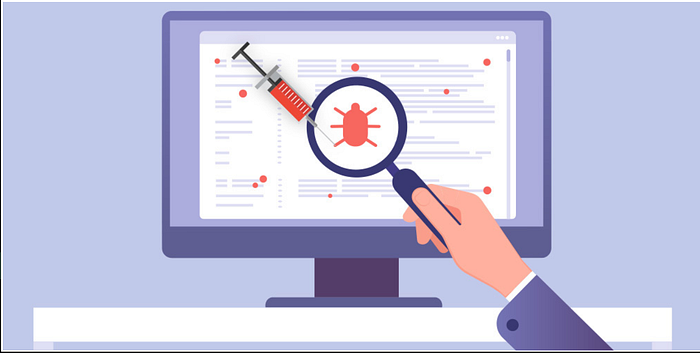
Injection happens when:
An application includes untrusted user input inside a command or query without proper validation.
In simple terms: User input + No validation + Direct execution = 💥 Injection vulnerability.
How It Works

Let's understand this with a simple login example.
A normal SQL query may look like this:
SELECT * FROM users
WHERE username = 'chandru'
AND password = '123456';
If the developer writes backend code like this:
query = "SELECT * FROM users WHERE username='" + username + "' AND password='" + password + "'"The application directly inserts user input into the SQL query.
Now imagine an attacker enters:
Username: admin' --
Password: anything
The query becomes:
SELECT * FROM users
WHERE username='admin' -- '
AND password='anything';
The -- symbol comments out the password check.
The application now logs the attacker in without verifying the password.
This is called SQL Injection, the most common form of injection.
Types of Injection
Injection is not limited to databases. There are multiple types:
1. SQL Injection
Manipulates database queries to bypass authentication or extract data.
2. Command Injection
Occurs when user input is executed as an operating system command.
Example:
system("ping " . $_GET['ip']);An attacker could input:
8.8.8.8; lsThis executes unintended commands on the server.
3. NoSQL Injection
Targets NoSQL databases like MongoDB by injecting malicious JSON queries.
4. Server-Side Template Injection (SSTI)
Injects malicious template expressions such as:
{{7*7}}Output:
49⚠️ That means user input is being executed as template code.
Real Attack Example
Here's a simplified real-world attack flow:
- Attacker finds a login form.
- Tests special characters like
'. - Application returns a database error.
- Attacker tries:
' OR 1=1 --5. Login bypass succeeds.
6. Attacker gains access to sensitive data.
In advanced cases, attackers:
- Extract database names
- Dump user tables
- Steal password hashes
- Escalate privileges
Impact
Injection vulnerabilities can have severe consequences:
- 🔓 Authentication bypass
- 📂 Sensitive data exposure
- 👤 Account takeover
- 🏢 Database compromise
- 💻 Remote code execution
- 🌐 Full server takeover
Many large-scale data breaches have involved injection flaws.
Detection
Injection vulnerabilities can be detected by:
Manual Testing
- Insert
'or"into inputs - Observe error messages
- Test logical payloads like:
' OR 1=1 --Automated Tools
Security professionals use tools such as:
- Burp Suite
- SQLmap
- OWASP ZAP
These tools help identify and confirm injection vulnerabilities.
Prevention
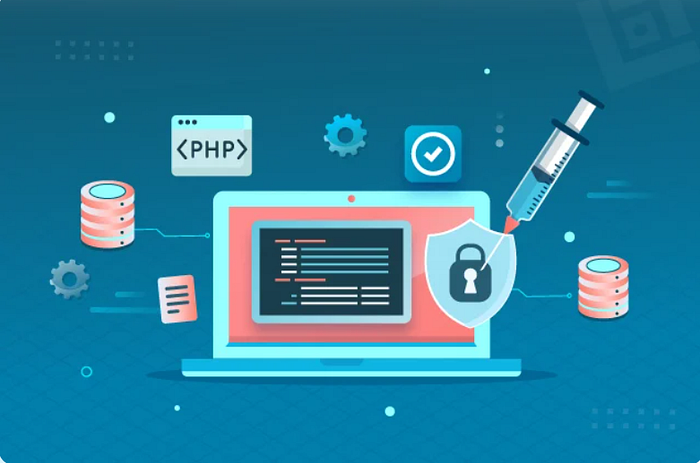
Injection vulnerabilities are preventable with secure coding practices.
1. Use Parameterized Queries (Prepared Statements)
Instead of concatenating strings:
Vulnerable:
query = "SELECT * FROM users WHERE id=" + idSecure:
cursor.execute("SELECT * FROM users WHERE id=%s", (id,))Here, user input is treated as data — not executable code.
2. Use ORM Frameworks
Modern frameworks automatically handle parameterization.
3. Validate Input
- Use whitelisting
- Enforce proper data types
- Reject unexpected characters
4. Apply Least Privilege
Database accounts should only have necessary permissions.
Conclusion
Injection vulnerabilities remain one of the most dangerous yet preventable security flaws in modern applications. By separating data from logic, validating input, and using parameterized queries, organizations can eliminate an entire class of attacks. In the end, security is not about trusting users — it is about enforcing boundaries in code.