
A few memes from friends. A client asking about a collaboration. A late-night message from someone I hadn't talked to in years.
Nothing unusual.
Then I saw the notification:
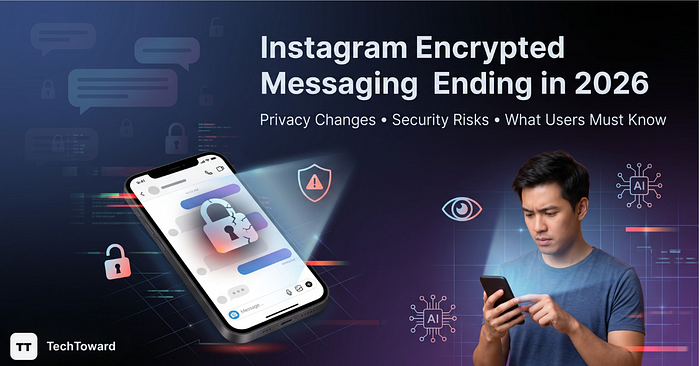
"End-to-end encrypted messaging on Instagram will no longer be supported after May 8, 2026."
At first, it felt like just another tech update — the kind most people ignore.
But the more I read, the stranger it felt.
For years, we've been told privacy matters. Apps proudly advertised encryption like a digital lock protecting our conversations from everyone — even the platform itself. Suddenly, one of the world's biggest social apps was quietly removing that lock.
And honestly?
That changes how people use Instagram.
Creators discuss sponsorship deals in DMs. Friends share personal struggles. Small businesses handle customer conversations. Couples argue, reconcile, and build relationships through chat windows.
Those messages were never just "content."
They were moments.
Meta says very few people used encrypted DMs, and users wanting stronger privacy can switch to WhatsApp instead.
But the bigger issue isn't just encryption disappearing.
It's what this decision represents.
The internet is slowly shifting from "private by default" toward "monitored for safety, moderation, AI training, and personalization." Governments want more visibility. Platforms want smarter AI systems. Advertisers want deeper insights. And somewhere in the middle sits the user — still believing private messages are truly private.
That realization made me rethink how casually we trust social platforms.
So I cleaned old chats. Enabled stronger security settings. Moved sensitive conversations elsewhere.
Not because Instagram became dangerous overnight — but because digital privacy is changing quietly, one feature at a time.
And most people won't notice until it's already gone.
Read the full breakdown here: Tech Toward Article