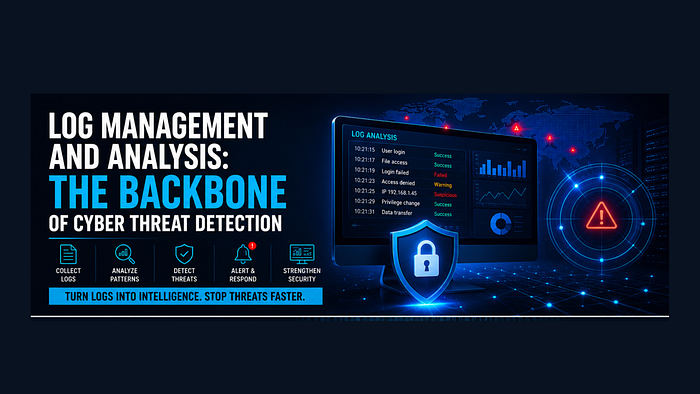

Login attempts, file access, system updates, and unusual network activity are constantly happening in the background. The problem is that while many companies collect this data, very few truly understand what it is telling them.
And that's risky.
Modern cyberattacks rarely happen all at once. Attackers move quietly through systems, leaving behind small traces that often go unnoticed until serious damage has already been done. Malware, suspicious access attempts, and stolen credentials can remain hidden for weeks without proper visibility.
That's why log management and analysis have become essential parts of modern cybersecurity.
It's not just about storing data. It's about identifying suspicious behavior early, connecting patterns across systems, and detecting threats before they become major security incidents.
Today, businesses rely on technologies like SIEM (Security Information and Event Management) to collect and correlate logs from multiple sources. At the same time, threat hunting teams investigate hidden activity that automated tools may miss.
Combined with incident response and continuous monitoring, log analysis becomes the foundation of a strong Security Operations Center (SOC).
Without proper log visibility: • Threats remain hidden • Response times become slower • Security investigations become more difficult
But with effective log analysis, businesses can improve visibility, strengthen their security posture, and respond to threats much faster.
Read the complete guide to SOC services in 2026 to understand how SIEM, threat hunting, incident response, and log management work together in modern cybersecurity.