June 3, 2026
What I Learned While Testing a Ride-Sharing Application
As a developer and cybersecurity enthusiast, I enjoy exploring applications not just from a user’s perspective, but also from a quality and…

Williams K A
1 min read
As a developer and cybersecurity enthusiast, I enjoy exploring applications not just from a user's perspective, but also from a quality and security standpoint. Recently, while testing a ride-sharing platform, I came across a few interesting issues that highlighted the importance of thorough testing before releasing features to users.
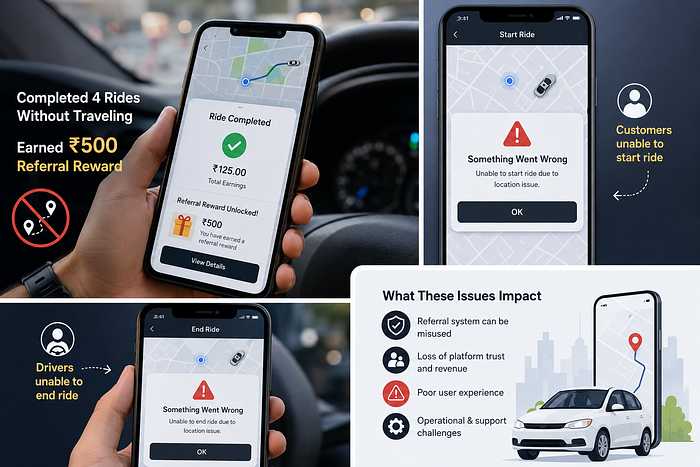
One of the issues involved the ride completion and referral reward system. During testing, I was able to complete multiple rides without physically traveling from my location. The system marked the rides as completed and even credited the referral reward associated with ride completion milestones.
While this may appear to be a simple bug, it raises important questions about how ride validation is implemented. Any reward system should verify legitimate user activity before granting incentives. Without proper validation, such issues can lead to abuse and financial losses for the platform.
Another issue I encountered affected the core functionality of the application. Both drivers and customers experienced difficulties when attempting to start or end rides. Instead of completing the action, the application displayed a generic "Something Went Wrong" message related to location validation.
From a user experience perspective, generic error messages can be frustrating because they provide little information about the actual problem. From an engineering perspective, location-based workflows require careful handling of permissions, GPS accuracy, network connectivity, and edge cases.
This experience reinforced several important lessons:
- Business logic should always be validated on the server side.
- Reward systems should include fraud-prevention mechanisms.
- Location-dependent features require extensive real-world testing.
- Error messages should be meaningful and actionable.
- Quality assurance is not just about finding bugs; it's about protecting the user experience.
Testing applications often reveals unexpected scenarios that developers may not encounter during implementation. Every bug discovered before reaching production is an opportunity to improve reliability, security, and user trust.
Building software is challenging. Building software that works reliably for thousands of users in unpredictable real-world conditions is even more challenging. That's why testing remains one of the most valuable parts of the software development lifecycle.
#SoftwareTesting #QualityAssurance #BugBounty #CyberSecurity #SoftwareDevelopment #QA #Testing #ProductQuality #Tech