June 5, 2026
HTML Injection in Outbound Emails: An Overlooked Security Risk
Introduction

vibhuti bhatt
1 min read
Introduction
When discussing injection vulnerabilities, security professionals often focus on SQL Injection or Cross-Site Scripting (XSS). However, HTML Injection in outbound emails is frequently overlooked despite its potential to facilitate phishing and content manipulation.
During a security assessment, I identified a scenario where user-supplied input was included directly in an email template without proper output encoding. This allowed HTML content to be rendered within emails sent by the application.
Let's examine how this issue occurs and why organizations should take it seriously:
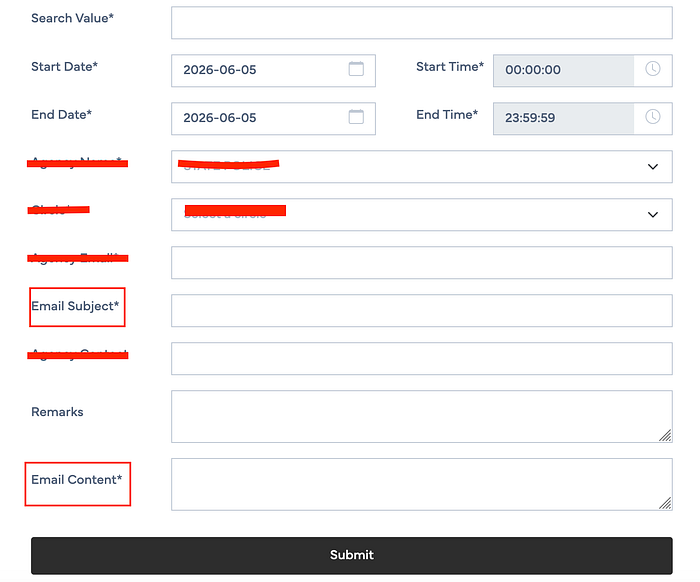
Application Workflow
The application allows users to enter details and submit the form.After successfully submitting the form user gets an acknowledgement mail on their outlook mail .
Identifying the Vulnerability:
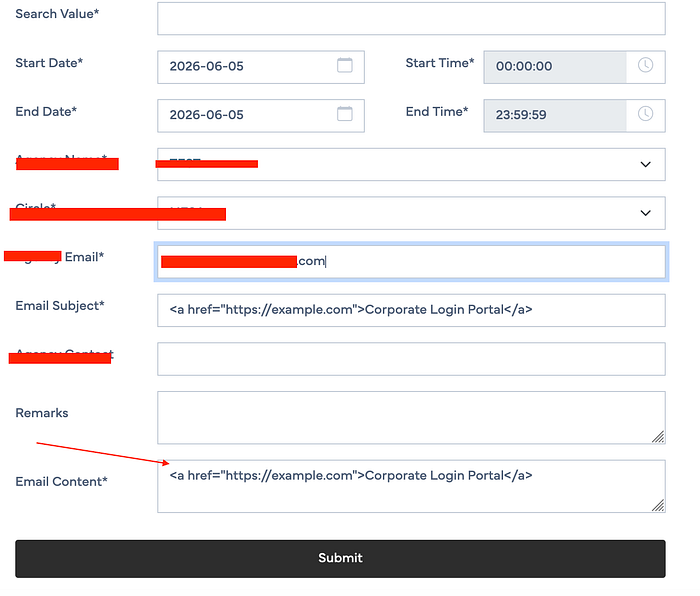
To test whether the application properly handled HTML content, I entered the following payload into the user-controlled field:
Email Received
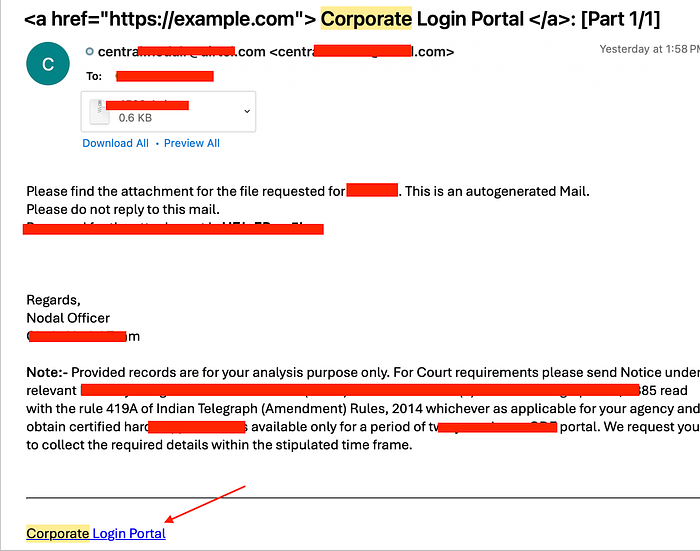
After submission, the application generated an automated email notification.
Instead of displaying the payload as plain text, the email client rendered the HTML anchor tag.
Root Cause
The application inserted user-controlled data into HTML email templates without performing proper output encoding.
Example:
<p>Comment:</p>
<div>{USER_INPUT}</div><p>Comment:</p>
<div>{USER_INPUT}</div>When user input is rendered directly inside HTML templates, email clients may interpret and display HTML elements instead of treating them as plain text.
Security Impact
Although modern email clients restrict JavaScript execution, HTML Injection can still introduce meaningful risks.
Phishing Opportunities
An attacker may insert links that appear legitimate and encourage recipients to visit attacker-controlled websites.
Content Manipulation
Recipients may see modified content that appears to originate from a trusted system.
Social Engineering
Because the email originates from a legitimate application, recipients may place greater trust in its contents.
Remediation
Organizations should:
- Perform context-aware output encoding.
- Sanitize user-controlled input before rendering.
- Avoid rendering raw HTML unless explicitly required.
- Conduct security testing for email functionality.
- Implement secure templating frameworks.
Conclusion
Security testing should not stop at web pages and APIs. Any communication channel that renders user-controlled content, including email templates, can become a potential attack surface.
HTML Injection in outbound emails may not always lead to code execution, but it can enable phishing, content manipulation, and abuse of user trust when left unaddressed.