

Kubernetes dominates modern infrastructure, powering giants like Google, AWS and countless enterprises, yet its very power breeds critical remote code execution (RCE) flaws that turn scalability into a security nightmare.
In this post, we dissect the hidden kill switches lurking in RBAC gaps, autoscaling exploits and supply chain traps, revealing how even hardened clusters crumble under sophisticated attacks.
Critical RCE Flaws in Kubernetes
Kubernetes powers much of modern cloud infrastructure, but its complexity introduces severe remote code execution (RCE) risks that can compromise entire clusters. Recent research highlights how misconfigurations and supply chain attacks amplify these threats, turning orchestration tools into attack vectors.
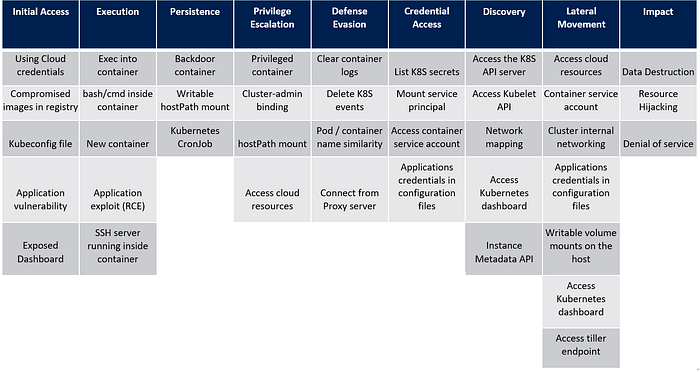
Common RCE Entry Points
RCE in Kubernetes often stems from overly permissive API access and flawed container images. Attackers exploit weak RBAC policies to escalate privileges, injecting malicious pods that execute arbitrary code on nodes. Deserialization bugs in components like custom controllers further enable code injection, especially in GPU-accelerated setups.
- Privileged containers bypass security contexts, granting root access to the host.
- Exposed kube-apiserver endpoints allow unauthenticated API calls leading to pod creation.
- Image pull vulnerabilities from untrusted registries deliver malware directly into deployments.
High-Profile Vulnerabilities
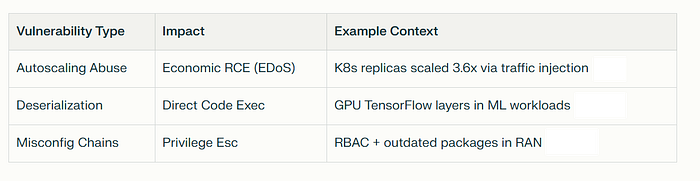
New and research papers reveal persistent flaws in autoscaling and Open RAN integrations. For instance, EDoS attacks manipulate Horizontal Pod Auto scalers to spawn resource-draining replicas, indirectly enabling RCE via cost-induced misconfigurations. In RIC clusters, outdated Kubernetes versions expose RCE through unpatched misconfigs scored high on MITRE ATT&CK.
Real-World Attack Scenarios
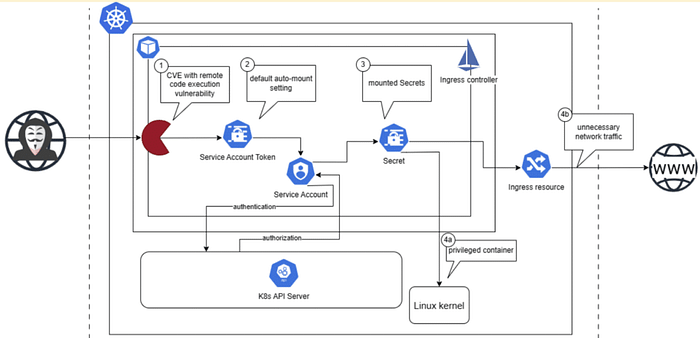
- Adversaries chain DevOps pipeline flaws with Kubernetes weaknesses for stealthy RCE.
- A malicious Jenkins job deploys tainted images, evading scans until runtime execution on nodes.
- Crypto-miners target GPU nodes, blending RCE payloads into legitimate ML jobs for sustained persistence.
- In production, reconnaissance via
kubectlproxies reveals endpoints, followed by pod escapes using hostPath mounts. These evolve into lateral movement across cluster nodes.
Mitigation Strategies
- Hardline pod security standards block privileged mode and host namespaces by default.
- Network policies isolate control plane traffic, while tools like GenKubeSec use LLMs to detect and auto-fix YAML misconfigs.
- Enforce admission controllers like Gatekeeper for policy-as-code.
- Rotate service accounts and audit logs with Falco for runtime anomalies.
- Shift-left scanning in CI/CD prevents supply chain RCE.
As Kubernetes adoption surges, AI-driven defenses promise proactive RCE hunting, but complexity ensures flaws persist. Clusters demand zero-trust by design to outpace attackers.