
🚨 "When Single Events Mean Nothing… But Patterns Mean Everything"
Inside the SOC: How SIEM Correlation Rules Reveal Hidden Cyber Attacks in Real Time
⚠️ The attacker doesn't always break in. Sometimes, they rewrite what you are allowed to see.
By Zoningxtr
In this third episode of the SOC Analyst Series, we explore one of the most powerful concepts in modern cyber security operations: SIEM correlation rules and how they transform raw logs into meaningful security intelligence.
In real Security Operations Centers (SOCs), thousands of individual events are generated every second. On their own, these events may look harmless. However, when properly correlated, they reveal structured attack patterns that indicate real cyber threats.
🔍 What You Will Learn
- 🧠 What SIEM correlation rules are and how they work
- 📊 How SOC analysts transform raw logs into actionable alerts
- ⏳ The importance of time windows in attack detection
- 🧩 How event correlation connects seemingly unrelated security logs
- 🚨 How brute-force attacks, reconnaissance, and stealth behavior are detected
- ⚙️ Why attackers attempt to bypass or fragment detection rules
- 🕵️ How threat hunters identify hidden attack patterns across systems
- 🔐 Why correlation failure can lead to missed cyber attacks
Disclaimer: This content is for educational purposes only. The author is not responsible for any use or misuse of the information provided. You are solely responsible for your actions. Always act ethically and ensure you have proper authorization.
🌒 Chapter 3 — The Rules Behind the Silence
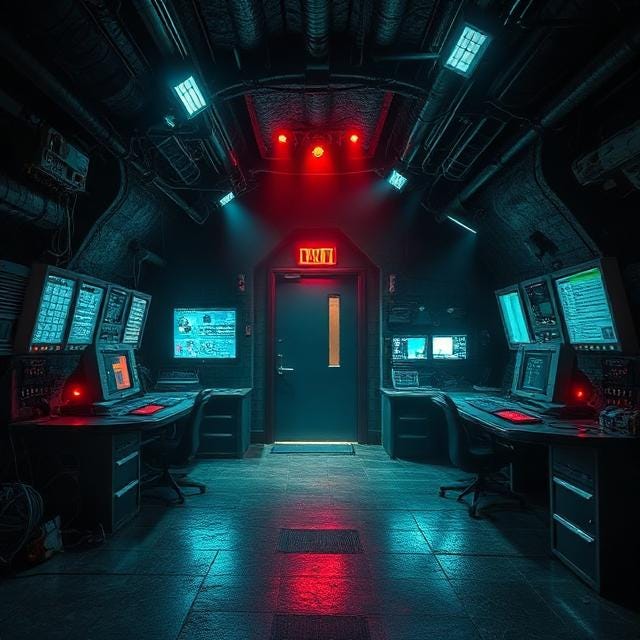
The SOC room inside a global technology firm was quieter than usual.
Not because the threat was gone…
But because something worse was happening.
The logs were still coming in. 📡 The systems were still running. 💻 The dashboards were still glowing. 📊
But the meaning of the data was becoming unclear.
At 02:06 AM, Omar leaned toward Sarah.
"We're getting too many low-level alerts… but nothing is being escalated." ⚠️
Sarah frowned.
"That's impossible… correlation rules should be grouping them." 🧠
Across the room, Maya narrowed her eyes. 🕵️
And Daniel… as always… remained calm. 🔵
Too calm.
🧠 Chapter 3.1 — What is SIEM Correlation?
Sarah stood in front of the SOC board.
"If logs are the language of systems… then correlation is how we understand sentences." 📡
📊 SIEM Correlation Rules Explained
A SIEM correlation rule is a logic engine that:
- 🔍 Collects multiple events
- ⏳ Observes time windows
- 🧩 Finds relationships
- 🚨 Generates a single meaningful alert
Instead of:
- 1,000 failed logins 🚫
You get:
- 1 brute-force attack alert 🚨
🧠 Why Correlation Matters
Without correlation:
- SOC analysts drown in noise
- attacks remain hidden in small events
- threats look "normal"
With correlation:
- patterns emerge
- attacks become visible
- behavior becomes understandable
⚙️ Chapter 3.2 — The Anatomy of a Correlation Rule
Sarah opened the SIEM configuration panel.
"Every rule has three parts." 🧩
1️⃣ Event Conditions
Defines what to look for:
- failed login attempts 🔐
- suspicious PowerShell execution ⚙️
- unusual DNS queries 📡
2️⃣ Thresholds
Defines how much activity is suspicious:
- more than 10 failed logins
- within 5 minutes ⏳
- from same IP 🌐
3️⃣ Time Window
Defines the detection timeframe:
- 1 minute
- 5 minutes
- 15 minutes
Omar leaned forward.
"So… correlation is basically pattern detection?" 🧠
Sarah nodded.
"Exactly. But patterns are everything in cyber security." ⚠️
🚨 Chapter 3.3 — The Missing Alerts Problem
Maya suddenly interrupted.
"Something is wrong with the correlation output." 🕶️
She pointed at the dashboard.
Some events were:
- not grouped
- not escalated
- not triggering rules
Omar looked confused.
"But the logs are coming in fine…" 💻
Sarah zoomed in.
And then she saw it.
A correlation rule behaving inconsistently.
Same input. Different output. ⚠️
🧩 The First Anomaly
One rule was supposed to trigger:
"Multiple failed authentication attempts within 5 minutes" 🔐
But instead:
- some events were ignored
- some were delayed
- some never triggered alerts
Sarah whispered:
"This is not a system issue…" 🧠
Maya finished the thought:
"It's rule manipulation." 🕶️
🔵 Daniel Speaks
Daniel finally turned from his screen.
"Correlation rules depend on data integrity." 🔵
Silence.
He continued:
"If the input logs are manipulated… correlation becomes meaningless." ⚠️
Omar frowned.
"But who would manipulate logs inside the SOC pipeline?" 💻
Daniel didn't answer immediately.
That silence said more than words.
🔍 Chapter 3.4 — Attack Through Correlation Blind Spots
Maya opened a threat hunting query.
"Attackers don't always bypass detection…" 🕵R️ &qot;Sometimes they fragment it." 🧩
🧠 Fragmented Attack Technique
Instead of triggering one big alert:
Attackers:
- split actions across time ⏳
- reduce frequency 📉
- avoid thresholds ⚠️
- stay below detection rules 👁️
Omar understood immediately.
"So the attack becomes invisible…" 😨
Sarah corrected him:
"Not invisible… just uncorrelated." ⚠️
📊 Chapter 3.5 — The Pattern Returns
At exactly 02:17 AM, the SIEM dashboard flickered. 📡
Then:
A pattern appeared again.
Every system showed small events:
- 🔐 login failures
- 🌐 DNS lookups
- 🔥 firewall blocks
- 💻 process executions
But individually… nothing critical.
Omar stared at the screen.
"These are just small events…" 💻
Sarah shook her head.
"That's exactly the problem." ⚠️
Maya zoomed out.
And saw it.
A pattern forming across time.
Repeating every 11 minutes. ⏳
Again.
🧠 Chapter 3.6 — Correlation Failure
Sarah checked the SIEM rules.
Everything looked normal.
But execution results were not.
She whispered:
"Correlation engine is not grouping related events…" 🧩
Omar asked:
"So the SIEM is broken?" 💻
Sarah slowly replied:
"No…" ⚠️ "It's being guided." 🕶️
🧯 Real SOC Workflow — Investigation Step
🟢 Omar (L1 Analyst)
- sees raw alerts
- escalates suspicious events
- notices repeated low-level anomalies
🟠 Sarah (L2 Analyst)
- reviews correlation rules
- identifies missing grouping behavior
- detects inconsistent rule execution
🕵️ Maya (Threat Hunter)
- correlates cross-system behavior manually
- identifies fragmented attack pattern
- detects timing-based stealth behavior
🔵 Daniel (L3 Engineer)
- inspects SIEM correlation engine
- validates rule execution logic
- checks ingestion pipelines
Then he says something carefully:
"The system is working… but the interpretation layer is compromised." ⚠️
🕶️ Hidden Clue
Later that night, Maya discovered something unusual.
A set of correlation rules had been:
- slightly modified
- re-timed
- selectively disabled
Not enough to break the system.
But enough to distort detection. 🧠
She stared at her screen.
Because only a few people had permission to modify SIEM logic.
And one of them had been… unusually present during every incident. 🔵
🎯 Reader Challenge
The SOC is now facing:
- broken correlation grouping 🧩
- fragmented attack patterns ⚠️
- repeating 11-minute cycles ⏳
- inconsistent alert generation 🚨
Question:
🔍 What is the attacker's strategy?
Is it:
- bypassing SIEM detection?
- hiding inside correlation gaps?
- manipulating rule logic?
- or slowly degrading SOC trust in alerts?
Because inside a global technology firm SOC…
⚠️ The system is not failing. It is being reshaped.