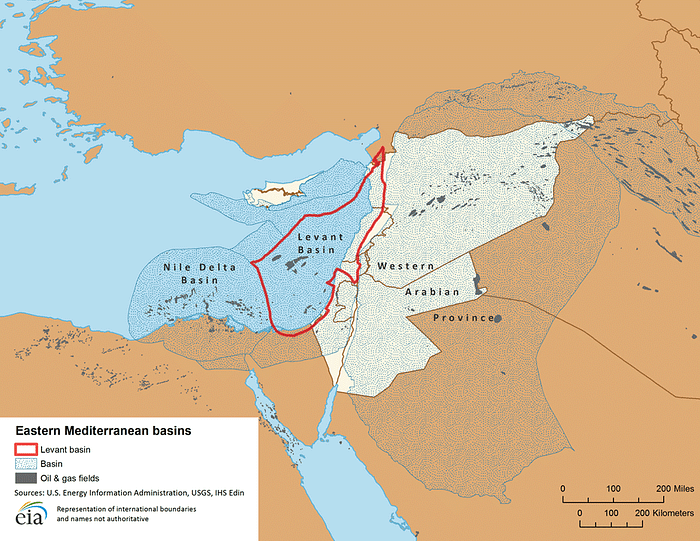


For more than a decade, the Eastern Mediterranean has been widely portrayed as a theater of intense geopolitical rivalry driven by newly discovered natural gas reserves. The discovery of significant offshore fields in Israel, Egypt, and Cyprus during the 2010s transformed the region into a focal point of energy geopolitics, prompting ambitious pipeline projects, new regional institutions, and a series of diplomatic realignments.
In its early phase, the emerging energy landscape appeared to reinforce geopolitical polarization. Initiatives such as the Eastern Mediterranean Gas Forum and the proposed EastMed pipeline were widely interpreted as efforts to institutionalize a new regional energy architecture that largely excluded Türkiye from the emerging framework. As several policy analyses noted at the time, the resulting configuration reflected not only energy cooperation but also deeper strategic tensions surrounding maritime jurisdiction disputes and regional alignments.
Yet the geopolitical logic that shaped the first phase of Eastern Mediterranean energy politics has gradually begun to shift. The economic limitations of large-scale pipeline projects, evolving regional diplomatic dynamics, and the growing importance of LNG-based energy networks have all contributed to a reassessment of earlier strategies.
Recent diplomatic developments suggest that the region may be entering a new phase. In particular, the normalization process between Türkiye and Egypt — marked by the restoration of diplomatic relations in 2023 and high-level political engagement in 2024 — signals the emergence of a more pragmatic framework for regional energy diplomacy. Rather than reinforcing rigid geopolitical blocs, this evolving environment increasingly reflects a search for flexible arrangements capable of accommodating competing strategic interests.
The First Phase: Exclusionary Energy Geopolitics

The discovery of significant natural gas reserves in the Eastern Mediterranean during the late 2000s and early 2010s fundamentally reshaped the region's geopolitical landscape. Offshore fields such as Israel's Leviathan and Tamar, as well as Egypt's massive Zohr field discovered in 2015, generated expectations that the Eastern Mediterranean could emerge as a new energy province capable of supplying regional markets and potentially contributing to Europe's energy diversification. As these discoveries attracted increasing international attention, energy resources rapidly became intertwined with longstanding political and maritime disputes in the region.
In the early stages of this process, cooperation among several Eastern Mediterranean states developed alongside an increasingly exclusionary geopolitical framework. Greece, Cyprus, Israel, and Egypt gradually strengthened diplomatic and energy partnerships that emphasized regional alignment around shared security and economic interests. According to assessments published by the Natural Resource Governance Institute, these emerging energy arrangements were shaped not only by commercial considerations but also by underlying geopolitical tensions, particularly those involving maritime jurisdiction disputes and broader strategic competition in the region.
The institutional centerpiece of this emerging framework was the establishment of the Eastern Mediterranean Gas Forum (EMGF) in 2019. Headquartered in Cairo, the organization brought together Egypt, Israel, Greece, Cyprus, Italy, Jordan, and the Palestinian Authority with the stated aim of promoting regional gas cooperation, developing infrastructure, and creating a more integrated energy market. At a formal level, the forum presented itself as a platform for economic coordination and energy dialogue. However, many analysts observed that the structure of the EMGF also reflected a specific geopolitical configuration that effectively excluded Türkiye from the emerging regional energy architecture.
Türkiye's absence from the forum was not simply a procedural matter. It was closely linked to broader disputes over maritime jurisdiction zones, offshore exploration rights, and competing interpretations of international maritime law in the Eastern Mediterranean. These disputes had already intensified during the 2010s as Türkiye and Greece advanced rival claims regarding continental shelf boundaries and exclusive economic zones. Within this context, the consolidation of energy cooperation among other regional actors increasingly appeared to institutionalize a geopolitical alignment that positioned Türkiye outside the emerging energy framework.
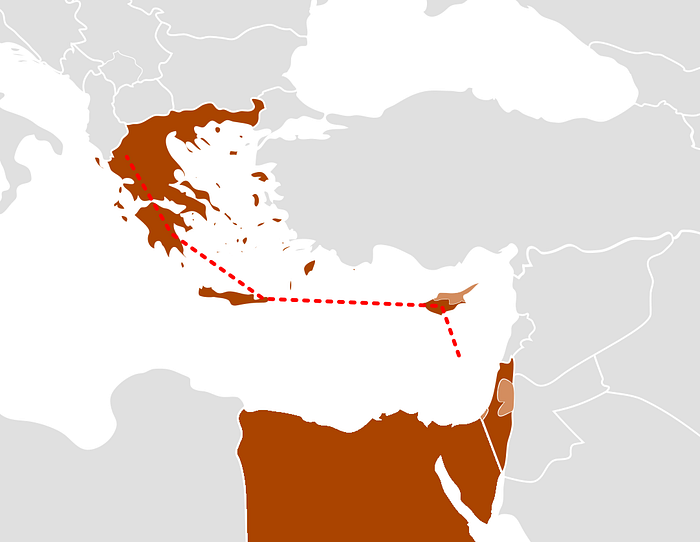
The proposed EastMed pipeline project further reinforced this perception. Supported primarily by Greece, Cyprus, and Israel — and politically encouraged by several European actors — the pipeline was designed to transport Eastern Mediterranean gas directly to European markets through a subsea route connecting Israel and Cyprus to Greece and eventually Italy. Beyond its economic rationale, the project quickly acquired strong geopolitical symbolism. It was widely interpreted as an effort to establish a new regional energy corridor that bypassed Türkiye entirely, thereby reinforcing the emerging bloc structure that had begun to take shape around the EMGF.
Although the economic feasibility of the EastMed pipeline was frequently debated, the political meaning of the project was unmistakable. In strategic terms, it represented an attempt to anchor a new regional energy order that aligned certain Eastern Mediterranean states while simultaneously marginalizing Türkiye's role within the evolving energy landscape. As a result, the first phase of Eastern Mediterranean energy geopolitics became defined less by inclusive cooperation and more by competing geopolitical visions regarding maritime sovereignty, regional alliances, and control over emerging energy corridors.
In this environment, natural gas discoveries did not simply create opportunities for economic collaboration. Instead, they contributed to the formation of a highly politicized energy geography in which infrastructure projects, diplomatic partnerships, and institutional initiatives became instruments of broader geopolitical competition.
The Structural Limits of the EastMed Strategy
Despite the ambitious geopolitical vision surrounding Eastern Mediterranean energy cooperation during the 2010s, the strategy that came to symbolize this first phase — most notably the proposed EastMed pipeline — faced a number of structural constraints that gradually limited its viability. While the project was frequently framed as a transformative infrastructure initiative capable of linking Eastern Mediterranean gas fields directly to European markets, its economic, technical, and geopolitical foundations remained far more fragile than initial political narratives suggested.
From a technical perspective, the EastMed pipeline was one of the most complex energy infrastructure projects ever proposed in the region. The planned route would stretch for nearly 2,000 kilometers across the seabed of the Eastern Mediterranean, connecting Israeli and Cypriot offshore fields to Greece and eventually to Italy. Large portions of the pipeline would run through deep-water environments, significantly increasing construction costs and technical risks. As a result, analysts repeatedly questioned whether the project could achieve commercial competitiveness when compared with alternative energy transportation methods.
Several energy policy studies raised similar concerns. A report published by the TRT World Research Centre in 2020 highlighted that the projected cost of the EastMed pipeline could reach several billions of dollars, raising doubts about whether the transported gas could remain price-competitive in European markets. In particular, the report emphasized that the project's economic viability depended on optimistic assumptions regarding long-term gas prices and stable production levels in Eastern Mediterranean fields — conditions that were far from guaranteed.
Beyond technical and financial considerations, broader structural changes in global energy markets further complicated the strategic logic behind the pipeline. In recent years, liquefied natural gas (LNG) infrastructure has increasingly emerged as a more flexible and commercially viable method of transporting natural gas across long distances. Egypt's existing LNG facilities in Idku and Damietta, for instance, already provide a functioning export route for Eastern Mediterranean gas to reach international markets without requiring the construction of entirely new subsea pipeline networks.
In parallel, European energy policy has increasingly emphasized diversification and supply flexibility rather than dependence on a single large infrastructure corridor. Analyses by European policy institutions such as Bruegel have noted that Europe's energy security strategy relies not only on securing additional gas supplies but also on expanding the range of transportation routes and suppliers available to European markets. Within this broader framework, LNG imports and modular infrastructure solutions often appear more adaptable to evolving market conditions than highly capital-intensive megaprojects.
These structural factors gradually exposed a fundamental tension within the EastMed strategy. While the pipeline carried strong geopolitical symbolism — representing a new regional energy corridor linking Israel, Cyprus, Greece, and Europe — its underlying economic foundations remained uncertain. The project therefore embodied a broader paradox of Eastern Mediterranean energy geopolitics: an initiative that was strategically ambitious but economically fragile.
In this sense, the EastMed pipeline became emblematic of the limitations of the first phase of Eastern Mediterranean energy politics. Rather than evolving into a commercially driven energy network shaped primarily by market dynamics, the region's initial energy architecture was heavily influenced by geopolitical calculations and alliance-building efforts. As economic realities and shifting energy market conditions became increasingly difficult to ignore, these structural constraints began to open space for alternative approaches to regional energy cooperation.
Türkiye–Egypt Normalization: The Threshold Mechanism of a Second Phase
Against the backdrop of the structural limitations surrounding the EastMed-centered energy framework, diplomatic developments between Türkiye and Egypt have gradually introduced a new dynamic into Eastern Mediterranean geopolitics. While the first phase of regional energy politics was largely shaped by exclusionary alignments and competing maritime claims, the normalization process between Ankara and Cairo suggests the emergence of a more flexible diplomatic environment capable of reshaping regional energy calculations.
The process began to gain tangible momentum in 2023 with the restoration of full diplomatic relations between the two countries and the reappointment of ambassadors after nearly a decade of strained ties. This step marked a significant institutional turning point. Rather than remaining confined to cautious exploratory talks, the relationship began to re-enter a structured diplomatic framework that allowed both governments to gradually expand political dialogue.
The normalization process gained further visibility in February 2024, when Turkish President Recep Tayyip Erdoğan visited Cairo for a high-level meeting with Egyptian President Abdel Fattah el-Sisi. The visit concluded with a joint declaration emphasizing the intention of both governments to deepen cooperation across political, economic, and regional policy domains. Although the declaration did not directly address maritime boundary issues in the Eastern Mediterranean, it signaled a broader willingness to move beyond the confrontational dynamics that had characterized the previous decade.
This diplomatic momentum continued later in 2024 when President Sisi paid a return visit to Ankara on September 4. During this meeting, the two countries formally convened the first session of the Türkiye–Egypt High-Level Strategic Cooperation Council, a mechanism designed to institutionalize bilateral coordination across multiple policy areas. The establishment of this council represented more than symbolic rapprochement. It created a structured platform through which the two governments could coordinate their regional policies, including issues related to trade, security, and potentially energy diplomacy.
Subsequent diplomatic signals have reinforced the perception that normalization is gradually moving beyond symbolic gestures toward a more institutionalized relationship. In 2025, joint statements by the foreign ministers of both countries emphasized the importance of maintaining political dialogue and expanding cooperation in regional matters, while growing security contacts suggest that the normalization process is gradually extending into the defense domain.
Taken together, these developments suggest that the normalization process between Türkiye and Egypt may function as a critical threshold mechanism in the evolving geopolitics of the Eastern Mediterranean. Rather than immediately producing a comprehensive maritime delimitation agreement or a formal restructuring of regional energy institutions, the rapprochement appears to be gradually reshaping the broader diplomatic environment in which energy diplomacy operates.
In practical terms, the significance of this shift lies in its potential to soften the rigid bloc dynamics that defined the earlier phase of Eastern Mediterranean energy politics. During the previous decade, regional energy cooperation frequently developed through exclusionary frameworks that positioned certain actors outside emerging institutional arrangements. The improvement of relations between Ankara and Cairo does not automatically dissolve these structural tensions. However, it opens new diplomatic channels that could facilitate more flexible bargaining over infrastructure routes, energy partnerships, and regional coordination mechanisms.
From this perspective, the Türkiye–Egypt normalization process represents more than a bilateral diplomatic adjustment. It introduces the possibility of recalibrating the regional energy landscape by expanding the range of actors able to participate in future energy arrangements. Even in the absence of immediate agreements on maritime boundaries or joint exploration initiatives, the restoration of political dialogue between two major Eastern Mediterranean states alters the strategic context in which regional energy diplomacy unfolds.
In this sense, normalization does not eliminate geopolitical competition in the Eastern Mediterranean. Rather, it potentially transforms the nature of that competition. Instead of rigid zero-sum alignments, the region may gradually move toward a more fluid diplomatic environment in which competing interests are managed through pragmatic negotiation and overlapping cooperation frameworks. Such a shift would mark a significant departure from the exclusionary dynamics that characterized the first phase of Eastern Mediterranean energy geopolitics.
Why Egypt Is the Pivotal Actor
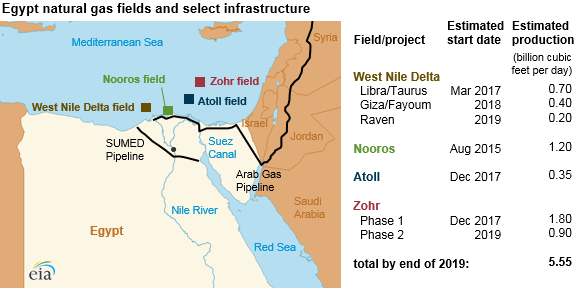
Within the evolving structure of Eastern Mediterranean energy geopolitics, Egypt occupies a uniquely strategic position that distinguishes it from other coastal states in the region. While several countries possess offshore gas reserves, Egypt combines geographic location, existing infrastructure, and institutional influence in ways that allow it to function not merely as a participant in regional energy politics but as a potential commercial hub linking producers and external markets.
A central element of this role lies in Egypt's liquefied natural gas (LNG) infrastructure. The country hosts two major LNG export facilities — located in Idku and Damietta — which together represent the only large-scale operational liquefaction capacity currently available in the Eastern Mediterranean. This infrastructure allows natural gas produced elsewhere in the region to be processed and shipped to international markets without requiring entirely new pipeline corridors. As a result, Egypt effectively operates as a gateway through which Eastern Mediterranean gas can reach global consumers.
This hub function has already begun to materialize in practice. Over the past several years, Israel has exported natural gas to Egypt through existing pipeline connections, where the gas is either consumed domestically or liquefied and re-exported as LNG. This arrangement demonstrates a commercially viable model of regional energy cooperation that relies less on the construction of new large-scale infrastructure projects and more on the efficient utilization of existing facilities. According to joint assessments published by the Eastern Mediterranean Gas Forum and the International Gas Union, Egypt's LNG capacity and geographic position give it a central role in any future regional gas commercialization strategy.
In this context, Egypt's strategic importance extends beyond its own domestic gas production. Even when production levels fluctuate, the country's infrastructure and institutional position allow it to function as an intermediary node in the broader regional energy system. For this reason, several policy analyses — including earlier evaluations by European energy policy institutions such as Bruegel — have emphasized Egypt's potential to emerge as the primary gas trading and export hub of the Eastern Mediterranean.
At the same time, Egypt's hub status should not be interpreted as structurally secure. Recent reporting by Reuters has highlighted that Egypt's domestic gas production has experienced fluctuations in recent years, forcing the country at times to increase imports in order to stabilize its internal energy supply. These developments illustrate a structural paradox: Egypt's infrastructure and strategic location give it significant leverage in regional energy networks, yet its domestic production dynamics introduce a degree of vulnerability that complicates its long-term position.
This dual character — simultaneously central and constrained — adds an important layer of complexity to the evolving geopolitics of the Eastern Mediterranean. Egypt is not simply a dominant energy power capable of unilaterally shaping regional outcomes. Rather, it functions as a pivotal intermediary actor whose infrastructure, diplomatic positioning, and institutional role enable the region's gas resources to reach global markets.
Within this framework, the normalization process between Türkiye and Egypt acquires additional strategic significance. If Egypt remains the most practical gateway for Eastern Mediterranean gas exports, improved relations between Ankara and Cairo could gradually open space for a more flexible regional energy configuration in which Türkiye is no longer structurally excluded from emerging cooperation frameworks. Even without immediate joint projects, the restoration of diplomatic dialogue between the two countries potentially expands the range of actors able to participate in future energy arrangements.
In this sense, Egypt's role is not limited to that of a major gas producer. It operates as the central hinge of the region's energy infrastructure — an actor capable of connecting different producers, markets, and transportation routes. At the same time, the vulnerabilities associated with its domestic energy balance ensure that Egypt's position remains dynamic rather than permanently consolidated. This combination of structural centrality and underlying fragility makes Cairo a pivotal, yet complex, actor in the emerging second phase of Eastern Mediterranean energy geopolitics.
What Does the Second Phase Look Like?
Taken together, the structural limitations of the first phase and the gradual diplomatic recalibration among regional actors suggest that Eastern Mediterranean energy politics may be entering a second phase. Unlike the earlier period, which was largely defined by exclusionary alignments and highly politicized infrastructure initiatives, the emerging landscape appears to be shaped by a more pragmatic and flexible logic of cooperation.
One of the most visible features of this shift is the gradual weakening of rigid geopolitical blocs that characterized the early years of Eastern Mediterranean gas politics. During the first phase, regional energy initiatives often evolved within clearly defined political alignments that brought together certain actors while simultaneously excluding others. In contrast, the evolving diplomatic environment now increasingly reflects a willingness among regional states to maintain dialogue across previously rigid political divides. Rather than forming tightly structured alliances, actors appear to be exploring overlapping and situational partnerships that allow them to pursue economic and strategic interests without fully abandoning existing political positions.
A second defining characteristic of this emerging phase is the changing role of infrastructure in regional energy strategies. Earlier debates were heavily centered on large-scale pipeline projects, particularly the EastMed pipeline, which came to symbolize the geopolitical ambitions of the first phase. Over time, however, the economic and technical constraints surrounding such megaprojects have shifted attention toward more flexible energy transportation models. Liquefied natural gas (LNG) infrastructure, floating storage and regasification units, and modular energy networks now appear increasingly attractive because they allow producers and consumers to respond more quickly to evolving market conditions. This shift reflects a broader transition away from what might be described as "pipeline determinism" toward a more diversified and adaptable energy infrastructure landscape.
Closely related to this infrastructural shift is a broader transformation in the relationship between politics and economics in regional energy planning. While the first phase of Eastern Mediterranean energy geopolitics often prioritized geopolitical symbolism and alliance formation, the emerging environment increasingly emphasizes commercial viability and market logic. In practical terms, this means that infrastructure choices and energy partnerships are now more frequently evaluated in terms of cost efficiency, supply flexibility, and access to existing facilities rather than purely strategic positioning.
Within this evolving framework, the normalization process between Türkiye and Egypt acquires particular significance. The rapprochement between Ankara and Cairo does not automatically resolve long-standing maritime disputes or eliminate competing strategic interests in the region. However, it introduces a diplomatic channel that can potentially make regional competition more manageable. Instead of reinforcing rigid geopolitical confrontation, the renewed relationship between the two countries creates opportunities for pragmatic dialogue on energy cooperation, transportation routes, and infrastructure utilization.
From a broader analytical perspective, this development illustrates a shift toward a more multidimensional form of regional diplomacy. Energy politics in the Eastern Mediterranean is no longer confined to a single issue — such as maritime delimitation or pipeline construction — but increasingly unfolds across multiple policy domains including trade, security coordination, infrastructure development, and diplomatic engagement. Within such a framework, cooperation and competition are not mutually exclusive; they can coexist within different policy arenas.
In this sense, the second phase of Eastern Mediterranean energy geopolitics should not be understood as the disappearance of regional rivalry. Rather, it represents a recalibration of that rivalry. Diplomatic normalization processes — such as the one unfolding between Türkiye and Egypt — do not eliminate underlying strategic differences, but they can create mechanisms through which those differences are managed within a more flexible and economically grounded regional environment. Seen from this perspective, the emerging phase of Eastern Mediterranean energy politics reflects less a definitive settlement than a gradual geopolitical adjustment toward a more pragmatic and interconnected regional order.
The evolving dynamics of Eastern Mediterranean energy politics suggest that the region is gradually moving beyond the rigid geopolitical framework that defined its initial phase. The early years of offshore gas discoveries produced ambitious visions of new alliances, large-scale pipeline corridors, and strategically aligned energy blocs. Yet the structural constraints surrounding these projects — combined with shifting regional diplomacy and changing global energy markets — have revealed the limitations of a system built primarily around exclusionary alignments and politically driven infrastructure strategies.
Rather than collapsing entirely, however, the earlier regional architecture appears to be undergoing a process of recalibration. Energy cooperation in the Eastern Mediterranean is increasingly shaped by pragmatic considerations related to economic feasibility, infrastructure flexibility, and evolving diplomatic relations. Liquefied natural gas infrastructure, existing export facilities, and more adaptable transportation networks are gradually gaining prominence over highly politicized megaprojects that once dominated the regional energy debate.
Within this emerging environment, diplomatic normalization processes play an increasingly important role in reshaping the broader strategic landscape. The rapprochement between Türkiye and Egypt illustrates how previously entrenched geopolitical divisions can gradually give way to more flexible channels of dialogue. While normalization does not eliminate underlying strategic competition in the region, it has the potential to soften the rigid bloc dynamics that previously structured Eastern Mediterranean energy politics.
In this sense, the region's emerging phase should not be understood as the disappearance of rivalry or the complete dissolution of earlier alliances. Instead, it reflects the gradual rise of a more flexible and economically grounded form of regional pragmatism in which cooperation, competition, and negotiation coexist within a more complex diplomatic environment.
The new era in the Eastern Mediterranean is therefore unlikely to be defined by the collapse of existing alliances, but rather by the emergence of a more adaptive and multi-actor energy landscape. Within this evolving framework, the normalization between Türkiye and Egypt stands out as one of the most significant threshold developments shaping the region's transition toward a more pragmatic and interconnected energy order.