
Imagine receiving a call from someone claiming to be a government official or bank representative — especially claiming to be from fraud department, urging you to transfer funds to a "safe account" with promises of high interest. It sounds official, urgent, and even plausible. That's exactly what happened to one victim, who was told by scammers they needed to move money to a safe account. At one point, the bank actually blocked the wire due to suspicious activity.
Here's where the scam turned bizarre: the scammer, posing as the victim's attorney, joined a conference call with the bank and the victim to authorize the wire. In real time, the victim was speaking with the scammer and the bank simultaneously, as the scammer tried to push the transfer through. It's a scenario straight out of a thriller. And yet, it's a classic example of impersonation fraud.
Fortunately, the bank's safeguards worked this time. Even though the scammer sounded confident and claimed legal authority, banks require verifiable documentation before allowing anyone to act on an account. This could include:
- Power of Attorney (POA): a notarized legal document naming someone to act on your behalf.
- Court documents or letters of representation: depending on the situation.
- Identity verification: in-branch or remote confirmation directly with the account holder.
Because the scammer had none of these documents, the wire transfer was rejected. The incident reinforces an important lesson: scammers can sound convincing, but official channels always require verifiable proof, and any attempt to bypass these controls is a red flag.
For individuals, the takeaways are clear. Never allow anyone, even someone claiming to be an attorney, bank officer, or government official, to act on your behalf without proper documentation. Pause, verify independently, and treat urgent requests to move money as suspicious. Wires are especially high-risk: once money leaves your account, recovery is extremely difficult.
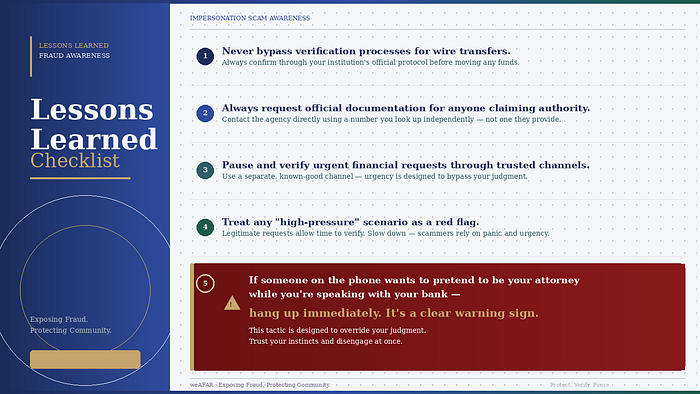
Lessons Learned Checklist:
- Never bypass verification processes for wire transfers.
- Always request official documentation for anyone claiming authority and contact the agency directly to confirm.
- Pause and verify urgent financial requests through separate, trusted channels.
- Treat any "high-pressure" scenario as a red flag.
- If someone claims to be your attorney while on the phone with your bank, hang up. It's a clear warning sign.
Scam stories like this aren't just cautionary tales. They're public education. Understanding how impersonation tactics work helps everyone stay vigilant and prevent financial loss.

Contact: info@weafar.org 🌐 medium.com/@WeAFAR and weafar.org