
Every new technology brings a bright side and a shadow. Generative AI, the models that write text, create images, and even produce convincing audio, have already changed how we learn, create, and communicate. This post walks through the problem in plain language, explains why it's worrying, and suggests realistic steps students and entry-level professionals can take to help protect themselves and others.
What attackers are doing with generative AI.
Generative AI amplifies what a human attacker can do. Instead of dozens of handcrafted phishing emails or manually edited voice clips, an attacker can scale and automate at a very different speed:
- Hyper-personalized phishing and social engineering. AI can draft messages tailored to a victim's social media, recent activities, or workplace tone, making scams look far more believable.
- Deepfake audio and video. Voice and face synthesis let criminals impersonate managers, family members, or public figures to coax victims into transferring money or revealing secrets.
- Automated credential stuffing and scam scripts. AI can generate many variations of scam messages and responses, manage chat-based scams at scale, and adapt replies in real time.
- Content pollution and misinformation. Fake articles, reviews, and profiles can be produced en masse to influence opinions, damage reputations, or manipulate markets.
- Tooling for less-skilled attackers. Complex attacks that once required specialist skills can be executed more easily with AI-assisted tooling or step-by-step guidance embedded in models
I'm deliberately keeping this high level, no step-by-step. The point is that the attacker's reach and believability have both grown.

Why is this especially dangerous
A few reasons make AI-assisted cybercrime more troubling than older scams:
- Scale without proportional effort. A single attacker can generate thousands of plausible messages or fake profiles in minutes.
- Believability. When an email or voice message "sounds" like someone you trust, your guard drops. AI has closed the gap between the real and the fake.
- Speed of adaptation. Attackers can quickly test what works (A/B testing), then rapidly iterate.
- Lower barrier to entry. People with minimal technical skill can now run sophisticated social-engineering campaigns.
- Erosion of trust. As deepfakes and AI-generated texts spread, it becomes harder to trust digital communication, hurting journalism, business, and personal relationships.
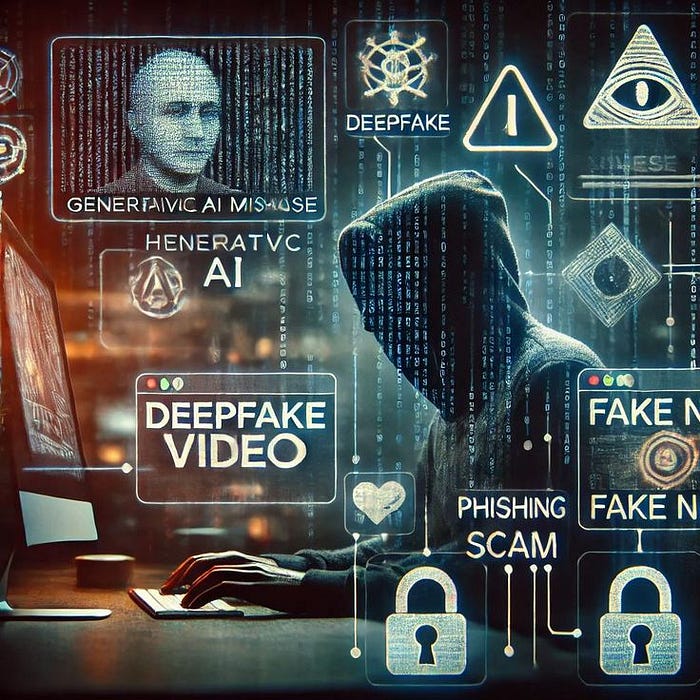
Realistic scenarios (what could happen)
These are short, believable situations you might read about in the news:
- A finance clerk receives a WhatsApp voice note from someone "sounding" like the CFO, urgently requesting that a vendor payment be released. The voice is convincing; the clerk pays.
- A job applicant is turned away after fake negative reviews and a manufactured "news article" about them circulate online.
- A student receives an email that perfectly mimics university staff style, asking to verify credentials on a fake portal. The student loses access to their account and personal data.
Again: these examples show impact and risk, not how to commit harm.
Why defenders are struggling
Defenders security teams, educators, and platform operators face hard problems:
- Detection arms race. As detection improves, generative tools get better at evading simple filters.
- Attribution is harder. Identifying who produced a deepfake or fake account is nontrivial.
- Policy and legal lag. Laws and platform policies are trying to catch up, but technology moves faster than regulation.
- Resource imbalance. Large criminal groups and nation-state actors have access to computing and data that small organizations don't.
What students and early professionals can do (practical, safe, and ethical)
As a student, you can't solve everything, but you can reduce risk and build useful habits:
- Verify before you act. If a message asks for money or credentials, verify through a separate channel (call the person's known number, check official portals).
- Harden personal accounts. Use unique passwords, enable MFA, and treat unexpected login attempts seriously.
- Teach others. Share short, easy tips with family and classmates. Many victims are not tech-savvy.
- Practice skepticism with the media. Check multiple trustworthy sources before sharing shocking posts or videos.
- Learn detection basics (ethically). Understanding metadata, simple forensic cues, and how platforms label synthetic media helps in analysis and honest research.
- Follow ethics. If you experiment with generative AI for learning, never use it to impersonate people, steal data, or create content that harms others.
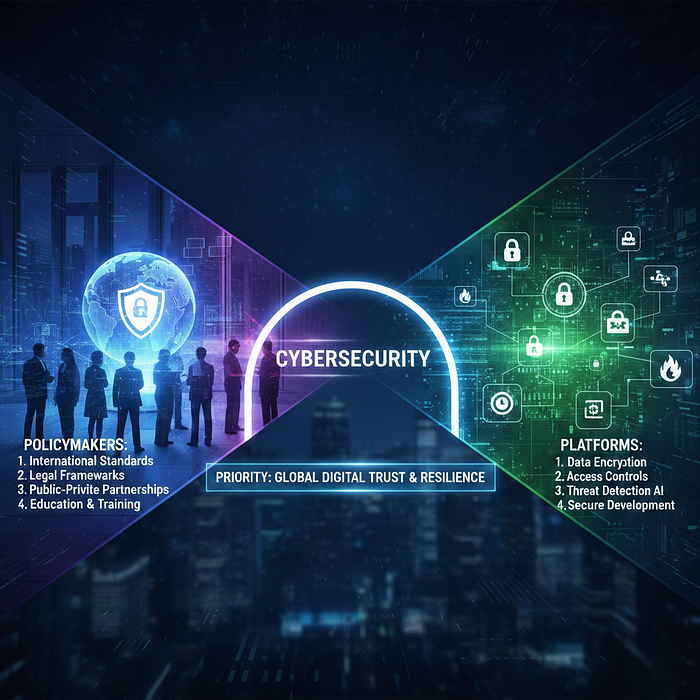
What policymakers and platforms should prioritize
A few non-technical priorities that would help the whole ecosystem:
- Stronger authentication norms for high-risk operations (bank transfers, payroll).
- Transparency for synthetic media, like clear labeling, without relying solely on watermarks that can be removed.
- Education campaigns that teach citizens how to spot and report deepfakes and AI-assisted scams.
- Support for defenders, including public resources and research into robust detection.
Final thought, responsibility and opportunity
Generative AI is not good or evil. It is a powerful tool that reflects human intention. In the right hands, it drives innovation and strengthens security. In the wrong hands, it increases deception and cybercrime.
Cybercriminals are already using generative AI to automate phishing, create deepfakes, and develop malicious code faster than ever. The barrier to entry is lower, and attacks are becoming more scalable and convincing. This is the reality we must accept.
But the same technology can also empower defenders. Generative AI can analyze threats, detect unusual behavior improve security awareness, and respond to incidents in real time. It can help us move from reacting to attacks toward predicting and preventing them.
As a Computer Science student specializing in cybersecurity and cloud technologies, I view the rise of Generative AI not just as an academic topic but as a critical security challenge that demands technical depth, strategic thinking, and ethical responsibility. This is not simply about understanding how AI works but about understanding how it reshapes the threat landscape and how defensive architectures must evolve in response. Systems must be designed with security by default and with the assumption that users will be targeted.
The future of cybersecurity will depend on how we choose to use this technology. The tools are powerful. The responsibility is ours.
Stay safe, folks. Feel free to connect with me on LinkedIn for more discussions on technology and cybersecurity www.linkedin.com/in/abdullah1432