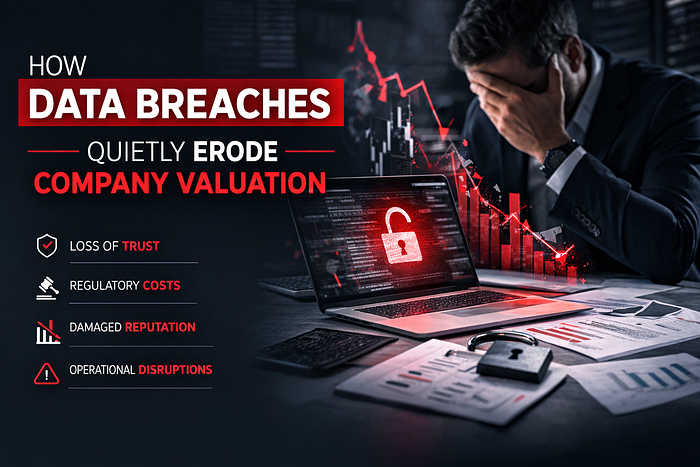

In today's digital economy, a company's value is influenced by far more than revenue, assets, and market share. Investors and stakeholders increasingly evaluate organizations based on reputation, customer trust, and operational stability.
When a data breach occurs, the immediate consequences — such as stolen data, service disruptions, or regulatory alerts — often dominate the headlines. However, the most significant damage usually develops over time. Beyond the technical recovery process, breaches can gradually weaken customer confidence, damage market reputation, and reduce a company's long-term valuation.
For businesses, understanding how cyber incidents affect financial performance and corporate value is essential for protecting both digital assets and long-term stability.
Immediate Market Reaction
Publicly traded companies frequently experience a rapid drop in share price when a data breach becomes public. Investors tend to react quickly to cybersecurity incidents because they signal potential operational vulnerabilities and financial risks.
A breach can introduce several concerns for shareholders. These may include the costs of forensic investigations, legal claims, regulatory penalties, and the financial resources required to restore compromised systems. In many cases, organizations must also invest heavily in security improvements to prevent future incidents.
Even if some companies eventually recover from the initial decline in stock value, the effects can persist over time. Investors may reassess the company's risk profile, which can influence future investment decisions and slow valuation growth.
Loss of Customer Trust and Brand Reputation
Customer trust is one of the most valuable assets an organization can possess. When sensitive information — such as personal details, payment data, or confidential business records — is exposed during a breach, rebuilding that trust can be extremely difficult.
Consumers are becoming more aware of how organizations collect and protect their data. As a result, many choose to stop doing business with companies that fail to safeguard personal information. Even long-standing customers may reconsider their relationship with a brand if they believe their data security has been compromised.
Reputational damage from a breach can also extend beyond existing customers. Potential clients, business partners, and investors may perceive the organization as a higher risk, which can limit future growth opportunities and partnerships.
Increasing Regulatory and Legal Costs
Another factor that can gradually reduce company valuation is the growing financial burden associated with regulatory compliance and legal exposure. Governments around the world have introduced strict data protection regulations that require organizations to protect sensitive and personal information.
If a breach occurs, companies may face regulatory investigations, mandatory reporting obligations, and significant financial penalties. In some situations, affected customers or business partners may pursue legal action, further increasing costs.
Beyond fines and settlements, organizations often need to strengthen compliance frameworks, hire cybersecurity specialists, and upgrade technology infrastructure. These additional expenses can significantly impact profit margins and long-term financial planning.
Operational Disruption and Long-Term Recovery
A cyber incident rarely ends when systems are restored. Breaches can disrupt internal operations, delay projects, and reduce productivity for weeks or even months.
IT teams must devote considerable time and resources to forensic investigations, rebuilding systems, and implementing stronger security measures. During this period, other strategic initiatives may be postponed, which can slow innovation and business development.
In some cases, organizations may also lose valuable intellectual property or proprietary data. Such losses can weaken competitive advantage, making it harder to maintain growth and investor confidence in the long run.
Conclusion
Although data breaches are often viewed as short-term crises, their true impact may take much longer to become visible. Declining investor confidence, reputational damage, regulatory penalties, and operational disruption can gradually reduce a company's overall valuation.
For modern organizations, cybersecurity is no longer just an IT responsibility — it is a critical component of business resilience and financial stability.
To safeguard your business from emerging cyber threats, partner with Digital Defense — your trusted cybersecurity expert. Strengthening your cybersecurity posture today can help protect your reputation, maintain stakeholder trust, and preserve long-term business value.