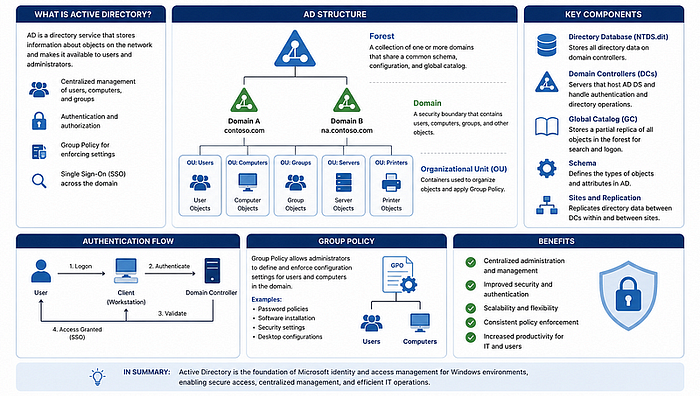

Active Directory (AD) is a database and set of services that connects users with the network resources they need to get their work done. It allows a company to manage all its Users, Computers, Passwords, Permissions, Policies, and Authentication from a single centralized place.
Why Active Directory?
By compromising a single device, an attacker can potentially control the entire network.
Active Directory is organized in a group-based structure for easy management and organization. Active Directory is very important — through groups and subgroups, you can gain access to the organization's data and resources based on the assigned permissions.
Active Directory allows authorized administrators to manage and access organizational resources such as files, employee accounts, permissions, and system activities. Through it, admins can monitor employees' access, roles, and system status, and centrally control many parts of the organization's network infrastructure.
Active Directory Structure
Active Directory keeps everything in a company's network neat and organized in a step-by-step structure.
Forest └── Tree └── Domain ├── Organizational Units (OUs) │ ├── Users │ ├── Groups │ └── Computers ├── Group Policies (GPOs) └── Domain Controllers
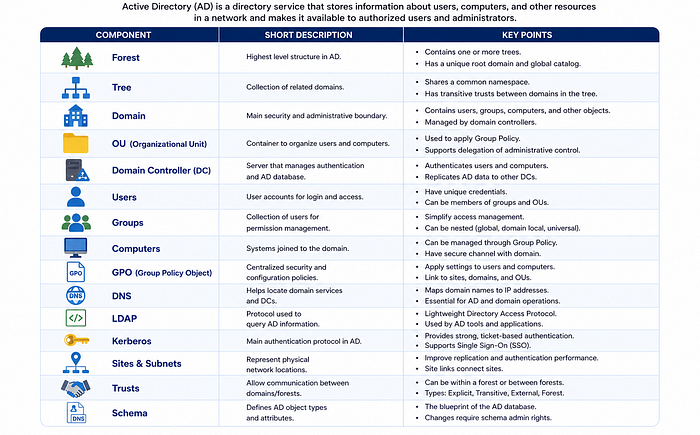
Key Components of Active Directory
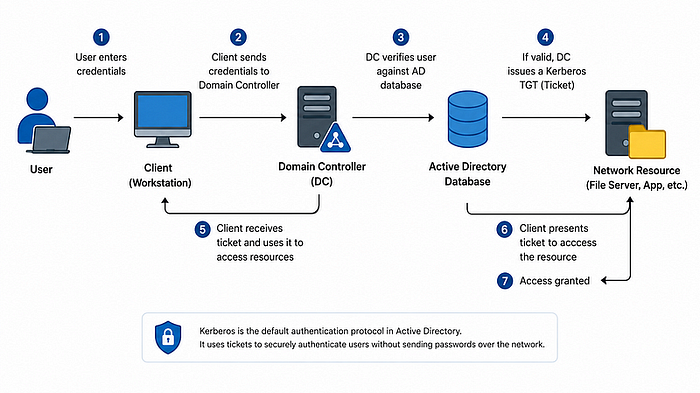
Active Directory Authentication Flow
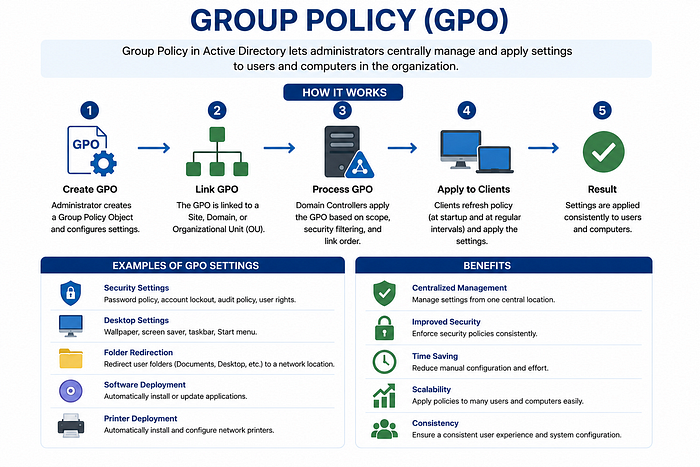
Active Directory Group Policy (GPO)
Benefits of Active Directory
Centralized Management Manage all users, computers, and resources from a single place.
Better Security Enforce password policies, account lockouts, and access controls across the network.
Single Sign-On (SSO) Users log in once and get access to all authorized resources without logging in again.
Easy Permission Control Assign and manage permissions for users and groups quickly and efficiently.
Automation Automate repetitive tasks like user creation, group assignments, and policy enforcement.
Auditing & Monitoring Track user activities, login attempts, and system changes for security and compliance.
Scalability Easily expand and manage a growing number of users, computers, and resources.