June 2, 2026
Smartphone Malware and Encryption
Understand the risks of mobile malware and discover why smartphone encryption is essential

Jibriel Jeelani
5 min read
Originally written in 2018, now republished on Medium.
Smartphone Malware
Smartphone malware is a thing. Millions of smartphones have been found to be infected by malicious programs called malware. The average smartphone user is hardly aware of smartphone malware. It is a common practice that smartphone users are more concerned about the physical safety of the phone than a serious threat of a malware attack.
Smartphones are the most common targets of mobile malware and therefore, it is high time that smartphone users are educated about mobile malware programs and how to prevent the malware from attacking their smartphones.
A malware infected smartphone can cause a lot of problems for the user. Malware can slow down a phone's performance, impact the phone's data usage, intercept messages and monitor calls, steal phone contacts, track user's location and movement, record browsing history, and more. Cyber criminals or hackers even use malware programs to spy target individuals.
When a phone is compromised, hackers can access all the sensitive information on the phone including the passwords, emails, messages, personal pictures, etc. Some malware programs even record and monitor online banking transactions of the user. Malware programs like ransomware lock files or even the device demanding user to pay money to allow access to device and files. Overall a malware can cause some serious threat to privacy and security of a user.
It is found that Android based smartphones are more affected by malware than Apple smartphones. Usually, a malware finds its way into the smartphone through third-party apps installed from the app store. According to an older report, Android based smartphones of 39 brands were detected to have malware pre-installed on them. These included some high-end smartphones of popular smartphone manufacturing companies. It is believed that malware was injected into the devices somewhere in the supply chain.
Some abnormal signs and symptoms on the phone can help a user detect presence of malware on the smartphone. Some of these signs are mentioned below.
Unusually Bad Battery Life. When a user does not perform many battery draining activities on the phone but still phone battery drains out faster than usual and on a regular basis, indicates an unusual behavior. This unusual behavior of the battery is because of certain processes of the malware running in the background that drain out the battery.
Clogged Performance of the Phone. A malware infection may cause various performance issues which disrupt normal working of the phone. Hidden malware processes running in the background consume too much RAM or CPU load to let the phone and the apps function in a proper manner. This may even result in freezing of applications and the phone, due to which a user often has to hard reboot the phone. Clogged performance of the phone is a possible sign that a malware is present on the device.
Abnormal Data Usage. Some malware programs that steal the data from your phone to unknown servers can be detected by observing the phone's data usage, upload and download patterns. Some smartphones also display data usage by apps, if the data is being used by some suspicious apps, it could be a sign that something is not normal with the phone.
Malware scans. A user can also detect a malware by scanning the phone using malware detection apps.
When a user finally detects the presence of malware, it is important to remove the malware and clean up the phone. Here are a few things that can help a user remove malware from the phone. When a user has detected and identified the malware app on the phone, the first and foremost thing that needs to be done is delete the app or do a factory reset to clean up the phone's memory if the malware infection has spread across the phone. In some cases when the malware is highly malicious and even the factory reset doesn't help, the user needs to get the firmware of the phone re-installed. Firmware re-installation of the phone is done through a complex process called flashing which should be done only by authorized mobile technicians.
While malware shows us how vulnerable smartphones can be, encryption offers one of the strongest ways to protect the personal data stored and shared through them.
What is smartphone encryption?
Smartphone encryption is a process of making your smartphone secure, and protecting its data and information from any unauthorized access.
To enhance mobile security there are two main kinds of encryption that a smartphone can have to prevent unauthorized access to private information: one is aimed at securing the 'data at rest', and second secures the 'data in motion'.
Securing or protecting the 'data at rest' usually a smartphone device is encrypted. An encrypted smartphone typically has a key or a passphrase to allow access to the phone, protecting information stored on the mobile device: photos, text messages, email communication, call information, access to social profiles and private data, documents, etc.
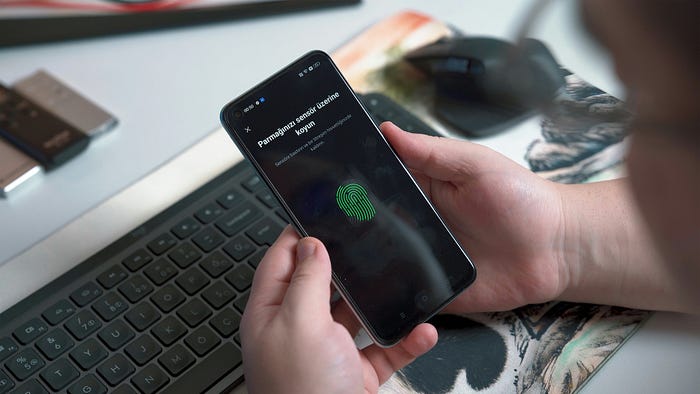
When a device is encrypted it stores the information in an unreadable scrambled format. The information is unlocked only with an authorized key with the device owner. Typically a smartphone key is an alphanumeric passcode or a passphrase comprising of a combination of letters, numbers and/or special symbols. Some high-end and latest smartphones models also use fingerprint authentication to unlock the encrypted device.
To secure the 'data in motion' just having the mobile device encrypted is not enough, the information transferred from one device to another (communication) can be secured through a process called as end-to-end encryption. End-to-end encryption ensures that data or information is accessible and readable only to the person it is intended for. Data is encrypted from the device when it is sent and decrypted only on the authorized recipient's device. No third parties in middle, communication carriers, unauthorized persons, or agencies will be able to access to the information.
How important is smartphone encryption?
There is an old proverb which says, "a man's home is his castle", but in today's age it would not be wrong to say, "a man's smartphone is his castle"! A smartphone is the closest thing a person can have in today's world, and it remains with you all the time like your shadow. It is rightly said that a smartphone is even closer to you than your best friend since your smartphone has more information about you than your best friend can ever have. On your smartphone there is a list of your contacts, your call records, your private messages and conversations with your friends, family and colleagues, your banking and financial information, your passwords, private and personal photos, videos, business documents, etc. Protecting this information and preventing it from falling into wrong hands is crucial, and the only way to that is through encryption.
In today's golden age of technology, almost anyone can spy one anyone. Thus, encryption is not an option but crucial.
In today's golden age of technology when two people on the opposite ends of the planet can have a conversation in the real-time, it also allows almost anyone to spy on anyone. It is true that technology has enabled convenience of communication but with that it also has enabled a convenience of surveillance. The only way from preventing your communication from being hacked or snooped into is to enable end-to-end encryption in your communications. End-to-end encryption ensure only the recipient is able to decrypt the message sent by the sender.
What can be encrypted on smartphones?
Encryption on your smartphone can be applied to multiple aspects of the phone if done by experts.
While most encrypted smartphones only encrypt the data stored in the phone which includes photos, saved text messages, documents, etc. Whereas there are few encrypted smartphones which apart from encrypting the stored data on the phone, can also encrypt the phone's communication features like messaging, emails, voice encryption, etc.
With a good cryptophone or an encrypted smartphone, a user can be benefited with encrypted voice calls, secure phone calls, encrypted messaging, encrypted email communication, encrypted Internet browsing, and more.
(This article was originally written by the author in 2017–18, and was first published on the official website of a Dubai-based cybersecurity startup.)