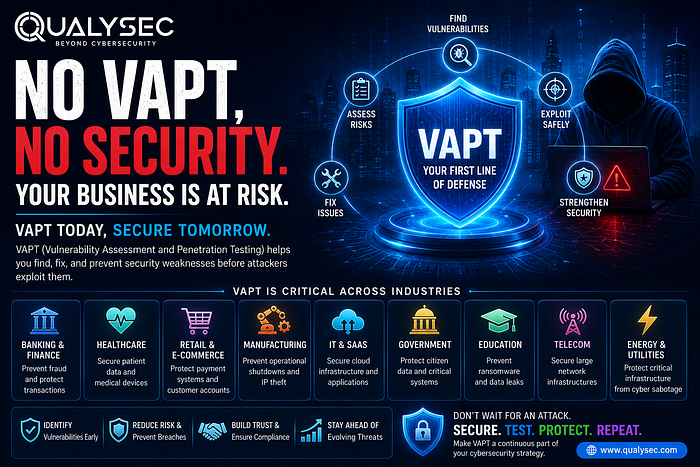

VAPT (Vulnerability Assessment and Penetration Testing) is important in nearly every industry because almost every organization now depends on digital systems, data, networks, cloud platforms, or connected devices. A security weakness in any of these can lead to financial loss, operational disruption, legal penalties, or reputational damage.
Here's why VAPT matters across industries:
1. Identifies Security Weaknesses Before Attackers Do
VAPT helps organizations discover:
- Misconfigured servers
- Weak passwords
- Unpatched software
- Vulnerable APIs
- Network loopholes
- Application security flaws
Instead of waiting for a real cyberattack, companies proactively find and fix issues.
2. Protects Sensitive Data
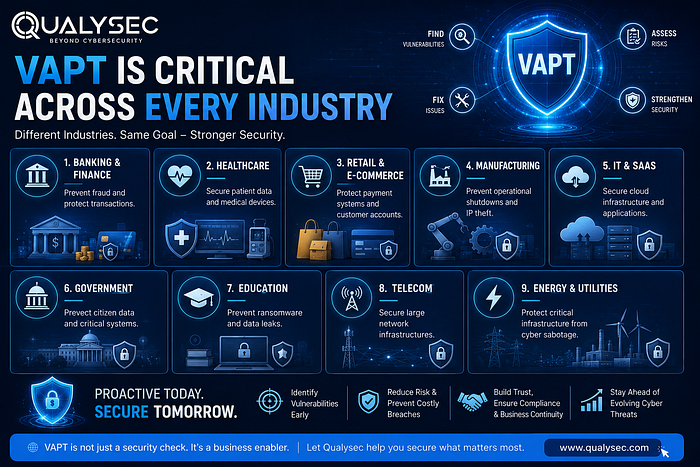
Different industries handle critical information:
- Banks → financial data
- Hospitals → patient records
- Retail → customer payment data
- Manufacturing → intellectual property
- Government → citizen and national data
A breach can expose confidential information and create serious legal and financial consequences.
3. Reduces Financial Loss
Cyberattacks can cause:
- Ransomware payments
- Downtime
- Fraud
- Recovery costs
- Loss of customers
VAPT helps reduce these risks by strengthening defenses before incidents occur.
4. Supports Compliance Requirements
Many regulations require regular security testing:
- PCI-DSS for payment systems
- HIPAA for healthcare
- GDPR for data privacy
- ISO 27001 security standards
Organizations often need VAPT reports during audits or certifications.
5. Improves Customer Trust
Customers expect their data to be secure. Regular VAPT demonstrates that a company takes cybersecurity seriously, which helps build confidence and brand reputation.
6. Prevents Operational Disruption
Industries such as manufacturing, telecom, healthcare, transportation, and energy rely on continuous operations. A cyberattack can stop production lines, disrupt services, or affect critical infrastructure.
VAPT helps identify weaknesses that could interrupt business operations.
7. Adapts to Evolving Threats
Cyber threats constantly change:
- AI-driven attacks
- Phishing
- Zero-day exploits
- Cloud misconfigurations
- IoT attacks
Regular VAPT ensures security controls remain effective against modern threats.
Industry-Specific Importance
Difference Between VA and PT
- Vulnerability Assessment (VA) → Finds and lists vulnerabilities.
- Penetration Testing (PT) → Simulates real attacks to test exploitability and impact.
Together, they provide both visibility and real-world security validation.
If an organization does not perform VAPT, several serious problems can happen over time — sometimes without any warning.
Possible Consequences of Skipping VAPT
1. Cyberattacks Become Easier
Hackers continuously scan systems for:
- weak passwords,
- outdated software,
- exposed servers,
- insecure APIs,
- and network vulnerabilities.
Without VAPT, these weaknesses remain open for attackers to exploit.
2. Data Breaches
Sensitive information may get stolen:
- customer records,
- banking details,
- employee information,
- medical records,
- intellectual property.
This can lead to lawsuits, penalties, and loss of trust.
3. Financial Loss
A single attack can cost:
- ransom payments,
- recovery expenses,
- downtime losses,
- legal costs,
- customer compensation.
For many small businesses, one major cyber incident can severely impact operations.
4. Business Downtime
Ransomware or system compromise can shut down:
- websites,
- payment systems,
- production lines,
- hospital systems,
- cloud services.
This affects productivity and revenue.
5. Compliance Violations
Industries that ignore security testing may fail audits or violate regulations, such as:
- PCI-DSS,
- GDPR,
- HIPAA,
- ISO standards.
This can result in fines or restrictions.
6. Reputation Damage
Customers may stop trusting a company after a breach. News of cyber incidents spreads quickly, especially for:
- banks,
- e-commerce companies,
- healthcare providers,
- SaaS businesses.
Reputation recovery can take years.
7. Hidden Vulnerabilities Keep Growing
Technology changes constantly:
- new software updates,
- cloud migrations,
- employee devices,
- third-party integrations.
Without regular VAPT, old and new vulnerabilities accumulate unnoticed.
Real-World Examples
Major cyber incidents often happened because organizations missed basic security testing:
- exposed databases,
- unpatched servers,
- insecure remote access,
- vulnerable web applications.
Many attacks could have been prevented through regular VAPT.
Simple Analogy
VAPT is like a regular health checkup for an organization's digital systems.
- Doing VAPT → finding and fixing problems early.
- Ignoring VAPT → problems stay hidden until they become emergencies.
Bottom Line
VAPT is no longer optional for modern organizations. As industries become more digital and interconnected, regular security testing is essential to:
- reduce cyber risk,
- maintain compliance,
- protect data,
- ensure business continuity,
- and preserve customer trust.