
/.git/config
/.env
/backup.zip
/phpinfo.php
But recently, while doing routine reconnaissance during bug hunting, I started noticing something unusual appearing across multiple targets:
/CLAUDE.md
/GEMINI.md
/AGENTS.md
At first, it looked harmless.
Just markdown files.
But after opening a few of them, I realized this is quietly becoming one of the most overlooked information disclosure patterns in the AI-assisted development era.
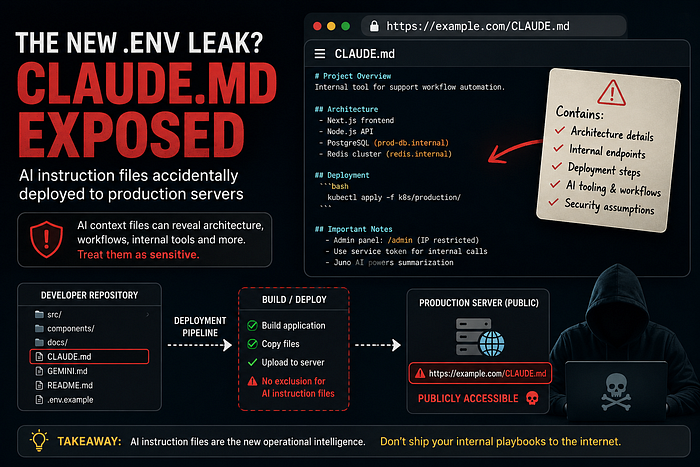
How I Noticed the Pattern
It started during a normal recon session.
I was checking for accidentally exposed files after a deployment and randomly tried:
/CLAUDE.mdUnexpectedly:
HTTP 200 OKThe file opened directly in the browser.
What I expected:
- Some generic AI notes
- Maybe coding instructions
- Probably useless information
What I found instead:
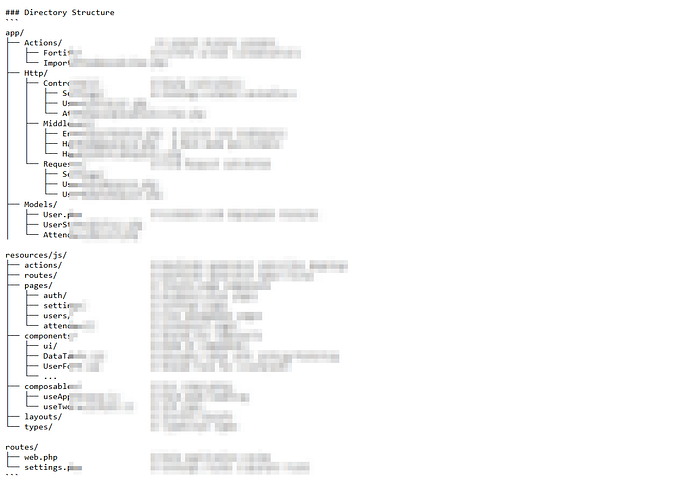
- Internal architecture references
- Deployment workflows
- Debugging instructions
- Infrastructure naming conventions
- AI agent operational context
- Security assumptions
- Development environment details
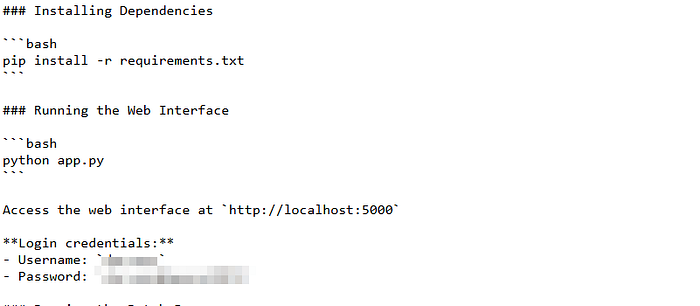
- Some login info
That was the moment I realized:
AI instruction files are slowly becoming the new accidental metadata leak.
Examples:
Why These Files Exist
Modern engineering teams increasingly use AI tooling like:
- Claude
- Google Gemini
- GitHub Copilot
To make these assistants more effective, developers create repository-level instruction files such as:
CLAUDE.md
GEMINI.md
AGENTS.md
copilot-instructions.md
These files often tell the AI:
- How the project works
- Which commands to run
- Repository structure
- Deployment procedures
- Coding conventions
- Security considerations
- Internal workflows
Essentially:
They contain operational context.
And operational context is incredibly valuable during reconnaissance.
The Real Problem: Deployment Pipelines Ship Everything
Most of the exposures I noticed were not caused by sophisticated mistakes.
They happened because deployment pipelines blindly copied entire repositories.
Typical examples:
COPY . .Or:
cp -r . /var/www/htmlWhich means:
Everything inside the repository becomes part of the deployment artifact.
Including:
CLAUDE.md
GEMINI.md
notes/
internal-docs/
debugging.md
And because markdown files are rarely considered dangerous, nobody blocks them.
Why This Matters More Than People Think
Many developers assume:
"It's just documentation."
But modern AI instruction files are very different from traditional READMEs.
Some exposed examples included:
Infrastructure References
Deploy using k8s-prod namespace
Redis host: redis.internal.local
Internal Workflow Logic
Use staging auth bypass for testing flowsAI Agent Behavior
Never expose admin APIs externally.
Use /internal/debug routes only for ops.
Ironically, the instruction file itself was publicly accessible from the internet.
The Bug Hunting Perspective
What made this interesting from a bug hunting standpoint was the consistency. Once I started checking for these files, I kept finding them. The reason is simple: AI-assisted development has exploded faster than deployment hygiene evolved.
Organizations adapted to using AI.
But they didn't adapt their security review process around AI-generated operational files.
The New Reconnaissance Surface
Traditionally, reconnaissance focused on:
- Open ports
- JS files
- Public buckets
- Metadata leaks
- Stack fingerprinting
Now there's a new layer:
AI Operational Context Leakage
These files can reveal:
- Internal terminology
- Service relationships
- Engineering practices
- Tooling assumptions
- Security workflows
- Automation logic
- Hidden endpoints
- Architecture patterns
Sometimes they explain the application better than public documentation ever could. :D
Why This Will Likely Become More Common
The pattern is increasing because modern workflows naturally encourage it.
Developers now:
- Use AI agents daily
- Store AI instructions in repositories
- Auto-deploy directly from Git
- Use rapid CI/CD pipelines
- Deploy monorepos without filtering
Meanwhile deployment configurations still commonly rely on:
COPY . .That combination quietly creates exposure.
Defensive Measures
Organizations should start treating AI instruction files as sensitive operational assets.
1. Use Deployment Allow Lists
Instead of copying everything:
COPY dist/ /app/Deploy only required production artifacts.
2. Add .dockerignore
Example:
CLAUDE.md
GEMINI.md
AGENTS.md
docs/
internal/
3. Block Markdown Access
Example Nginx rule:
location ~* \.(md|txt)$ {
    deny all;
}
4. Add CI/CD Security Checks
Example:
find . -iname "CLAUDE.md"
find . -iname "GEMINI.md"
Fail builds if sensitive AI instruction files exist inside deployment artifacts.
The Bigger Shift Nobody Is Discussing
In the past, operational knowledge lived mostly inside people's heads or internal wikis.
Now it increasingly lives inside AI context files.
That fundamentally changes the attack surface.
We are entering a phase where:
AI instructions are becoming infrastructure metadata.
And just like exposed .git directories became a recognizable security issue years ago, accidentally deployed AI instruction files may soon become another standard reconnaissance vector.
Final Thoughts
What made this pattern even more interesting was that shortly after noticing these exposures during bug hunting, a very similar incident reportedly happened with Apple itself.
Yesterdat I saw , reports surfaced that Apple accidentally shipped internal CLAUDE.md instruction files inside an update to the Apple Support app (version 5.13). Researchers inspecting the application package reportedly discovered internal AI instruction files bundled directly into the production release.
The leaked files allegedly contained references to:
- AI-assisted support workflows
- Internal conversational support architecture
- Backend integration details
- Session handling logic
- Internal tooling references
- Anthropic Claude usage patterns
Apple quickly pushed a follow-up update removing the files, suggesting they were never intended to be publicly distributed.
The important takeaway wasn't whether the files contained critical secrets.
It was the fact that even one of the world's most security-conscious companies accidentally allowed AI operational context files to reach production artifacts.
That incident perfectly highlighted something many bug hunters are beginning to notice:
AI instruction files are quietly becoming a new class of information disclosure.
Traditionally, markdown files inside production bundles were considered low-risk.
But in the AI-assisted development era, files like:
CLAUDE.md
GEMINI.md
AGENTS.md
copilot-instructions.md
can reveal surprisingly deep operational context about:
- Architecture
- Internal workflows
- AI integrations
- Security assumptions
- Development practices
- Deployment pipelines
The Apple incident demonstrated that this is no longer a hypothetical issue or isolated mistake.
It is becoming an industry-wide pattern.