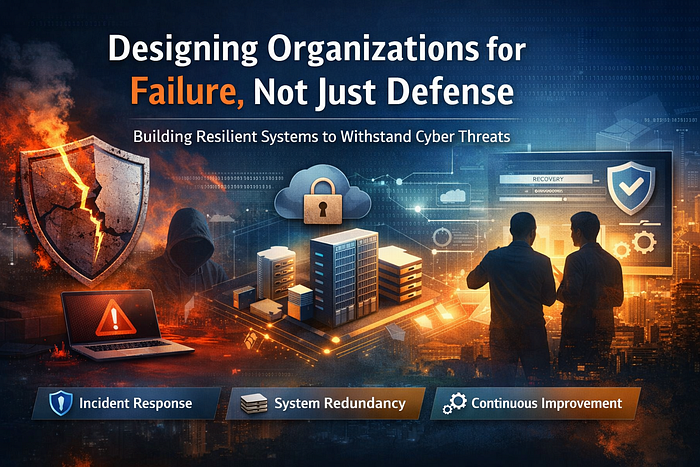

For a long time, organizations viewed cybersecurity as a simple objective: keep hackers out. Firewalls, endpoint protection, and access controls were all built around prevention. However, the reality is far more complex. No matter how strong your defenses are, breaches can and do happen.
The real question is no longer if an attack will occur, but what happens next. Organizations that focus only on defense often struggle to respond effectively when systems fail. This is why forward-thinking businesses are shifting their approach — designing systems that can handle failure and continue operating without major disruption.
Why Prevention Alone Is No Longer Enough
Traditional cybersecurity strategies are based on the assumption that threats can be completely blocked. While preventive measures remain essential, they are not foolproof. Attackers constantly evolve their tactics, exploiting new vulnerabilities, misconfigurations, and human errors.
Even highly secure environments can be compromised through phishing attacks or insider threats. When organizations rely solely on prevention, a single point of failure can lead to widespread disruption.
Designing for failure acknowledges this reality. Instead of assuming breaches can be avoided entirely, it focuses on minimizing their impact and ensuring business continuity.
Building Resilient Systems
Resilience is the ability of an organization to continue operating during and after a cyber incident. Achieving this requires more than just deploying security tools — it demands thoughtful system design.
Key elements of resilient systems include:
- Segmentation: Dividing networks and systems to limit an attacker's ability to move laterally
- Redundancy: Maintaining backup systems and processes to ensure continuity if primary systems fail
- Fail-safe mechanisms: Ensuring systems default to a secure state during unexpected disruptions
By integrating these principles, organizations can contain threats and prevent them from escalating into major incidents.
The Importance of Incident Response Planning
Having a well-defined incident response plan is critical when designing for failure. Without clear procedures, even minor issues can escalate quickly.
An effective incident response strategy includes:
- Clearly defined roles and responsibilities
- Real-time monitoring and alerting systems
- Regular testing through simulations and drills
Organizations that actively test and refine their response plans are better equipped to act quickly, reduce downtime, and protect sensitive data while maintaining customer trust.
Creating a Culture of Continuous Improvement
Designing for failure is not a one-time effort. Cyber threats evolve rapidly, making continuous improvement essential.
Organizations should:
- Conduct regular security assessments and penetration testing
- Learn from past incidents and near misses
- Update policies and technologies to address emerging risks
A culture that prioritizes learning and adaptation ensures that security strategies remain effective over time.
From Defense to Resilience
The shift from pure defense to resilience represents a fundamental change in cybersecurity thinking. Instead of building rigid systems designed to block every threat, organizations are creating flexible environments that can adapt and recover under pressure.
This approach not only strengthens security but also improves overall operational stability. Systems designed to handle failure are inherently more reliable, even during unexpected disruptions.
Conclusion
In today's evolving threat landscape, prevention alone is not enough. Organizations must assume that failures can occur and design systems capable of withstanding and recovering from them. By focusing on resilience, incident response, and continuous improvement, businesses can significantly reduce the impact of cyber incidents.
To safeguard your business from emerging cyber threats, partner with Digital Defense — your trusted cybersecurity expert.