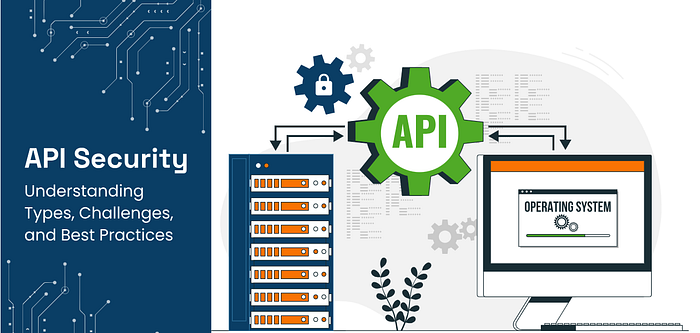

When I first began learning about API security, my understanding was narrow and overly optimistic. I believed that once an endpoint required authentication, such as an API key or token, it could be considered secure. If unauthorised users cannot access it, then the system must be protected. This assumption did not survive long.
As my learning deepened, I realised that authentication is only one control in a much larger security architecture. An API can require valid credentials and still be dangerously exposed through weak error handling, misconfigured headers, excessive privileges, unlimited request volumes, or poor monitoring. Security is not a single feature. It is an ecosystem of decisions that shape how systems behave under stress, misuse, and attack.
This shift in perspective fundamentally changed how I think about building software systems.
How My Understanding of API Security Evolved
My early mental model of API security was linear. A client sends a request. The server checks a token. Access is either granted or denied. Over time, I learnt that API security is layered and contextual. Each layer introduces both protection and potential failure points.
Server-level security revealed how much information APIs expose unintentionally. Response headers, CORS policies, and error messages communicate internal system behaviour. A poorly configured API might reveal stack traces, database errors, or framework versions. These details seem harmless during development, but provide attackers with reconnaissance data in production environments.
API gateways introduced another dimension. They showed me that APIs should rarely be exposed directly to the internet. Gateways enforce authentication, validate request structure, apply rate limits, and log traffic consistently. They form a defensive perimeter that backend services rely on. Without them, every service becomes responsible for its own protection, which leads to inconsistency and complexity.
Compliance frameworks such as PCI DSS and healthcare security standards further reshaped my thinking. They demonstrate that security is not only a technical concern but also a governance and accountability issue. APIs that process financial or personal data must meet defined expectations for encryption, access control, and monitoring. These requirements influence system architecture from the beginning rather than being added later.
Connected systems expanded the scope even further. APIs no longer just manage data. They control devices, vehicles, and medical equipment. In these environments, failures in API security can cause physical harm. This made it clear that API security is no longer abstract. It directly affects human safety.
Through this learning process, I began to see APIs as trust boundaries rather than simple interfaces.
Security as a Software Engineering Discipline
One of the most important lessons I learnt is that security is not separate from software engineering. It is software engineering.
Design choices determine security outcomes. Decisions about error handling, request validation, logging, and access control shape how resilient a system is to abuse. A well-designed API defines clear contracts, limits behaviour, and enforces boundaries. A poorly designed API leaves room for ambiguity and exploitation.
This also changed my view of development speed. I once believed that security slowed progress. I now see that security simplifies systems by reducing unpredictability. Clear authentication rules, strict permissions, and controlled traffic patterns make behaviour easier to reason about. They reduce chaos rather than create it.
Secure systems are not just harder to attack. They are easier to maintain.
A Changed Assumption: From Protection to Resilience
My original assumption was that security existed to prevent attacks entirely. That view was unrealistic. Modern systems operate in hostile environments. APIs are scanned continuously by bots and automated tools. Attack attempts are not rare events. They are constant.
The more realistic goal is resilience. Systems should expect misuse and respond safely. They should fail in controlled ways rather than exposing internal logic or collapsing under load. They should reveal as little as possible about how they work internally.
This is where concepts such as rate limiting, generic error messages, and strict permission scopes become critical. These controls do not just block attackers. They reduce the impact of inevitable mistakes.
A Principle I Now Hold: Design APIs as If They Will Be Attacked
The strongest principle I now hold is that APIs must be designed as if they will be attacked.
This does not imply pessimism. It implies engineering maturity. It means assuming that tokens will leak, that inputs will be malformed, and that traffic patterns will be abused. Good API design anticipates these scenarios and constrains them.
Practically, this principle leads to specific behaviours. APIs should limit how much any one client can do. They should validate every request. They should avoid exposing internal system details. They should log activity in ways that support investigation and accountability.
This mindset transforms security from an afterthought into a design constraint.
Explaining API Security in Human Terms
For non-security professionals, API security can be understood using a physical analogy.
APIs are like doors and corridors in a building. Authentication is the lock on the door, but security also includes lighting, surveillance, visitor logs, and restricted access to sensitive rooms. A building is not secure just because it has locks. It is secure because it controls movement, visibility, and accountability.
Similarly, APIs must manage who enters, what they can do, how often they can do it, and how their actions are recorded.
This analogy helped me communicate security concepts to non-technical stakeholders. Security is not about fear. It is about responsible design.
Reflection: API Security as a Social Responsibility
Learning API security changed how I think about responsibility in technology. APIs connect people, services, and machines. They move money, store medical data, and control physical devices. Their impact extends far beyond code.
Security failures do not only harm systems. They harm trust. When users lose confidence in digital services, the consequences are social and economic, not just technical.
This led me to a broader conclusion. API security is not a specialist concern reserved for security teams. It is a core competency for anyone building systems that interact with the real world.
Software engineering today is not only about functionality. It is about stewardship. Developers are custodians of data, behaviour, and control. API security is one way that responsibility is expressed in practice.
Conclusion
What began as a technical learning exercise became a shift in worldview. I no longer see APIs as neutral pipes between systems. I see them as decision points that determine how trust is enforced.
My clear point of view now is that API security is inseparable from good system design. It belongs alongside performance, usability, and reliability. Security is not only about stopping attacks. It is about preserving trust in a world where digital systems increasingly shape physical and social reality.
In that sense, learning API security was not just about protecting endpoints. It was about learning how to build systems for the real world.