
📖 A Story You've Probably Lived
- You've just been added to a Slack channel with the senior security team.
- Someone drops a message: "Anyone have thoughts on the lateral movement we're seeing via Kerberoasting combined with the DCSync behavior?"
- Three people respond instantly. With confidence. In detail. With tool names you recognize but haven't fully used yet.
- You know what Kerberoasting is. You've read about DCSync. You've done the TryHackMe rooms. But you sit there, hands hovering over the keyboard, thinking:
"I shouldn't say anything. What if I'm wrong? What if they realize I don't actually belong here?"
- So you read along. You say nothing. And afterward you feel like a fraud.
- Here's the thing I'd bet money that at least one of the "confident" people in that chat felt the exact same way about something else that week. Probably something a lot more junior than what they just answered.
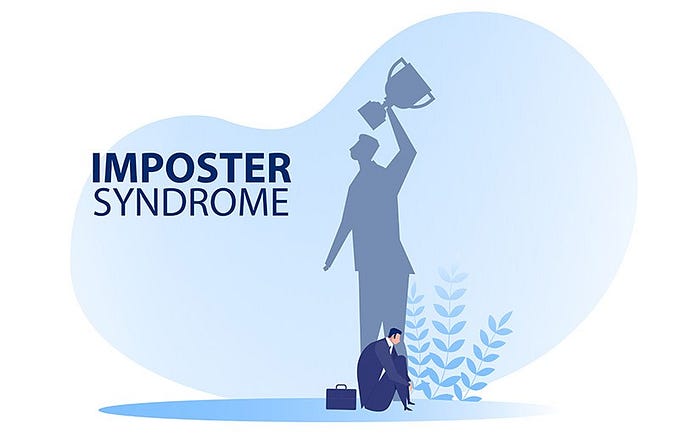
- That's imposter syndrome. And in cybersecurity, it runs deep.
📋 What We're Covering
- 🔍 What imposter syndrome actually is (and isn't)
- 🌊 Why cybersecurity breeds it more than most fields
- 😔 The 5 most common ways it shows up
- 🧩 Why you actually know more than you think
- 🛠️ Practical ways to work through it
- 🚀 How to use it as fuel instead of letting it be a brake
🌊 Why Cybersecurity Breeds It More Than Most Fields
- This isn't just a "you" problem.
- There are structural reasons why cybersecurity is a particularly fertile ground for imposter syndrome.
🏔️ The Field Is Genuinely Vast
Let's be honest about the scope of what "cybersecurity" covers:
Network Security           Cloud Security
Web App Pentesting         Mobile Security
Malware Analysis           Reverse Engineering
Digital Forensics          Threat Intelligence
Incident Response          OT/ICS Security
Cryptography               Red Teaming
Blue Team / SOC            DevSecOps / AppSec
Social Engineering         Physical Security
Compliance / GRC           Security Architecture
Hardware Hacking AI Security- No single human being is an expert in all of these.
- Not one. Not the people you follow on Twitter, not the CISO with 25 years of experience, not the DEF CON speakers.
- But when you're new, you look at this list and think: "I should know all of this." And when you don't, you feel like you're behind.
- You're not behind. The field is just enormous.
🔄 The Knowledge Half-Life Is Short
- A networking certification you earned in 2020 is partially obsolete. A cloud security skill set from 2022 needs updating for 2026.
- The attack techniques evolve. The defensive tools change. The cloud platforms add new services constantly.
- This means even experts feel like they're constantly catching up.
- If you're new and you feel like you can't keep up, welcome to the experience of every security professional regardless of seniority.
- The difference is experienced people have accepted it. They know "keeping up" is a permanent state, not a destination.
🎭 The Community Visibility Problem
- The people you see most on Twitter, YouTube, LinkedIn, and at conferences are not a representative sample of security professionals.
They are:
- ✨ The most confident communicators
- ✨ The people who love being visible
- ✨ Often presenting their best work, not their average day
- ✨ Frequently specialists in a narrow area who sound like generalists
What you don't see:
- 😶 The SOC analyst who's been doing this for 10 years and doesn't post
- 😶 The pentest team member who quietly follows along in meetings
- 😶 The engineer who knows one cloud platform really well and isn't sure about anything else
- 😶 The senior person who quietly Googles things constantly
You're comparing your interior experience to everyone else's exterior performance. It's not a fair comparison.
🏆 Certification Culture Creates a Weird Ladder
Security has a lot of certifications. And the community, while generally supportive, has some gatekeeping energy around them.
You start with Security+. Someone mentions you should have Network+. You get OSCP. Someone says you need to also have PNPT and know assembly and have a CVE and contribute to an open source project and have a blog…
The ladder never ends. Because it was never designed to end.
Certifications measure knowledge at a point in time. They do not measure your worth or readiness to contribute.
😔 The 5 Ways Imposter Syndrome Shows Up in Security
1. 🤐 Silence in Technical Discussions
You have a thought. You think it might be relevant. But what if it's wrong? What if it sounds basic? What if someone already said it and you missed it?
So you stay quiet.
And then later someone says exactly what you were going to say and gets credit for it.
2. 🔄 Endless Preparation Before Action
- "I'll apply for that job once I finish this certification."
- "I'll start the HTB machine once I've re-read the theory."
- "I'll submit that bug bounty report once I'm 100% sure."
Preparation is good. Endless preparation as avoidance is imposter syndrome in a trench coat.
At some point, you have to ship the thing and let it be imperfect.
3. 📉 Discounting Your Own Wins
You pass your OSCP. Your internal reaction: "The exam was easier than expected. Other people deserve it more."
You find a medium-severity bug on a bug bounty. Your reaction: "It's not that impressive. Anyone would have found it."
You get the job. Your reaction: "They must not have had better candidates."
This is imposter syndrome doing what it does, reframing every success as luck, timing, or low competition. Never as evidence that you're capable.
4. 😰 The Stack Overflow Shame Spiral
You Google something basic. You look at a cheatsheet for a command you've used 50 times. You ask a "dumb question."
And you feel shame about it.
Here's the reality:
- Senior developers Google basic syntax constantly
- Senior pentesters check cheatsheets on every engagement
- The smartest people in security ask "dumb questions" regularly because they've made peace with not knowing everything
Using references isn't a sign you don't know something. It's how you make sure you know something correctly.
5. 💬 The Certification/Experience Mismatch Anxiety
You have CompTIA Security+. The job listing wants 3–5 years of experience. You have one year.
You have OSCP. The senior pentester has OSCP and has been doing this for 8 years and has found CVEs and has spoken at DEF CON.
There's always someone further along. Always. Even at the top of the field.
🧩 Why You Know More Than You Think
Let's get concrete. Because this isn't just motivational, there are actual reasons to believe you're underestimating yourself.
💡 The Dunning-Kruger Inverse
You've heard of Dunning-Kruger, the phenomenon where people with low knowledge overestimate their ability. Less discussed is the flip side:
As knowledge increases, people tend to underestimate their ability because they become more aware of everything they don't know.
KNOWLEDGE vs. CONFIDENCE CURVE:

Confidence ↑
            ●   ← "I know everything" (beginner)
           / \\
          /   \\
         /     ●  ← "I know nothing" (intermediate - THIS IS YOU)
        /       \\
       /         \\──────● ← "I know my area well, not others" (expert)
The dip in the middle is not a sign you're falling behind.
It's a sign you're growing.
Feeling like you don't know enough is often a symptom of learning, not a symptom of inadequacy.
📊 You're Comparing Completed Roads to Your In-Progress One
When you look at someone with 10 years of experience, you're seeing the result of 10 years. You're not seeing:
- The first year where they had no idea what they were doing
- The engagements that went badly
- The certifications they failed before they passed
- The months they felt completely lost
- The questions they Googled that they "should have known"
You're at the start of a road they've already traveled. Of course you haven't covered the same distance yet. That's not fraud. That's chronology.
🔁 The Knowledge You Have Is Real
Take a second. Seriously.
Write down 10 things you actually know how to do in security. Not things you want to know. Things you actually know how to do right now.
Examples that count (and that many people don't know):
├── Running a basic Nmap scan and interpreting output
├── Setting up a virtual machine for a lab
├── Understanding the OSI model and where attacks happen
├── Reading a Wireshark packet capture
├── Identifying XSS in a web application
├── Understanding what a CVE score means
├── Writing a basic Python script to automate a task
├── Configuring Burp Suite and intercepting HTTPS traffic
├── Understanding the kill chain and ATT&CK framework
└── Knowing the difference between a vulnerability and a risk
Every single one of those is real knowledge that has real value. Not everyone has it. Most people outside this field have none of it.
🌍 The Comparison Pool Is Skewed
If you follow 100 security professionals on Twitter and they all seem more advanced, you've selected a non-representative sample. You followed the people posting impressive things. Of course they look impressive.
The actual security workforce is a much wider bell curve. Plenty of people with "cybersecurity professional" on their LinkedIn profile can't explain the OSI model clearly or set up a basic lab. You probably can.
🛠️ Practical Ways to Work Through Imposter Syndrome
These aren't platitudes. These are things that actually work.
📓 Keep a "Win Log"
Every week, write down:
- One thing you learned
- One thing you figured out
- One thing you did that was hard
Review it monthly. It becomes hard to argue with evidence.
EXAMPLE WIN LOG ENTRY:
Week of Jan 15, 2026

Learned: How Kerberoasting actually works at the TGS level
Figured out: Why my Burp Suite proxy wasn't intercepting HTTPS
              (certificate not trusted in Firefox)

Did that was hard: Asked a "basic" question in the security Slack
                   and got a genuinely helpful answer
🎤 Say the Thing Out Loud
Next time you're in a technical discussion and you have a thought — say it. Frame it as a question if that feels safer:
"I might be off base here, but could this be related to [X]?"
Two things happen:
- You're often right, and you realize it
- You're sometimes wrong, and the world doesn't end
Both outcomes are useful. Staying silent has a 0% learning rate.
📖 Document Your Learning Publicly
- Write a blog post about something you just learned
- Do a CTF and publish the writeup
- Share a tool you found useful
When you explain something to others, two things happen:
- You realize how much you actually understand
- You get feedback that confirms (or refines) your understanding
The act of teaching is one of the most effective antidotes to feeling like you don't know anything.
👥 Find Your Peer Group, Not Just Your Heroes
Following the most advanced people in security is fine. But also connect with people at a similar stage to you.
- TryHackMe and HTB Discord servers are full of people learning alongside you
- Reddit communities like r/cybersecurity and r/netsec have all skill levels
- Local BSides events and OWASP meetups have practitioners at every level
Seeing peers struggle, learn, and succeed normalizes the experience. It's harder to feel like the only imposter when you realize everyone in the room is working through the same doubts.
✋ Reframe "I Don't Know" as "I Don't Know Yet"
This is a small word change with a real psychological effect.
FIXED MINDSET:        "I don't know Active Directory attacks"
                      → Implies permanent gap, breeds shame

GROWTH MINDSET:       "I don't know AD attacks yet"
                      → Implies temporary gap, points toward action
The field is too big for anyone to know everything. Yet is always accurate.
🔁 Recognize When It's Useful
A small amount of imposter syndrome keeps you humble and hungry. It prevents the arrogance of thinking you know enough to stop learning.
The goal isn't to eliminate it completely. The goal is to stop it from silencing you, preventing action, or distorting your self-assessment.
There's a version of this feeling that's fuel. The version that says "I want to understand this better" and goes and learns it. That version is valuable.
The version that says "I'll never be good enough so why try", that's the one to work on.
🚀 A Note Specifically for Career-Changers
If you came from a completely different field — teaching, accounting, military, healthcare, customer service, whatever — the imposter syndrome hits differently.
You're not just new to security. You're new to tech culture, new to the jargon, new to the community norms, and possibly surrounded by people who've been doing this since they were teenagers.
Here's what's actually true:
- 🏥 Healthcare background → You understand medical device security, HIPAA, clinical workflows better than most security people
- ⚖️ Legal background → You understand compliance, contract language, and risk documentation better than most security people
- 🎓 Teaching background → You can explain complex concepts clearly, which is rarer than you think
- 🪖 Military background → You understand operational security, clearance processes, and mission-critical thinking
- 💰 Finance background → You understand fraud, financial crime, and regulatory environments
Your "other" background isn't a liability. It's a specialization you haven't named yet.
The security field desperately needs people who can bridge the gap between technical teams and the rest of the organization. That's almost always the person who came from somewhere else.
💬 Things Worth Saying Out Loud
Sometimes it helps to just hear it plainly:
🔵R "Not knowing something yet is not the same as being unqualified."
🔵R "Everyone in security is learning constantly. The senior person who looks confident is Googling things tonight too."
🔵R "Your first job doesn't have to be perfect. It has to be a start."
🔵R "You are allowed to be in the room. You don't need to earn the right to exist there."
🔵R "The person who asks questions learns faster than the person who stays quiet to look like they already know."
🏁 Conclusion
- Cybersecurity has a self-selection problem when it comes to confidence.
- The people who are loudest and most visible are often not the most knowledgeable, they're the most comfortable being visible.
- That's a different skill. And it can make the rest of us feel inadequate in comparison.