
How LUCKY X Is Building a Provably Fair System
In most gaming platforms, "fairness" is something you're told to believe in.
You're shown a result. You're told it's random. And you're expected to trust that nothing happened behind the scenes.
But if a player can't independently verify an outcome, then fairness is still just a promise — not a property.
At LUCKY X, we're building toward a different standard: fairness that can be verified, not just claimed.
This article explains the architecture behind our provably fair system, how it's designed to work, and what users will be able to verify once the system goes live.
From Trust to Verification
Most platforms rely on reputation. We rely on structure.
Instead of asking players to trust the platform, we design systems where outcomes are mathematically constrained — so that altering results becomes detectable rather than deniable.
The goal is simple:
A player should be able to verify results independently, without relying on platform explanations, screenshots, or assurances.
Pre-Commitment: Locking Randomness in Advance
The foundation of the system is pre-commitment.
Before any game rounds begin, key randomness components are committed in advance, including:
- A secret salt commitment
- A VRF-derived random seed
- A hash chain anchor that sequences future rounds
These commitments are published before outcomes are generated. Once committed, they cannot be changed retroactively.
This removes the possibility of adjusting randomness after seeing user behavior or bet outcomes.
Hash Chains and Time Integrity
Each game round is tied to a specific position in a hash chain, rather than to a server clock.
The chain is constructed using SHA-256, where:
- Each value depends on the previous one
- Altering any value breaks all subsequent hashes
In practice, this means every round is cryptographically bound to its position in time. Changing one outcome would invalidate everything that follows.
All hashing uses standard, industry-accepted cryptographic algorithms (SHA-256) — not proprietary logic or internal systems.
Canonical Inputs: Eliminating Hidden Variables
Randomness alone isn't sufficient. Inputs matter just as much.
Each outcome is derived from a canonical input, built from standardized parameters such as:
- Game round identifier
- User identifier
- Bet amount (fixed precision)
- Epoch and room information
The same inputs always produce the same result.
There are no hidden parameters, no dynamic server-side modifiers, and no undocumented variables.
Outcome Derivation Without Bias
Outcomes are derived using:
- HMAC-SHA256
- Combined with canonical inputs
- Followed by rejection sampling
Rejection sampling ensures uniform probability distribution and avoids modulo bias — meaning results aren't just "random-looking," but statistically sound.
These are public, well-established cryptographic primitives, not custom randomness.
Anyone using the same inputs and the same algorithms will arrive at the same result.
User-Side Verification
Once live, verification does not depend on internal tools or private servers.
Users will be able to:
- Recompute hash chain values
- Derive the same seeds
- Verify that outcomes match the published rules and inputs
If two independent parties perform the same computation, they should reach the same result.
That is what "provably fair" means in practice.
Epoch Audits and Public Detectability
At the end of each epoch:
- The secret salt is revealed
- The full hash chain is recomputed
- Results are checked against the original commitments
If anything does not match, the discrepancy becomes publicly detectable.
No trust is required.
Current Status and Rollout
The provably fair system has already been fully designed and implemented.
Public user-side verification will go live together with mainnet features, including deposits and withdrawals.
We're sharing the architecture early so expectations are clear — and so the system becomes publicly auditable once it's live.
A Note on Standards
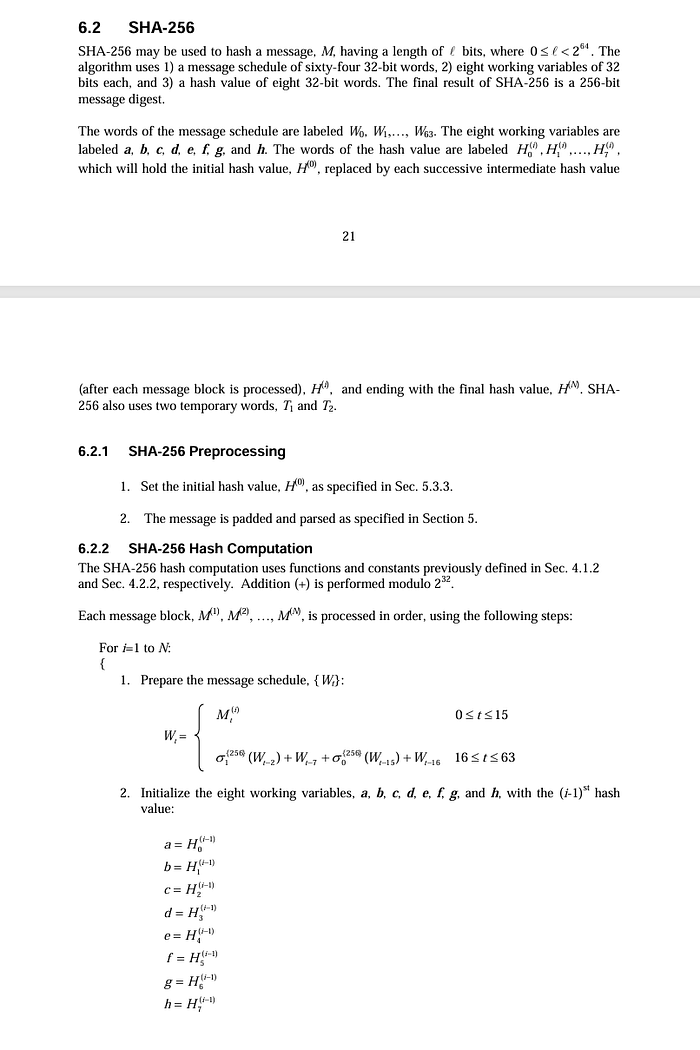
All hashing in this system follows the SHA-2 (SHA-256) specification, defined in NIST FIPS 180–4.
This is a public cryptographic standard, not a platform-defined algorithm or proprietary system.
Official specification (PDF): https://nvlpubs.nist.gov/nistpubs/FIPS/NIST.FIPS.180-4.pdf
Anyone implementing this standard will compute the same results.
Fairness Is Not a Promise
Fairness shouldn't depend on reputation. It shouldn't depend on explanations.
It should depend on math, structure, and the ability to verify.
That's the standard we're building toward at LUCKY X.