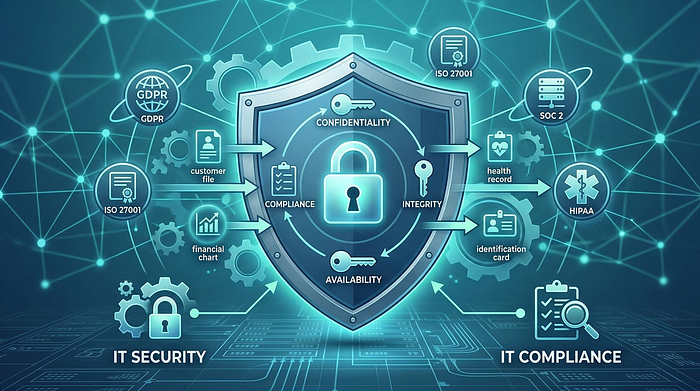

As businesses collect more data than ever before, protecting that information has become a top priority. Companies today handle sensitive data such as customer details, financial records, and personal information. Because of this, organizations must follow strict regulations to keep that data secure.
This is where Information Security Compliance becomes essential.
Information security compliance ensures that organizations follow the necessary laws, regulations, and internal policies designed to protect sensitive data from unauthorized access, breaches, or misuse.
What Is Information Security Compliance?
Information security compliance refers to the process of meeting legal, regulatory, and organizational requirements for protecting data.
The goal is to safeguard the three core principles of data security:
- Confidentiality — ensuring only authorized users can access data
- Integrity — maintaining the accuracy and reliability of data
- Availability — ensuring systems and data remain accessible when needed
Organizations achieve this by implementing security controls, establishing policies, training employees, and continuously monitoring potential risks.
Why Information Security Compliance Matters
Strong compliance practices offer several important benefits for organizations.
1. Protection Against Cyber Threats
Businesses face increasing cyber threats such as data breaches, ransomware, and unauthorized access. Compliance frameworks help organizations implement security measures that reduce these risks.
2. Avoiding Legal Penalties
Failure to comply with regulations can result in severe financial penalties. Many global regulations require companies to protect sensitive data and report breaches.
3. Building Customer Trust
Customers expect companies to protect their personal information. Organizations that demonstrate strong security compliance send a clear message that data protection is a priority.
4. Competitive Advantage
Companies that follow recognized security standards often gain an advantage in regulated industries such as finance, healthcare, and technology.
IT Security vs IT Compliance
Although they are closely related, IT security and IT compliance are not the same thing.
IT Security focuses on protecting systems, networks, and data from cyber threats. This includes tools and practices such as firewalls, encryption, and monitoring systems.
IT Compliance, on the other hand, ensures that these security measures meet the requirements of industry regulations and standards.
In simple terms:
- Security protects the organization
- Compliance proves that protection meets required standards
Both work together to reduce risk and protect sensitive information.
Types of Sensitive Data Organizations Must Protect
Information security programs mainly focus on protecting sensitive data such as:
Personally Identifiable Information (PII)
Data that can identify an individual, including:
- Names and addresses
- Email addresses
- Identification numbers
- Biometric data
Protected Health Information (PHI)
Health-related information such as medical records, prescriptions, and insurance data.
Other Sensitive Information
This can include financial data, IP addresses, political beliefs, and other private information.
Understanding what data your organization handles is the first step toward building an effective security compliance program.
You may also Like: How to Choose the Right Tech Stack
Steps to Achieve Information Security Compliance
Organizations can follow a structured process to implement security compliance effectively.
- Define Compliance Requirements Identify the regulations and security standards relevant to your industry.
- Conduct a Gap Analysis Evaluate your current security posture and identify areas that need improvement.
- Implement Security Controls Develop policies, procedures, and technical safeguards to close security gaps.
- Monitor and Manage Security Programs Continuously monitor systems and document evidence of compliance.
- Conduct Regular Audits Internal or external audits help verify that security controls meet regulatory requirements.
Common Information Security Compliance Standards
Many global regulations and frameworks help organizations manage security compliance. Some well-known examples include:
- General Data Protection Regulation (GDPR)
- ISO/IEC 27001
- SOC 2
- Health Insurance Portability and Accountability Act (HIPAA)
These frameworks provide structured guidelines for protecting sensitive data and managing security risks.
Final Thoughts
Information security compliance is no longer optional for modern organizations. It plays a critical role in protecting sensitive data, maintaining customer trust, and ensuring businesses meet regulatory requirements.
By implementing strong security policies, educating employees, and continuously monitoring risks, organizations can build a reliable compliance framework that protects both their customers and their reputation.
Read More in Detail: What Is Information Security Compliance?