Introduction
Cloudflare is widely used to protect web applications against attacks such as XSS, SQL injection, and DDoS. It acts as a reverse proxy, filtering malicious traffic before it reaches the origin server.
But what if an attacker never goes through Cloudflare at all?
This blog walks through a real-world scenario where me and Jayesh kunwal were able to bypassed Cloudflare protections via identifying and directly interacting with the origin server.
Understanding the Protection Mechanism
When a website is behind Cloudflare:
- Traffic is routed through Cloudflare
- The real server IP is hidden
- Malicious payloads are filtered by WAF rules
This means attacking via the domain is often ineffective.
Step 1: Initial Testing (Blocked by Cloudflare)
During testing, multiple payloads were attempted:
- XSS
- SQL Injection
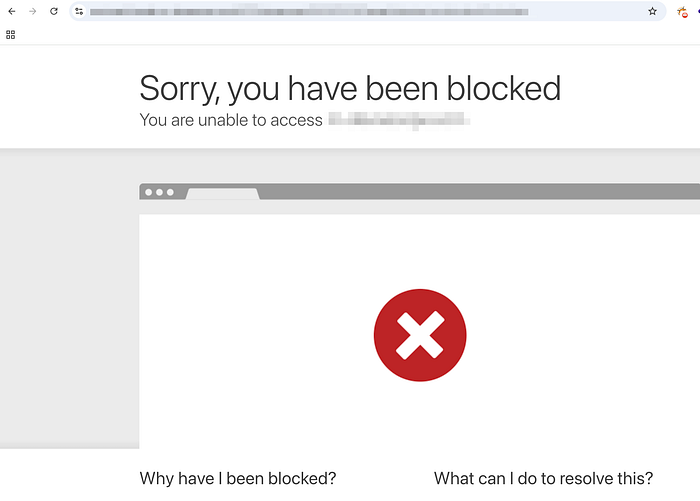
All requests were blocked, confirming that Cloudflare WAF protections were active.
Step 2: Reconnaissance — Identifying the Origin IP
The next step was to determine whether the origin server was truly hidden.
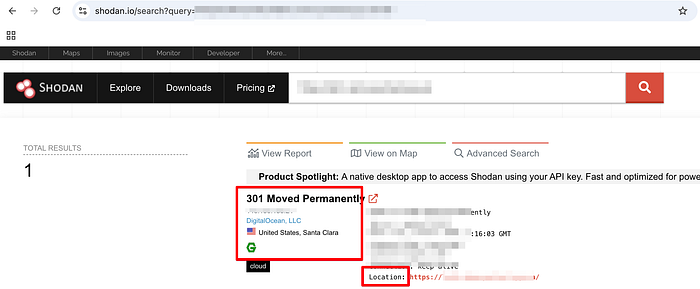
Using reconnaissance techniques such as Shodan , we identified a potential real IP address of the target server.
Validating the Origin IP
To confirm whether the discovered IP belonged to the target:
- Enter the IP address along with the required port in the browser, and it redirects to the original website.
This confirmed that the IP was indeed the origin server.
Step 3: Bypassing Cloudflare
Instead of interacting with the protected domain, we directly targeted the origin IP.
This completely bypassed Cloudflare protections, as requests no longer passed through its filtering layer.
Step 4: Port Scanning & Service Discovery
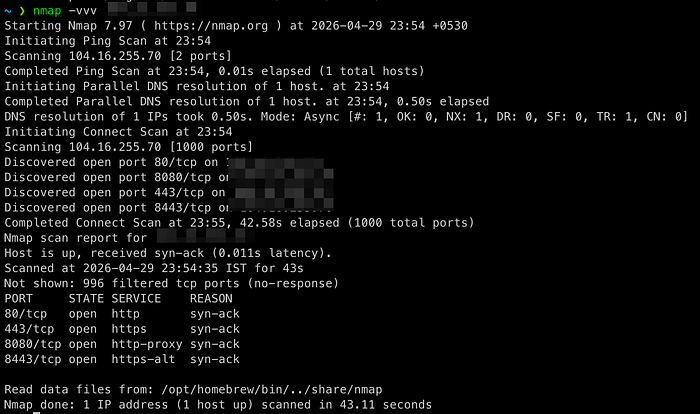
An Nmap scan on the origin IP revealed an open port exposing an additional service.
This service turned out to be:
A documentation portal not visible on the main application
Step 5: Default Credentials Exposure
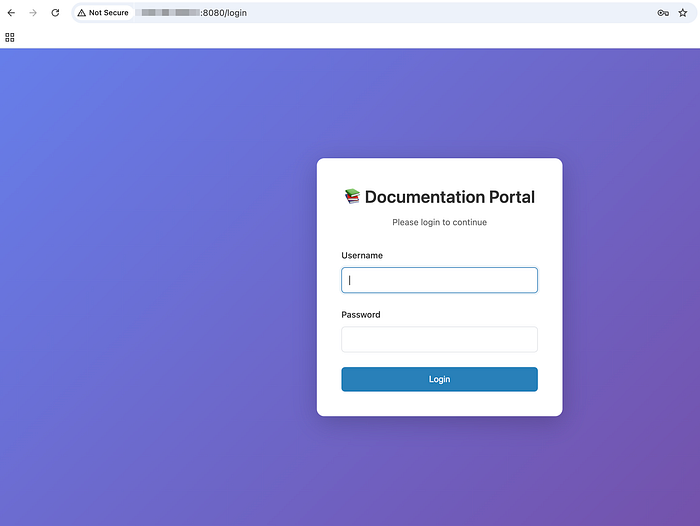
Upon accessing the documentation portal:
- A login interface was present
- The portal accepted default credentials
Using these default credentials, we successfully gained access.
Step 6: Post-Login Enumeration
After logging in, further exploration revealed:
- A file upload functionality within the portal
Step 7: Exploiting File Upload
The upload feature lacked proper validation controls.
This allowed:
- Uploading a malicious PHP file
- Executing it on the server
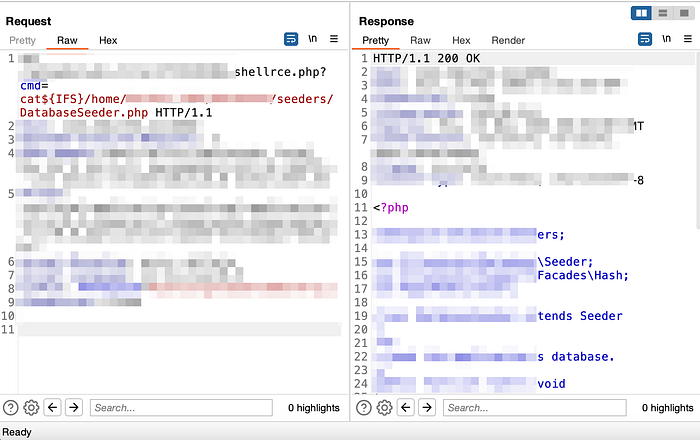
Step 8: Achieving Remote Code Execution
Once the file was uploaded:
- It was triggered through the browser
- A reverse shell connection was established
Result:
Remote Code Execution (RCE) on the server
Root Cause Analysis
This was a chained exploitation involving multiple weaknesses:
- Origin IP exposure
- No restriction on direct access to origin server
- Open port exposing internal service
- Use of default credentials
- Insecure file upload handling
Key Takeaways
1. Cloudflare is Not Enough
It only protects traffic routed through it.
2. Restrict Origin Server Access
- Allow only Cloudflare IP ranges
- Block all direct public access
3. Never Use Default Credentials
- Always enforce credential changes
- Implement strong authentication policies
4. Minimize Attack Surface
- Do not expose internal services publicly
- Use proper network segmentation
5. Secure File Uploads
- Validate file types and content
- Disable execution permissions in upload directories
6. Never Assume Internal Means Safe
Never assume that an internal or less-visible portal is secure just because it's not publicly linked. You never know when or how a data breach might occur. Even small misconfigurations or overlooked exposures can become entry points for attackers and eventually lead to a full compromise.
Conclusion
This case highlights a critical reality:
Security controls are only effective if they cannot be bypassed.
Even with Cloudflare properly configured, exposing the origin server made the entire protection layer ineffective.
Final Thoughts
Most breaches don't happen because defenses fail — they happen because something was left exposed.
In this case, it wasn't Cloudflare that was weak, it was everything around it.