
Not easy, but at least logical.
Find a weakness. Get in. Move money. Done.
So I tried to walk through it in my head.
And I got stuck almost immediately.
"I'll just log in."
That should be the hard part.
Except login isn't just login anymore.
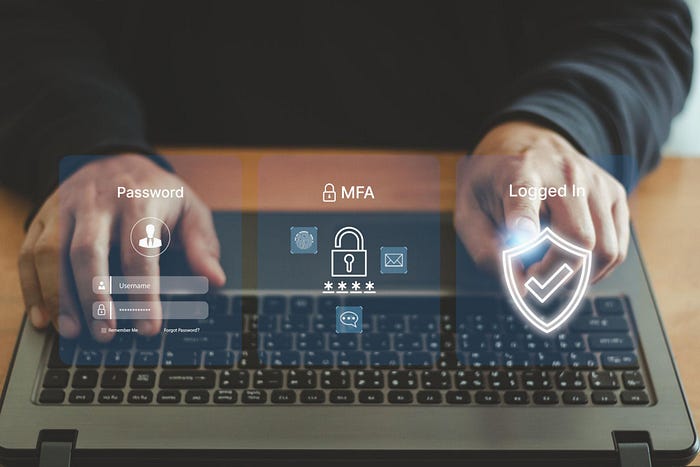
It's not just a password or even two-factor. It's layers working together: password, code, device recognition, location, and behavior.
Even if I somehow get past all of that, the system doesn't just say "ok." It quietly asks why this login looks different.
A new device. A new location. Slightly unusual timing.
That alone can be enough to block access.
But fine. Let's assume I get through.
Now I'm in.
This is where it should be over. If I have access to the account, I should be able to move the money.
I go to transfer, enter an amount, add a recipient, and click send.
Blocked.
This is the part most people misunderstand.
Login answers who you are. It doesn't answer whether what you're doing makes sense.
The moment you try to move money, a completely different set of checks kicks in. The system looks at whether this is a new recipient, whether the amount is unusual, whether the pattern matches past behavior, and whether the timing looks off.
You're inside the account, but you're still being questioned.
So I adjust.
I lower the amount and try to make it look normal. Something small, something quiet.
This time it goes further, but then another step appears. Extra confirmation. Another check. Sometimes it even requires the original device.
Because the system assumes something simple: a login can be compromised.
Let's say I pass that too.
It still doesn't end there.
The payment gets evaluated again through fraud systems, behavioral models, and risk scoring. Something is constantly asking whether this transaction looks right, and if the answer is even slightly uncertain, it can be slowed down, flagged, or stopped.
And even if it goes through, it's still not really finished.
The money doesn't just move from one account to another. It goes through clearing and settlement processes, often involving other banks and multiple systems along the way. Each of these steps adds another opportunity to pause, review, or even reverse the payment.
So "sent" doesn't always mean final.
At some point, something else becomes obvious.
Everything is logged.
How I logged in, what device I used, what I clicked, how fast I moved, what I tried before succeeding.
Nothing is invisible, and systems are constantly watching for anything that feels off. Not obviously wrong, just different.
That's enough.
That's where the whole idea falls apart.
I thought hacking a bank was about getting in.
It's not.
Getting in is just the first problem. After that, every action is treated with suspicion.
Not one big wall, just layers that slow you down, question you, and increase the chance you get caught.
It's not get in, take money, leave.
It's get in, get checked, get questioned, get watched, and maybe get stopped.
And that's the design.
Not perfect security.
Just enough friction to slow you down and catch you.