
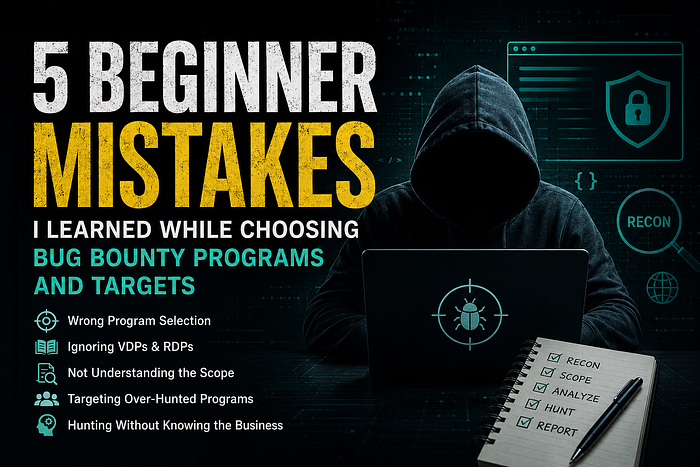
Choosing the right target is one of the biggest factors in bug bounty hunting.
Many beginners directly jump into random programs and start hunting without understanding the scope, competition, or even what the company actually does.
I made the same mistakes too.
In this blog, I want to share some beginner mistakes I learned while choosing bug bounty programs and the steps I mostly use now to select better targets.
1. Jumping Directly Into Bug Bounty Programs and Starting Hunting
This is one of the most common mistakes beginners make.
Most people create an account on a platform and immediately start scanning targets without understanding:
- how scopes work
- how much competition is there
- how reports are handled
- what vulnerabilities are already commonly reported
- how companies respond to reports
At the beginning, I also focused too much on finding bugs quickly instead of understanding the process properly.
Bug bounty is not only about tools and payloads. Methodology and target selection matter a lot.
2. Ignoring VDPs Before Entering Paid Programs
Many beginners skip Vulnerability Disclosure Programs (VDPs) and directly enter highly competitive paid programs.
Personally, I think VDPs are one of the best places to start.
Because they help you:
- gain confidence
- understand real-world applications
- improve reconnaissance skills
- practice report writing
- learn testing methodologies
And most importantly, VDPs usually have lower competition compared to large public bug bounty programs.
In my starting days, I mostly hunted in VDPs and Responsible Disclosure Programs (RDPs). After gaining some confidence and understanding, then I slowly moved into paid bug bounty programs.
3. Not Knowing Responsible Disclosure Programs Also Exist
Many beginners only know famous bug bounty platforms and ignore responsible disclosure programs.
Some companies may not run public bug bounty programs on major platforms, but they still allow security testing through their responsible disclosure policy.
Sometimes these programs have much lower competition.
You can also use simple Google dorking techniques to discover responsible disclosure or bug bounty pages from companies or startups you are interested in testing.
Some searches I personally use are:
site:target.com "responsible disclosure" OR "vulnerability disclosure" OR "bug bounty"Sometimes companies host their security policies on dedicated subdomains, so I also try:
site:security.target.comThis simple approach helped me discover programs that were not easily visible on major bug bounty platforms.
4. Jumping Into Big Companies Running Programs for More Than 10 Years
This was another mistake I made.
Big companies with bug bounty programs running for many years are usually tested by thousands of experienced hunters every day.
Most beginner-level vulnerabilities are already discovered there.
As a beginner, this can become frustrating because:
- duplicate reports become high
- attack surfaces are heavily tested
- competition is massive
That does not mean beginners should never hunt there.
But starting only with heavily tested targets can reduce motivation very quickly.
Sometimes newer programs or smaller companies provide much better learning opportunities.
5. Starting Hunting Without Understanding What the Company Actually Does
This mistake changed my mindset completely.
Earlier, after selecting a target, I used to start reconnaissance immediately without understanding the business properly.
Now before hunting, I first try to understand:
- what services the company provides
- who their users are
- what technologies they use
- whether they use APIs heavily
- whether AI features are used
- who their partners are
- what type of data they process
Because different services usually have different attack surfaces.
For example:
- fintech applications may have payment-related issues
- SaaS platforms may have authorization problems
- AI applications may have prompt injection risks
- file-sharing services may have upload-related vulnerabilities
Understanding the business helps you think more like a security researcher instead of only running tools blindly.
* Steps I Mostly Use to Select Better Targets
This is the process I personally follow most of the time.
1. Choosing Platforms
There are many bug bounty platforms available today like:
- HackerOne
- Bugcrowd
- YesWeHack
- Intigriti
- Open Bug Bounty
- Synack
For beginners, I personally suggest BugCrowd and Intigriti because I found their triage process beginner-friendly and they often have newer programs available.
2. Using Filters Properly
After logging into the platform, I usually:
- go to engagements/programs
- filter by newer programs
- filter by web or API targets
- look for wildcard scopes
Personally, I mostly choose:
- web applications
- APIs
- wildcard scopes
because they usually provide a wider attack surface.
I also try filtering programs created within the last 6 months because newer programs sometimes have less testing compared to older ones.
3. Manually Reviewing Programs Before Hunting
Before selecting a target, I manually review:
- last 90 days activity
- triage response speed
- bounty history
- scope size
- how active the program looks
Then I shortlist around 2–3 programs that:
- feel interesting
- have decent scope
- look active
- match my testing interests
I save those program links in my notes instead of jumping between too many targets.
4. Understanding the Application Before Recon
Before starting actual reconnaissance, I spend time manually exploring the target.
I try to understand:
- what the application does
- how endpoints change while browsing
- how authentication flows work
- what technologies are being used
I also take notes while manually visiting pages.
This step helped me much more than blindly running tools immediately.
After understanding the target properly, then I start reconnaissance, map interesting attack surfaces, and begin hunting based on my understanding of the application.
Final Thoughts
One thing I learned in bug bounty is:
Better target selection can save huge amounts of time.
Many beginners think success only depends on advanced payloads or expensive tools.
But in reality:
- choosing the right target
- understanding the application
- following proper methodology
- staying consistent
matters much more.
I am still learning every day, but these are some mistakes and approaches that genuinely helped me improve my hunting process.
Thanks for reading this blog.
If you are interested, I may write another detailed blog about my reconnaissance workflow and how I map interesting attack surfaces before starting actual testing.