

Introduction: Starting from Zero Is Normal
You've probably seen people making money through bug bounty. Reports, rewards, recognition — it all looks exciting.
But when you try to start, you hit a wall:
- "Where do I even begin?"
- "Do I need coding skills?"
- "What tools should I learn?"
If you feel confused, that's completely normal.
Every successful bug hunter once started with zero experience. The difference? They followed a clear path.
This guide will give you exactly that.
What Is Bug Bounty (Simple Explanation)
Bug bounty is a program where companies pay you to:
- Find security vulnerabilities
- Report them responsibly
- Help improve their security
You don't need a degree. You don't need a job.
You just need:
- The right skills
- A clear process
- Consistent practice
Why Most Beginners Fail (Before They Even Start)
Before we go forward, understand this.
Most beginners:
- Jump between random tutorials
- Learn tools without understanding
- Expect quick results
And then quit.
The goal is not to learn everything. The goal is to learn the right things in the right order.
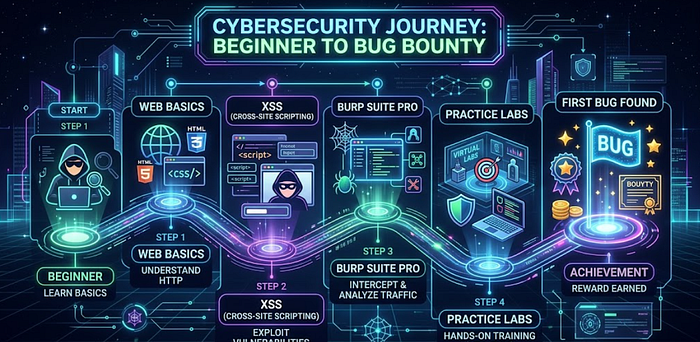
Step-by-Step Roadmap to Start Bug Bounty (Zero Experience)

Step 1: Understand How the Web Works
Before hacking, understand the target.
Learn basics like:
- How websites function
- What is a request and response
- How login systems work
Focus on:
- HTTP/HTTPS
- Cookies & sessions
- Basic web flow
👉 This is your foundation.
Step 2: Learn Basic Web Vulnerabilities
Start with beginner-friendly vulnerabilities:
- XSS (Cross-Site Scripting)
- SQL Injection (SQLi)
- IDOR (Insecure Direct Object Reference)
You don't need to master everything at once.
👉 Pick one → understand it → practice it.
Step 3: Learn One Core Tool (Burp Suite)
Instead of learning 10 tools, start with one:
Burp Suite
Learn how to:
- Intercept requests
- Modify parameters
- Analyze responses
👉 This tool will be your main weapon.
Step 4: Practice in Safe Environments
Don't jump to real companies immediately.
Use beginner platforms like:
- TryHackMe
- PortSwigger Web Security Academy
These platforms:
- Teach concepts
- Give hands-on labs
- Build confidence
Step 5: Follow a Simple Testing Process
When you start testing a target, follow this:
- Explore the website
- Identify inputs (forms, parameters, URLs)
- Intercept requests using Burp Suite
- Test inputs for vulnerabilities
- Observe behavior carefully
👉 Bug bounty is about observation, not guessing.
Step 6: Start with Real Bug Bounty Platforms
Once you're comfortable, move to real programs:
- Choose beginner-friendly targets
- Read program scope carefully
- Start small
👉 Focus on learning, not earning at this stage.
Beginner-Friendly Tools You Actually Need
Keep it simple.
Start with:
- Burp Suite → Intercept and test requests
- Browser (Chrome/Firefox) → Manual testing
- Basic extensions → Optional
Avoid:
- Installing too many tools
- Running automated scans without understanding
👉 Tools don't make you a hacker. Understanding does.
Practical Guide: What to Do in Your First 30 Days
Week 1–2:
- Learn web basics
- Understand HTTP & requests
Week 3:
- Study XSS or IDOR
- Practice labs daily
Week 4:
- Start using Burp Suite
- Practice on real platforms
👉 Consistency matters more than speed.
Common Mistakes to Avoid
❌ Trying to Learn Everything at Once
Focus beats overload.
❌ Watching Without Practicing
Knowledge without action = no results.
❌ Expecting Fast Money
Bug bounty is a skill, not a shortcut.
❌ Copy-Pasting Payloads
Understand why something works.
The Reality of Bug Bounty (Honest Truth)
Your first bug may take:
- Weeks
- Or even months
And that's okay.
What matters:
- You're improving
- You're learning
- You're getting closer
Most people quit early. If you stay consistent, you already win.
Conclusion: Start Simple, Stay Consistent
You don't need:
- A degree
- Expensive tools
- Advanced knowledge
To start bug bounty.
You need:
- A clear roadmap
- Daily practice
- Patience
Start small. Stay focused. Keep going.
Your first bug is not far — You just need the right direction.