June 6, 2026
Why Rekurd Was Built: The $3.7 Trillion Problem No One Wanted to Solve
The problem existed long before the platform. What took so long was finding someone willing to build the solution that actually threatened…

Rekurd
5 min read
The problem existed long before the platform. What took so long was finding someone willing to build the solution that actually threatened the people profiting from the problem.
There is a number that should sit uncomfortably with every business leader, every customer experience director, and every consumer who has ever filed a complaint and heard nothing back.
$3.7 trillion.
That is the annual global cost of poor customer experience — the revenue lost, the customers churned, the lifetime value destroyed because businesses either could not or would not handle the people who trusted them with their money. The figure comes from Forrester Research, one of the most credible sources on the commercial cost of customer experience, and it represents one of the largest quantifiable waste events in the global economy.
It is larger than the GDP of Germany. It is larger than the entire global advertising industry. And it happens, quietly, every year, while the systems that were supposed to prevent it continue to fail in ways that are structural, predictable, and in many cases, entirely deliberate.
Understanding why Rekurd was built requires understanding exactly why that number exists, and why the platforms that claimed to solve this problem never actually tried.
The Scale of the Complaint Problem
Start with the most fundamental statistic in the accountability landscape: 79 percent of online complaints are ignored.
Not 7%. Not 17%. Seventy-nine percent. The vast majority of people who take the time to formally document a problem with a company — who overcome the friction of complaint channels, who write out what happened, who submit the form or make the call — receive nothing meaningful in return.
This is not a coincidence. This is a calculation. Companies have long understood that the cost of resolving a complaint, at scale, is higher than the cost of ignoring most of them. Because most complainants, faced with silence, with delays, with automated replies that promise nothing, eventually give up.
Which brings us to the second foundational statistic: only 1 in 26 unhappy customers ever files a complaint at all.
That number is not a measure of satisfaction. It is a measure of hopelessness. The other 25 customers, the ones who said nothing to the company, did not stay silent because they had no grievance. They stayed silent because they had already run the calculation and concluded that the effort of complaining would produce nothing worth the trouble. They had seen the system work before. Or rather, they had seen it not work. And they adjusted their behaviour accordingly.
The consumer complaint problem is not primarily a problem of too few complaints. It is a problem of too many people who have already given up on the idea that complaining will change anything.
The Three Structural Failures
The $3.7 trillion cost of poor customer experience persists not because the solutions are technically complex. It persists because the platforms designed to hold companies accountable have three structural failures built into their foundations.
The first failure is deletion.
Every major review platform that exists today — Trustpilot, Google Reviews, Yelp — allows companies to remove reviews. The mechanisms vary: a flagging tool here, a premium-tier dispute process there. But the outcome is the same. A company with sufficient resources and the right subscription can make a legitimate, documented, entirely true consumer complaint disappear. Millions of honest accounts of how companies treated people have been erased this way. Not because they were false. Because someone could afford to remove them.
The second failure is anonymity.
Most platforms allow or actively encourage anonymous reviews. This seems like a consumer protection measure. In practice, it is one of the most effective ways to ensure that complaints carry no real weight. Anonymous accusations are legally meaningless, easily dismissed by corporate communications teams, and trivially manufactured by competitors or bad actors. A review ecosystem built on anonymity is an ecosystem built on noise, where the signal of a genuine consumer experience is lost in a landscape where no one can be verified and therefore no one can be trusted.
The third failure is conflict of interest.
This is the most important failure, and the most carefully avoided topic in the accountability industry. Trustpilot's annual revenue — $261 million, reported publicly — comes almost entirely from subscriptions sold to the businesses it reviews. The companies whose accountability Trustpilot is supposed to measure are the same companies funding its operations. Google Reviews is underpinned by an advertising relationship with the same businesses whose reviews it surfaces. The review platform problem, at its core, is a revenue model problem: every major platform earns from the entities it is supposed to hold accountable. That relationship does not make objectivity impossible in theory. But it makes certain decisions, like building a robust, no-exceptions deletion prevention system, commercially inconvenient. And commercially inconvenient decisions do not get built.
Why Trustpilot and Google Reviews Were Never Going to Fix This
It is worth being precise here, because the argument is structural, not personal.
Trustpilot is a well-run company with intelligent people and genuine value in its product. Google Reviews is used by billions and serves a real discovery function. The issue is not that these platforms are operated by bad actors. The issue is that they were designed to solve a different problem.
Trustpilot was designed to help businesses collect social proof. Google Reviews was designed to help consumers find businesses. Neither was designed to be the permanent, independent, verified accountability infrastructure that the consumer complaint problem actually requires. And crucially, neither is financially incentivised to become that. The accountability gap they leave is not an oversight. It is an inevitable consequence of what they are actually trying to do and who they are actually trying to serve.
The review platform problem is not that these platforms perform their function badly. It is that their function was never 'accountability'. It was always, in different ways, commerce.
The Gap Rekurd Was Built to Fill
The accountability gap is the space between what consumers need and what every existing platform is structured to provide. It has existed, in various forms, for as long as there have been consumer complaints. What has changed in 2026 is the cost of leaving it unfilled.
The convergence of three forces makes this the right moment for a permanent accountability record.
The first is consumer documentation behaviour. The smartphone generation does not just complain, it documents. Screenshots, voice notes, payment receipts, chat logs. Consumers are already building the evidence base for a permanent record. They just have nowhere to put it that cannot be deleted.
The second is declining trust in paid media. As advertising trust reaches historic lows and word-of-mouth becomes the primary driver of consumer decisions, the companies that can demonstrate, through a verified, permanent, public record, that they handle complaints with integrity will have a structural acquisition advantage over those that cannot.
The third is the failure of the existing platforms to self-correct. The accountability gap has been visible and quantifiable for years. The $3.7 trillion figure is not new. The 79 percent ignored complaint statistic is not new. What is new is the explicit decision to build a platform whose architecture prevents the failures that have kept these numbers high — a platform with no delete button, verified identity requirements, and a revenue model that earns nothing from the companies it holds accountable.
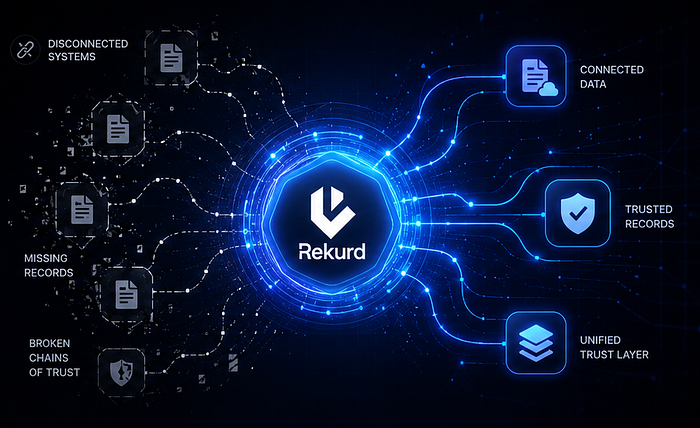
That is why Rekurd was built. Not to compete with Trustpilot or Google Reviews. To do something none of them were ever designed to do: keep the record permanently, independently, and completely beyond the reach of the people it holds accountable.
The Obligation
The $3.7 trillion cost of poor customer experience is not an abstraction. It is what the person who waited four months for a complaint resolution paid with their time. It is what the customer who gave up before filing paid with their trust. It is what the business that ignored its way through thousands of legitimate complaints paid, slowly, invisibly, with its brand.
The consumer complaint problem has a solution. It was always a platform problem — a question of where the truth should go and what should happen to it once it got there.
The answer is: somewhere permanent. Somewhere verified. Somewhere the company being held accountable cannot reach.
That is Rekurd.
Join the waitlist at rekurd.com