
Introduction
Reconnaissance is the first and most critical phase of penetration testing and general cybersecurity investigations. During this stage, investigators or analysts gather publicly available information about a target to understand its digital footprint and potential attack surface.
Many tools canhelp with excellentreconnaissance. One powerful tool for this purpose is ReconSpider, an Open Source Intelligence (OSINT) framework that automatesthe collection of information from multiple online sources. It allows security professionals to gather data on domains, IP addresses, email addresses, social media accounts, and more from publicly available datasets.
ReconSpider
ReconSpider is an OSINT-based reconnaissance tool that helps security researchers collect information about a target from different online sources. It aggregates data such as:
- IP addresses
- Data breaches
- Email addresses
- Phone numbers
- Social media accounts
- Domain and DNS information
The information above provides penetration testers, bug bounty hunters, investigators, and infosec researchers with an understanding of a target's infrastructure and helps identify potential security risks.
Instead of using different tools for a particular data type, ReconSpideracts as a multi-source intelligence collector, automating tasks that would otherwise require manual searches across multiple platforms. It visualizes it on a dashboard and facilitates alerting and monitoring of the data.
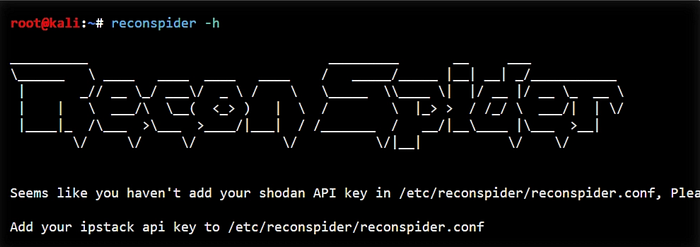
Key Features of ReconSpider
Some of the main uses of ReconSpider include:
1. Domain and DNS Reconnaissance
ReconSpider can be used to gather information about domains, including DNS records and WHOIS information. This helps identify the infrastructure supporting a website or organization.
2. IP Address Intelligence
This tool can retrieve information related to IP addresses, including associated domains and hosting details.
3. Email Intelligence
The tool searches for exposed email addresses connected to a target organization or domain.
4. Social Media Intelligence
ReconSpider can pull basic data from social media accounts such as:
- Profile name
- Number of followers
- Profile description
This information can be useful in social engineering assessments or investigations.
5. Data Breach Discovery
It can search publicly available breach databases to determine whether email addresses or credentials have been exposed.
Installing ReconSpider
ReconSpider is typically installed on Linux systems such as Kali Linux or Ubuntu, since they are commonly used for penetration testing.
Step 1: Clone the Repository
git clone <https://github.com/bhavsec/reconspider>Step 2: Navigate to the Directory
cd reconspiderStep 3: Install Dependencies
pip install-r requirements.txtStep 4: Run the Tool
python reconspider.pyOnce executed, the tool will launch its menu-driven interface.
How to Use ReconSpider
After launching ReconSpider, you will see a menu that allows you to select the type of reconnaissance you want to perform.
1. Domain Reconnaissance
You can gather domain intelligence by entering a target domain.
Example:
Target: example.comResult include all or some:
- Domain registration details
- DNS records
- Associated IP addresses
2. Email Intelligence Gathering
You can search for information associated with an email address.
Example:
Target: security@example.comResult may provide:
- Data breach exposure
- Associated usernames
- Related accounts
3. IP Address Investigation
If you have an IP address, ReconSpider can help gather intelligence about it.
Example:
Target: 192.168.1.1Possible results include:
- Hosting provider
- Location data
- Reverse DNS records
4. Username and Social Media Search
ReconSpider can search for usernames across different platforms.
Example:
Target username: johndoeThis helps investigators identify a user's digital footprint.
Practical Use Cases
ReconSpider can be used in several cybersecurity scenarios:
Penetration Testing
Security testers use ReconSpider during the information gathering phase to map a target's infrastructure.
Bug Bounty Hunting
Researchers use it to identify exposed assets that may contain vulnerabilities.
Threat Intelligence
Analysts use it to track malicious actors, domains, or suspicious email addresses.
Cybercrime Investigations
Investigators may use ReconSpider to connect online identities and collect publicly available intelligence.
Limitations of ReconSpider
While ReconSpider is useful and appears to be a all in one tool, it has some limitations:
- Some features depend on external sources and APIs
- Social media data extraction is limited
- The tool may occasionally crash due to Python errors in certain queries
Despite these issues, it remains a helpful OSINT automation tool.
Best Practices for Using ReconSpider
To use ReconSpider responsibly:
- Only run reconnaissance on systems you are authorized to test
- Use it as part of a broader OSINT workflow
- Combine it with tools like:
- Maltego
- theHarvester
- Amass
- Shodan
Combining multiple tools improves accuracy and depth of intelligence gathering.
Conclusion
ReconSpider is a powerful OSINT tool that helps automate the reconnaissance process by collecting information from multiple open sources. It simplifies the early stages of cybersecurity investigations by aggregating intelligence related to domains, IP addresses, email accounts, and social media profiles.
For cybersecurity professionals, penetration testers, and threat intelligence analysts, tools like ReconSpider can significantly reduce the time required to build a comprehensive picture of a target's online presence.
When used ethically and responsibly, ReconSpider can be an invaluable addition to any security professional's toolkit.
Till I come your way again in the next 2 weeks, Tuesday, #BeCyberSmart
Cyberliza writes TuesdayTool
References