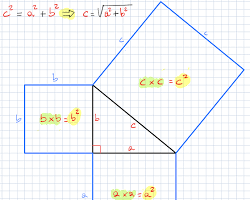

The Mediterranean sun is blinding, but beneath the deep, azure waters of the Aegean Sea, the shadows hide one of the most bizarre cover-ups in human history.
Forget the serene marble statues. Ancient Greece was home to history's most unhinged academic scandal: a brilliant young rebel allegedly tossed off a boat and drowned under the blinding sun — all because he solved a math problem his peers didn't like.
The Anatomy of an Ancient Cover-Up
To understand how geometry ended up with a body count, we have to look at the facts of history's strangest cold case:
- The "Mafia" Under the Togas: Pythagoras wasn't just a guy who liked right triangles; he was the charismatic leader of an ultra-secretive, math-worshiping cult. They wore matching clothes, swore blood oaths, and believed numbers were literal gods ruling the universe.
- The Unhinged Rules: The Pythagoreans operated on strict, bizarre dogma. Alongside their mathematical research, they had absolute taboos — most famously, a strict religious prohibition against eating, or even touching, fava beans.
- The Cosmic Doctrine: Their entire religion relied on a single premise: Everything in the universe can be expressed as a clean, perfect ratio of whole numbers. To them, cosmic order meant perfect fractions.
- The Threat: A young member named Hippasus of Metapontum cracked a mathematical proof using a simple square. He proved that the square root of 2 is an irrational number — a decimal that goes on forever without a repeating pattern. It couldn't be written as a fraction.
- The Glitch in the Simulation: This wasn't just a discovery; it was holy anarchy. Hippasus had exposed a fundamental flaw in their god. If numbers weren't perfect, their entire worldview collapsed.
- The Final Voyage: Instead of debating him, the cult took action. While out at sea on a communal boat, Hippasus mysteriously "vanished" over the side. The official cult narrative claimed it was divine punishment by the gods, but ancient historians whispered about a much more human hands-on execution.
"The Pythagoreans built a funeral tomb for Hippasus while he was still alive — symbolizing that to the order, he was already dead. The sea merely finished the job." — Derived from Iamblichus, Life of Pythagoras
The Pythagoreans believed this length must be expressible as a ratio of two whole numbers (a fraction). Hippasus showed why that is completely impossible.
Deduce that 'b' must also be even: The contradiction hits.
Look at our new equation: b2=2k2. By the exact same logic we used for a, this means b2 must be an even number, which means b must be an even number too.
The Fatal Flaw
Do you see the trap Hippasus sprung?
- In Step 1, we established that the fraction be was fully simplified, meaning a and b cannot both be even.
- By Step 5, the math proved that a and b must both be even.
- If a fraction's numbers are both even, you can keep dividing them by 2 forever. You can never reach a fully simplified "base" fraction. The math folds in on itself.
This simple proof proved that the length of that hypotenuse (2) is an endless, non-repeating decimal (1.41421356…). It was an un-fractionable number. To a cult that worshipped whole-number ratios as the literal architecture of God, Hippasus hadn't just solved a triangle — he had shattered their universe.