
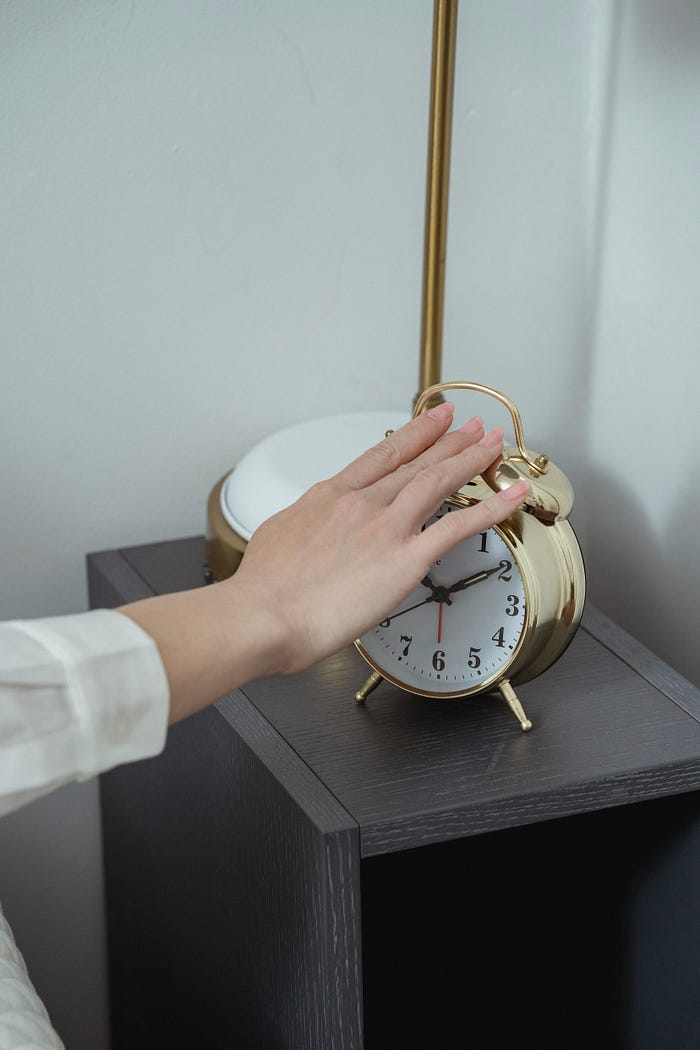
For thirty minutes (or more), I convince myself that I'm too tired, too exhausted, too drained, "too too". Not today.
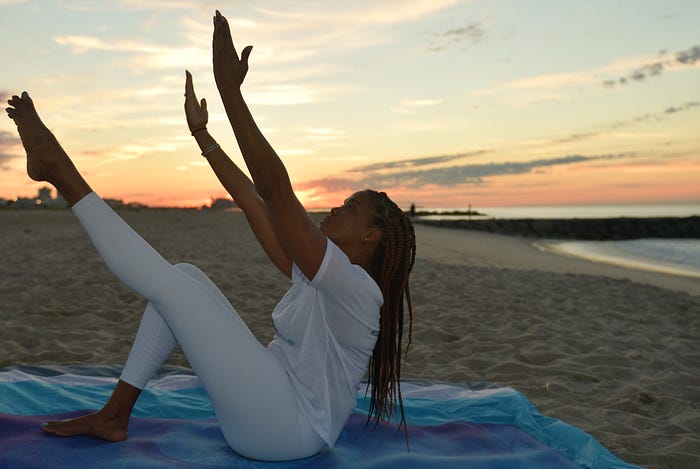
What does not make any sense is that I teach about movement, about improving the quality of movement, and I believe that movement heals. I teach Pilates. I know — intellectually, experientially, in my body — that movement will change how I feel, shift my energy, and improve my mood. I know I will feel better, clearer, stronger.
And still, I stay in bed.
For years, I told myself this was about being tired, about needing more rest, about not having enough time, but I am not being honest with myself. The resistance isn't fatigue — it's protection from who I become when I actually show up.
What Resistance Is Really Saying
I think differently than I did 20 years ago. I probably think differently than I did 20 minutes ago, but I understand resistance differently now. It is information that I choose not to ignore, and as a result, I am more introspective. It is not just something to push through, but sit with.
Resistance is telling me about me, where I am still growing, evolving. Where something in me is shifting — and not all of me feels ready for it. When I move my body, I change something. Not just physically, but mentally and emotionally as well. My energy shifts. My perspective shifts. The way I move through the rest of my day changes.
Even if I can't predict exactly how the day would have gone otherwise, I know this: when I move, the outcome is always better. So, if movement consistently improves my experience… why would I resist it? Because part of me is uncomfortable with what that better version of me requires.
The Comfort of Playing Small
I didn't consciously choose to play small, but I learned how to live there.
Playing small looked like staying quiet when I had something to say. It looked like holding back in conversations, softening my opinions, and choosing not to fully express myself. It looked like prioritizing other people's comfort over my own truth, and there was safety in that.
If I stayed small, I couldn't be overexposed. I couldn't be judged. I couldn't be wrong. I couldn't get my feelings hurt. But staying small also meant staying stuck. I probably backed myself into a box that I did not know how to get out of.
Now, when I think about something as simple as getting out of bed to move my body, I see it differently. It's not just about exercise, it's about identity.
If I consistently show up for myself — if I stop hitting snooze, if I move with intention, if I build that discipline — then I am no longer operating from that smaller version of myself. I become someone who follows through. Someone who prioritizes herself. Someone who uses her voice more fully.
And that shift? That's uncomfortable because I stayed in the box too long.
The Role of Ego
My ego has its own story it likes to tell.
It wants me to believe that I'm still operating the way I used to — that my body responds the same way, that my energy is the same, that I can ignore certain signals without consequence.
But my body tells the truth and reminds me of when I've been inconsistent. My hip gets cranky. My feet tell me it is time for some footwork. Sometimes my back speaks up louder than I'd like.
And still, there are moments where my ego resists the adjustment. It resists the humility of acknowledging that I need to move differently now and be more intentional. I can no longer depend on old habits and expect the same results.
Letting go of that ego requires something deeper: humility. It requires me to accept that I don't always have the answers and that I am still learning my body, still learning myself. My growth doesn't come from forcing or pretending — it comes from paying attention, from listening.
And if I'm honest, part of that ego isn't just about physical capability. It's also about emotional protection. If I fully show up — in my body, in my life — I risk being seen more clearly. And being seen comes with vulnerability.
When Resistance Takes Root
The longer I sit in resistance, the heavier it gets. Missing one day of movement turns into a few. A few turns into a bad habit, and that poor behavior doesn't just affect my body — it affects how I show up in every area of my life.
Physically, I feel the tightness and discomfort almost immediately. I know that something is off.
Mentally, it's even more noticeable. I feel less clear, less focused. I'm more easily frustrated. I don't feel like I'm operating at my best.
And yet, even knowing this, resistance can still feel convincing in the moment. This fascinates me. Why would I choose the version of my day that feels worse, when I know there's a version available to me that feels better? Because in that moment, comfort feels more immediate than growth.
Pushing Through vs. Pushing Past
I've also had to redefine what effort looks like for me.
For a long time, I believed in pushing through. That meant overriding how I felt, forcing my body to comply, pushing to the point of exhaustion because that's what I thought discipline required. It was required in my career in the financial services industry to push to meet deadlines and pull all-nighters to meet client requirements. But pushing through often left me depleted, disconnected, and often resentful of the process.
Now, I see a difference where pushing through is forceful and driven by ego. "I must perform, I must deliver. How would it look if I did not? It ignores the signals.
Pushing past resistance is intentional. It's self-aware. It acknowledges the resistance and chooses to move anyway — but not at the expense of connection. It's not about punishing my body. It's about partnering with it, and that shift has changed everything.
What Actually Helps Me Show Up
Understanding resistance is one thing. Working with it is another. I've learned that I can't rely on motivation, but I need structure.
Simple things make a difference, such as laying out my clothes the night before; I remove one decision in the morning, with one less opportunity for resistance to take hold.
If I decide ahead of time how I'm going to move — even if it's just ten or fifteen minutes — I remove the mental negotiation. Having a plan is everything. Ten minutes is enough. Fifteen can be powerful. It doesn't have to be perfect — it just has to happen.
Accountability matters, so when I schedule a class or commit to something outside of myself, I'm far more likely to follow through.
The most important shift has been this: I commit the night before. I don't wait until the morning to decide how I feel. I decide in advance who I'm going to be.
When Resistance Is Actually Rest
Not all resistance is something bad. My body may be asking for rest. I am still figuring it out.
There are days when I am genuinely exhausted, and my body craves stillness more than movement. On those days, the best choice for me is to honor my body and rest. But there are also days when the resistance feels different. Less like depletion, more like avoidance or hesitation.
The challenge is learning to tell the difference. Am I tired? Or am I uncomfortable? Am I depleted? Or am I avoiding something? That level of self-awareness doesn't come automatically. It takes practice.
The Truth About "Not Having Time"
I've told myself I don't have time. But if I'm honest, I make time for what matters to me. We all do. Time isn't always the real issue — priority is.
When I choose not to move, I'm choosing something else instead. Maybe it's comfort, ease, or avoidance, but it's still a choice. Recognizing that gives me power, because it means I can choose differently.
It's About Getting Started
The hardest part is almost always the beginning.
Before I move, the resistance feels big. It feels convincing. It feels like something I should listen to, yet once I start, that usually shifts. My body warms up, my mind clears, and I settle into it.
There are still days when I don't want to continue. Days when I'm counting down the minutes, yet even then, I'm in it. I've already interrupted the pattern. And that matters, because starting is what breaks the cycle.
What Resistance Is Really About
At the heart of my resistance, it really is not about movement at all; it's about identity. When I show up consistently, I become someone different. I am empowered; I become stronger — physically and mentally — and more confident. I connect more deeply to my inside voice. I speak up more. I take up more space. I stop playing small, even though that's what I want, it's also unfamiliar.
My nervous system is wired to keep me safe, not necessarily to help me grow. And growth — especially visible, undeniable growth — can feel unsafe, so resistance steps in to protect me.
Choosing Differently
I'm learning to work with resistance rather than fight it. I create a structure that prepares me in advance, reduces the decisions I need to make, and establishes accountability.
I listen to and question my body simultaneously.I ask myself: Is this protection necessary, or is it outdated? I'm still peeling back the layers. And every time I think I've reached the core, I find there's more to uncover, but that is part of the process.
But one thing is becoming clearer:
The version of me I avoid when I hit snooze is the version of me I've been trying to become.
So I'm choosing differently.
I'm choosing to get up. To move. To show up — even when it's uncomfortable.
Because I know that when I do, something shifts.
And the life I experience on the other side of that choice is always better. Resistance is not in my way, but it is the way I become who I am meant to be.
If this resonates with you and you're ready to explore a gentle, embodied Pilates practice that honors where you are right now, I invite you to reach out. Let's discover together what your body already knows.
The ideas and content shared here are original, drawn from what I am learning in my studies, teaching experience, and my personal practice. An AI-generated tool was used to provide feedback and edit the grammar of the content here.