

Disclaimer: I am a cybersecurity professional, not a lawyer. I break into servers (legally) and patch vulnerabilities; I don't argue in court. This article is my attempt to bridge the gap between Code (what I do) and Law (what keeps us safe). So, take this as educational insight, not legal counsel. ^_^
Hey everyone, ak here! :D
Usually, on LeetSec, I talk about Bug Bounties, heavy automation scripts, or how to use Linux to bend the internet to your will. But today, I want to talk about something different. Something that scares most hackers more than a critical RCE (Remote Code Execution): The Law.
See, I have realized something important. You can be the best Red Teamer in the world, you can find the most critical vulnerability, but if you don't know how to document it legally, you are just a criminal with a keyboard. >_<
And for my friends who are studying Law (I know you are reading this!), you might know every section of the Indian Evidence Act, but do you know if the digital screenshot in your hand is actually real? Or did someone just edit the HTML with "Inspect Element"?
Let's break down Digital Evidence and the infamous Section 65B in a way that both a hacker and a lawyer can understand. No complex jargon, just logic.
1. The "Digital Fingerprint" (Hashing)
Imagine you send a sealed envelope to your friend. You put a special wax seal on it with your ring. If your friend receives it and the seal is broken or replaced, they know someone messed with the letter inside. Right?
In the digital world, we don't have wax seals. We have Hashing.
A Cryptographic Hash (like MD5 or SHA-256) is a mathematical algorithm that takes a file (any file like a photo, a log, a chat backup) and turns it into a unique string of characters.
Example:
If I hash the text file evidence.txt containing "Sudoaman is cool", the computer gives me this unique ID:
5e884898da28047151d0e56f8dc6292773603d0d6aabbdd62a11ef721d1542d8
Now, if I change just one letter like if I make it "Sudoaman is Cool" (capital C) then the hash changes completely:
9aa58... (totally different string)
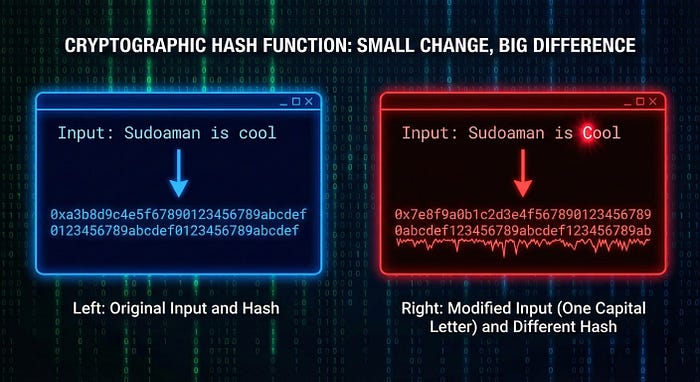
For the Lawyers: This is your Integrity Check. If the police seize a laptop, they must generate this hash immediately. If the hash presented in the court doesn't match the hash taken at the crime scene, the evidence is tampered with. It's that simple.
2. The "Chain of Custody" (The Amazon Package Analogy)
When you order something from Amazon, you can track it every step of the way:
- Warehouse -> Dispatch -> Local Hub -> Delivery Guy -> You.
If the tracking says "Delivered" but you don't have the package, you know something went wrong in the chain.
In Digital Forensics, this is called the Chain of Custody.
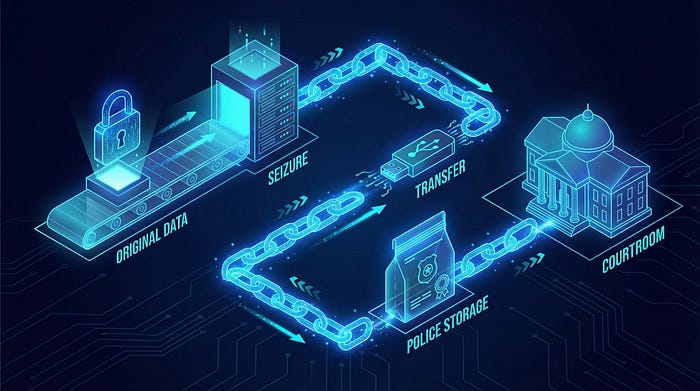
As a hacker, when I find a vulnerability, I have to log everything. Timestamps, IP addresses, screenshots. If I miss one step, the company can say, "Hey, how do we know you didn't plant that bug?"
For the Lawyers: If a piece of digital evidence (like a hard drive) was lying on a desk for 2 hours where anyone could touch it, the "Chain" is broken. In my world, we call that "corrupted data." In your world, you should call it "Inadmissible." ;)
3. The "Gatekeeper": Section 65B Certificate
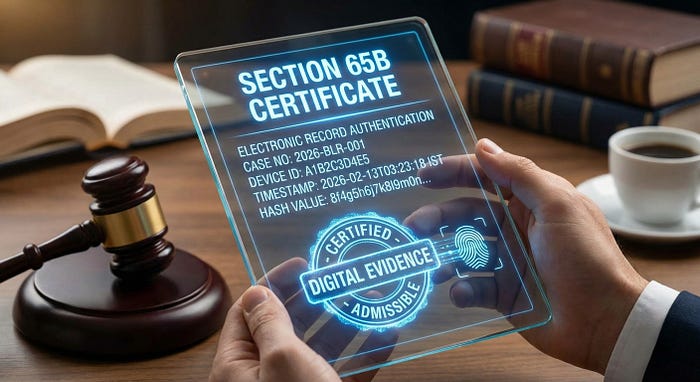
Okay, this is the heavy part. In India, under the Indian Evidence Act, 1872, electronic records (emails, chats, server logs) are considered "secondary evidence."
To make them valid in court, you need a Section 65B Certificate.
Think of this Certificate like a "System Health Report." It basically says two things:
- "The computer that printed this document was working fine."
- "I am the responsible person who handles this computer."
Without this paper, your digital evidence is just noise.
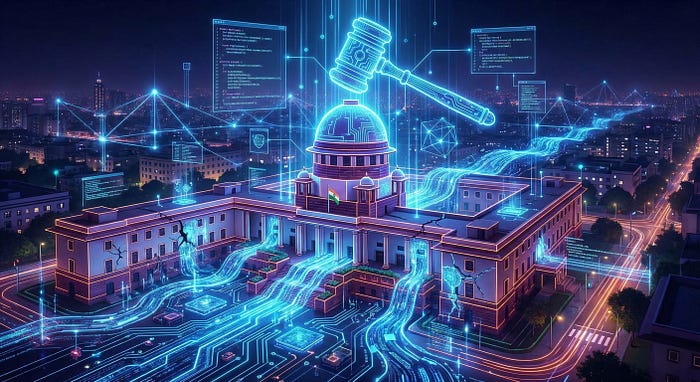
4. The Case That Changed Everything: Arjun Panditrao (2020)
Okay, let's get a bit serious for a minute. >_<
For years, Indian courts had a huge "bug" in the system. Some judges said, "Hey, if the digital evidence looks real, just accept it!" (Shafhi Mohammad case). Other judges said, "No! Without the certificate, it's trash!" (Anvar P.V. case).
It was a mess. Imagine trying to run a Python script, but the interpreter keeps changing the syntax rules every time. Frustrating, right?
Then came July 2020. The Supreme Court, in the case of Arjun Panditrao Khotkar v. Kailash Kushanrao Gorantyal, finally "patched" this bug.
The Story (Simplified):
This case wasn't about hacking; it was about an election fight. The evidence? Video recordings from CCTV cameras. The problem was, the accuser only had a copy on a CD, not the original hard drive. And he didn't have the Section 65B certificate because he didn't own the computer that made the video!
The Supreme Court's "Patch":
The Court laid down the final law (the "Stable Release"):
- Original Device = Primary Evidence: If you bring the actual laptop or mobile to court and show the file, you don't need a certificate. (Just like showing the original weapon).
- Copy/Printout = Secondary Evidence: If you bring a CD, a pen drive, or a screenshot (which is what we do 99% of the time), you MUST produce a certificate under Section 65B(4). This is non-negotiable.
- "But I don't own the server!": If you need logs from Facebook or Google, you can't sign the certificate (because you aren't Mark Zuckerberg :P). In that case, you must ask the Judge to order the company to produce the certificate.
5. The "Bug" That Still Exists (My Critique)
This judgment is great for lawyers because it creates a clear rule. But for us in Tech, it still has a vulnerability.
The law focuses on the Device's Health: "Was the computer working properly?"
But it ignores the Data's Integrity: "Was the file modified after it was copied?"
Example:
I can have a perfectly working computer (hardware is fine). I can open a log file, change User: Admin to User: Guest, save it, and then print it. I can honestly sign a certificate saying, "My computer was working fine."
The Court accepts it. But the data is false.
This is why, as hackers, we need to go beyond the law. We need to provide Hash Values (Digital Fingerprints) even if the law doesn't explicitly ask for them yet. That is how we make the evidence "Perfect."
The "Perfect Evidence" Checklist (Cheat Sheet)
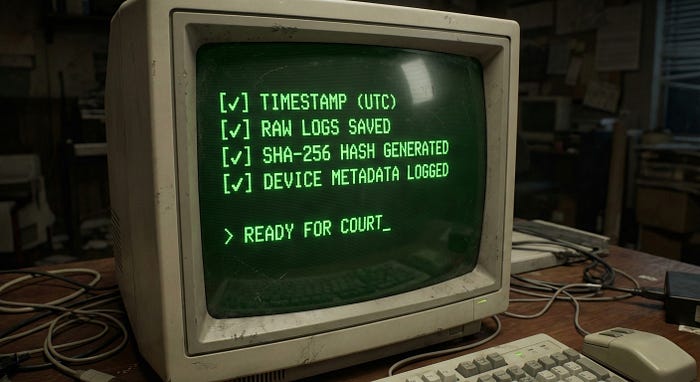
To wrap this up, here is a checklist for both my worlds.
If you are a Bug Hunter / Researcher:
- [ ] Timestamp Everything: Use UTC time. Local time zones are confusing.
- [ ] Don't Just Screenshot: Save the raw HTTP request/response logs
- [ ] Hash It: Run
sha256sum filename.txton your terminal and save that hash immediately. - [ ] Device Info: Note down which OS and browser version you used. This helps if you ever need to sign a 65B certificate.
If you are a Lawyer / Law Student:
- [ ] Ask for the Metadata: Don't just look at the text; ask when the file was created and modified.
- [ ] Check the Chain: Who held the pen drive between the seizure and the court?
- [ ] Verify the Hash: If the other side gives you a digital file, ask for its hash value and verify it yourself. Don't trust; verify.
Conclusion
We need to work together. Tech provides the Truth (Math), and Law provides the Justice. You can't have one without the other.
So, the next time you see a screenshot in a legal file, ask yourself: Where is the hash?
That's it for today! I know this was a bit different from my usual "How to hack X" posts, but I think it's super important as we build the Cyber Law section of LeetSec. Let me know if this made sense to you guys. Next time, back to the terminal!
Happy Hacking (and Arguing)!
~ ak (sudoaman)