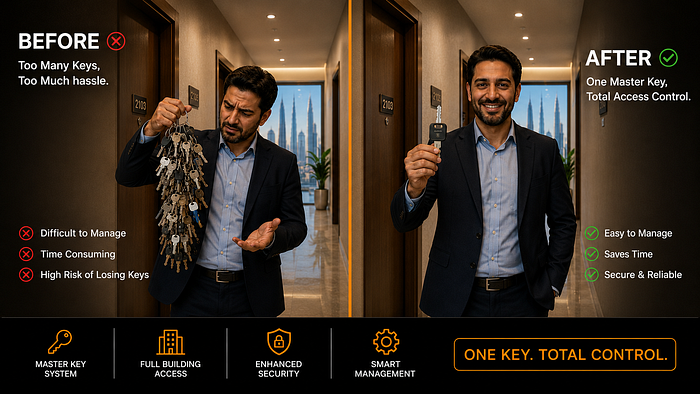
Managing keys in a multi-unit building in Dubai is a logistical headache that most property managers accept as unavoidable. A 30-unit apartment building means 30 apartment keys, plus keys for utility rooms, storage areas, electrical rooms, water pump rooms, roof access, and parking barriers. That is 40 or more individual keys that need to be organized, tracked, and available at any time.
A master key system reduces this to one.
The concept is elegantly simple. Every lock in the building is configured to accept two keys: the individual key assigned to that specific door, and the master key that opens all doors. The tenant's key opens only their apartment. The manager's master key opens everything.
How Master Key Systems Work Technically
A standard pin tumbler lock uses a series of pins at different heights. When the correct key is inserted, the pins align at the shear line — the boundary between the inner cylinder and the outer housing — allowing the cylinder to rotate and the lock to open.
A master-keyed lock adds a second set of shorter pins called master wafers at calculated positions within each pin stack. These wafers create a second shear line that responds to the master key's different cut pattern.
The result is that each lock has two valid key configurations: one for the individual key and one for the master key. The mathematics of pin height combinations allows a skilled locksmith to design systems where hundreds of individual keys and multiple levels of master keys all work within the same set of locks.
Hierarchy Levels
A basic two-level system has individual keys and one master key. This suits small buildings and simple operations.
A three-level system adds sub-master keys between the individual and master levels. This is useful for buildings where maintenance staff need access to all apartments but should not have access to management offices, or where different floors are managed by different supervisors.
A four-level system adds a grand master key above the master level. This is used in large organizations or building portfolios where multiple building managers each have their own master key, but the owner or facilities director needs one key that works across all buildings.
Security Considerations
A common concern about master key systems is that the master key becomes a single point of security failure. If the master key is lost or copied, every door in the building is potentially compromised.
Professional master key systems address this with restricted key blanks. The master key is cut on a blank that is not commercially available. It cannot be duplicated at a standard key cutting shop. Copies can only be made by the locksmith who designed the system, with authorized approval.
Key control policies should specify who holds the master key, how it is stored when not in use, and the procedure if it is lost. A lost master key situation requires re-pinning every lock in the system to a new master configuration — an expensive operation that strong key control policies prevent.
Implementation Process
The process begins with a survey of the property documenting every lock, its location, and who needs access. The locksmith then designs a key chart showing the hierarchy and which keys open which doors.
Once the design is approved, each lock cylinder is removed, re-pinned to the new master key configuration, and reinstalled. New individual keys are cut for each door, and the master keys are cut for management. The entire process for a 30-unit building typically takes two to three days.
Existing locks can usually be re-pinned without replacement, keeping costs lower than installing entirely new hardware.

Pro Key Services designs and installs master key systems for buildings of any size across Dubai. From small apartment buildings to large commercial complexes, we handle the complete process from survey through design, installation, and documentation.
📞 0567091771
🌐 locksmithdxb.com/our-services/master-key-service/
The right key system turns chaos into control. One key is all you need.