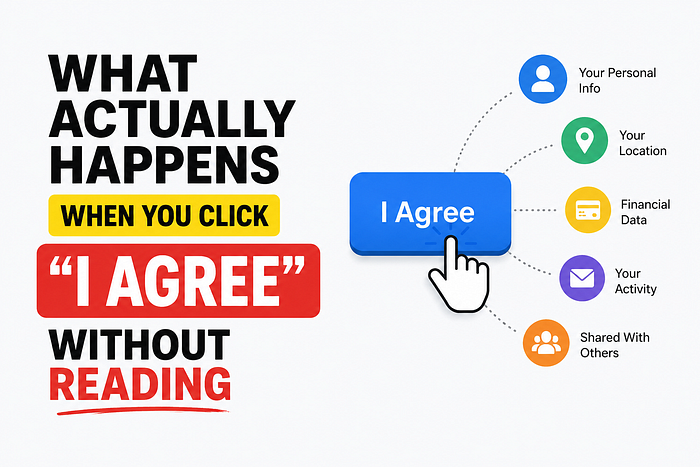
Most people do it in under two seconds. A pop-up appears, something asks for permission, and you click "I agree" just to move on. It feels harmless, almost like closing a door behind you. But that single click often has more weight than it seems.
You are signing a legal contract
When you click "I agree," you are not just acknowledging a message. You are entering into a legally binding agreement, either the Terms of Service or the Privacy Policy. These documents are written to protect the company, not the user. They define what data is collected, how it is used, and sometimes even how disputes will be handled.
The key issue is not that these agreements exist. Most people never realise they are agreeing to real legal terms that can affect their data rights.
Your data starts getting collected immediately
Once you agree, apps and websites often begin collecting information such as your location, device type, browsing behaviour, and interaction patterns. This data is used for analytics, personalisation, and advertising.
In many cases, this is not hidden or illegal. It is just buried inside long documents written in complex language. The result is that users consent without fully understanding the scope.
You permit tracking and sharing
Many services include clauses that allow them to share your data with third-party partners. This can include advertisers, analytics companies, and sometimes affiliated organisations.
This does not always mean your identity is exposed, but your behaviour patterns can still be profiled. Over time, these profiles can become very detailed, showing interests, habits, and even routines.
You rarely have real control after agreeing
Technically, you can stop using the service or change settings later. In practice, most users do not revisit privacy settings or read updates to policies. Companies also reserve the right to update terms, which often leads to new agreements being accepted with another quick click.
The real takeaway
Clicking "I agree" is not dangerous by itself, but doing it blindly removes awareness from the process. You are trading attention for convenience. The system is designed to work that way, and it only becomes a problem when users assume nothing important is happening behind the button.