June 2, 2026
The Day You Noticed the People Who Raised You Getting Older
To a child, rather than a human being, parents are more like a permanent, unchanging figure of the universe. Someone who has always been…
laquieren
5 min read
To a child, rather than a human being, parents are more like a permanent, unchanging figure of the universe. Someone who has always been there. They always know the way, the ultimate protectors.
You spend the first two decades of your life assuming they will stay exactly as they are forever. But time doesn't wait for you to finish growing up before it starts wearing them down. It happens quietly, waiting for the exact moment you finally pause to look, really look, to hit you with the reality all at once. While we are busy expanding our worlds, stepping into our prime, they are quietly moving in the opposite direction.
For a long time, you don't notice. You are too busy growing up, chasing deadlines, rushing between tasks, and building your life. We get so caught up in the momentum of our own evolution, that we forget a simple, heartbreaking truth:
As we grow up, they grow older too.
And suddenly, the reality hits you all at once.
It starts with the visual reminders. When you are in conversation, you noticed it. How the years have softly settled onto their faces. There is a new vulnerability written in the lines around their eyes — creases carved by decades of worrying about you, laughing with you, and staying up late waiting for you to come home.
Then there is the grey hair. The last time you paid close attention, you could have sworn there were only one or two stray silver threads — the kind you could jokingly point out or pluck away. But now, as you look closer, a quiet shock hits you. Those few strands have multiplied, spreading softly until they almost cover their entire head. You realize their dark hair is officially replaced by a crown of silver that seems to have arrived overnight.
They are getting noticeably thinner — their clothes, once form-fitting now hang a bit loose. You find yourself walking behind your father, maybe through a public space or just down the hallway of your childhood home — and you suddenly notice that he walks differently. The stride that used to be wide, firm, and hurried has softened into something careful and guarded.
The realization deepens when you walk next to your mother. You take a few normal steps forward, look back, and find that you have left her behind by a few paces. A jarring question hits your chest: Have I started walking faster, or is it my mother who is walking slower? You remember how she used to lead you effortlessly through crowded places, never losing her ground, and now you are the one who has to consciously check your stride so she can keep up.
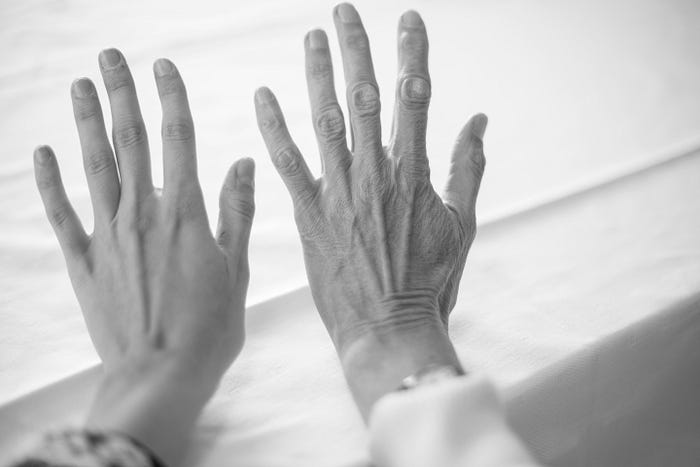
Even the simple act of greeting them or holding their hands feels different now. When you take their hands in yours, you can instantly feel the shift in their texture. The palms that used to feel so warm, large, and invincible now feel cool and fragile against your own. As your fingers brush against theirs, you notice how the skin has grown incredibly delicate — thin, dry, losing the firm elasticity it once had. You can feel the prominent tracks of their veins rising slightly beneath the surface, and the distinct, hard shape of their knuckles. Holding them feels like holding something precious but profoundly fragile, a tactile reminder that the hands which spent a lifetime building your world are now wearing down.
The visual changes are heavy, but it is the sentences they casually drop into conversation that truly break your heart. They say them without any desire for pity, just stating them as simple, matter-of-fact observations of their own bodies.
You're sitting in the living room when your father struggles to read a text message on his phone. He sighs, and says softly:
"Dek kok mata Bapak udah kabur ya…"
The words hang in the air. This is the man who used to drive you through dark, rain-slicked streets without a hint of hesitation. Hearing him admit that his vision is blurring feels like watching a lighthouse lose a bit of its brightness.
Moved by a sudden ache in your chest, you take his phone. Without saying a word, you go into the settings and change the font size, sliding the bar until the text becomes the largest one, bold, and clear. As you hand it back to him, you look at his face and ask "Kalau segini udah kelihatan belum, Pak?" He squints at the screen for a moment, adjusting his vision, before giving you a quiet nod. Watching him do that feels like a small, quiet surrender to the reality of his aging — a tiny patch for a leak you cannot fully fix.
Not long after, you're helping your mother in the kitchen or sitting together after a long day. She pauses, places a hand on her chest, and looks at you with a vulnerability that catches you completely off guard:
"Dek, kok Ibu belakangan napasnya gini ya…
In that single phrase, the roles reverse entirely. You are no longer the child running to her for comfort; she is looking to you, seeking reassurance for a body that is beginning to tire. She was always the strongest woman, the one who never once complained about being tired or overwhelmed. A cold wave of anxiety hits your chest because, for the first time, you realize you don't have the magic cure to make it better.
When you hear those words, a sharp, suffocating wave of guilt immediately follows.
You look at them and suddenly remember all the times you were less than kind. You remember the moments you lost your temper over something mere, the times you acted mean or dismissive because you were tired, stressed, or absorbed in your own small world. You think of the times they asked you how to do something simple and you answered with an impatient sigh.
At that time, you acted as if they had forever. You treated their presence like a permanent figure, forgetting that they are human, fragile, and temporary.
Seeing them slow down makes those memory fragments sting. You find yourself wishing you could go back to every single instance where you were stubborn, distant, or cold, just to replace it with a hug or a softer tone. It is a painful realization that while they were busy spending their life forgiving your flaws, you were sometimes too busy to notice they were running out of time.
This anxiety carries a distinct, sharp edge if you happen to be the youngest child — the anak bungsu.
As the youngest, you exist in a terrifying paradox. Your older siblings got to experience these two people when they were energetic, resilient, and at the peak of their strength. They had more years with the version of your parents who didn't tire easily. But you? You get the version that is slowing down just as you are finally picking up your own speed.
An underlying panic settles deep into your chest: Am I running out of time? While you are standing at the very starting line of your adulthood, navigating your final milestones, and trying to figure out your future, they are already nearing the quiet evening of their lives. You watch them age and you find yourself desperately hoping that your achievements can outrun their ticking clock. You want so badly to give them the world, to make them proud, and to take care of them the way they took care of you — but you are constantly terrified that by the time you are fully ready and established, they might be too tired to witness it.
Noticing your parents aging is a lonely kind of grief because it's a grief for the present moment. It is the realization that the version of your parents who were invincible is gone, replaced by two beautiful, fragile humans who need your gentleness more than ever.
We cannot stop the wrinkles from deepening, nor can we dye the silver back to its original shade. We cannot fix the blurring eyes, steady the altered stride, or give them back the effortless breaths of their youth. But what we can do is change our pace.
We can match our steps to theirs when we walk. We can listen to the same stories they've told ten times before, with the same warmth as the first time. We can answer their text messages a little faster and hold their hands a little longer.
The day you notice your parents are getting older is the day you stop taking time for granted. It's the day you realize that loving them fiercely right now, in all their fragile, human beauty, is the most important thing you will ever do.