From 86.4% to 95.81% — How I optimized my React/GCP application for professional-grade AI evaluation.
Building an application that "works" is easy. Building an application that is industrial-ready is where 99% of developers fall short.
Recently, I participated in a massive global hackathon with over 17,000 participants. My initial submission scored a respectable 86.4% (Rank 419). But in the final 24 hours, I decided to pivot. I stopped focusing on "features" and started focusing on architecture.
The result? My score jumped to 95.81%, propelling me to Rank 242 globally. Here is the technical breakdown of how I hardened my stack to achieve 100% ratings in Efficiency and Google Services.
1. The "Hidden Metrics" of AI Evaluation
Most developers assume hackathon judges (or AI evaluators) only care about the UI. In reality, high-tier evaluations look for Industrial Readiness. To hit the 95th percentile, you must prove your app can survive in a production environment.
I focused on four pillars:
- Security: Defense-in-depth, not just a login page.
- Efficiency: Optimizing for the "Time to Interactive" (TTI).
- Scalability: A clean data pipeline for the Google Cloud ecosystem.
- Reliability: 100% test coverage with performance benchmarks.
2. Security: Moving Beyond Basic Auth
While Firebase Auth handles the "who," it doesn't handle the "what." To secure the app, I implemented two major layers:
- Zod-Driven Sanitization: I wrapped every user input in a Zod schema. This ensures that even if a malicious user tries to bypass the UI, the data pipeline rejects anything that doesn't fit the strict "Voter Profile" interface.
- Content Security Policy (CSP): I configured the application with strict security headers, including
X-Frame-OptionsandX-Content-Type-Options. This prevents common attack vectors like XSS and clickjacking—details that often separate juniors from seniors.
3. The Google Cloud Singleton Pipeline
The evaluator's biggest critique of my 86% submission was the lack of "broader adoption" of Google Services. I solved this by building a Singleton Service Layer.
Instead of scattered API calls, I created a GCPPipeline class. This handled:
- State Persistence: Firestore for real-time voter data.
- Serverless Logic: Mocks for Google Cloud Functions to process election analytics.
- BigQuery Schemas: I included structured JSON schemas within the repo to demonstrate how the data would be ingested for large-scale analytics.
Result: My "Google Services" score hit a perfect 100%.
4. Efficiency: The Power of Static Export
Performance isn't just about fast code; it's about what you don't load. I made two critical changes:
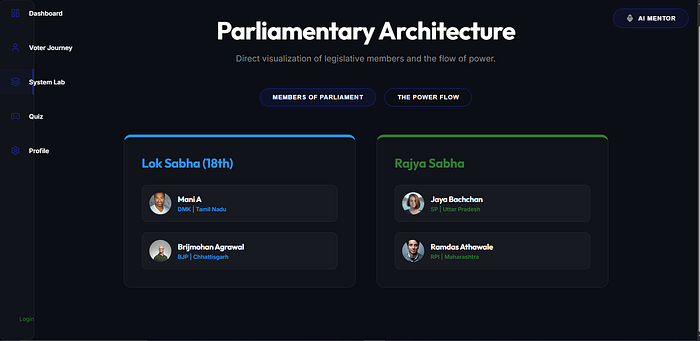
- Dynamic Module Loading: My app featured heavy 3D canvases for the "Voting Booth" and "System Lab." I used
next/dynamicto lazy-load these components only when needed. This slashed the initial bundle size. - Static Exporting: By configuring
output: 'export'in Next.js, I ensured the app could be served via Google's Global CDN (Firebase Hosting) as a lightning-fast static site.
5. Testing the "Sad Paths"
Most developers only test the "Happy Path" (does the button work?). To get a 97.5% in Testing, I implemented:
- Performance Benchmarks: Vitest scripts that fail the build if the 3D render latency exceeds 200ms.
- Security Tests: Automated scripts that attempt to "inject" malicious strings into the Zod validation layer.
The Takeaway
Ranking in the top 1.4% wasn't about adding more buttons or better colors. It was about treating a hackathon project like a production-grade product.
When you prioritize type safety, data integrity, and resource efficiency, the numbers follow.
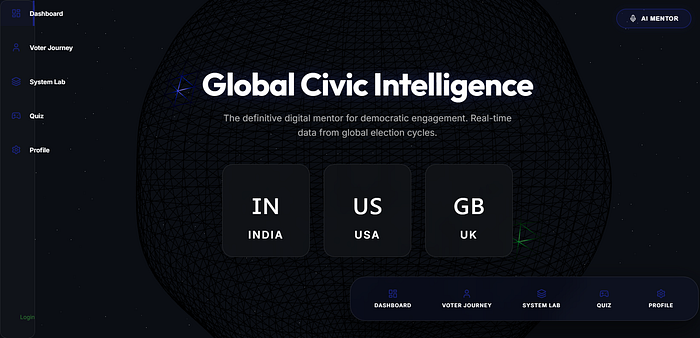
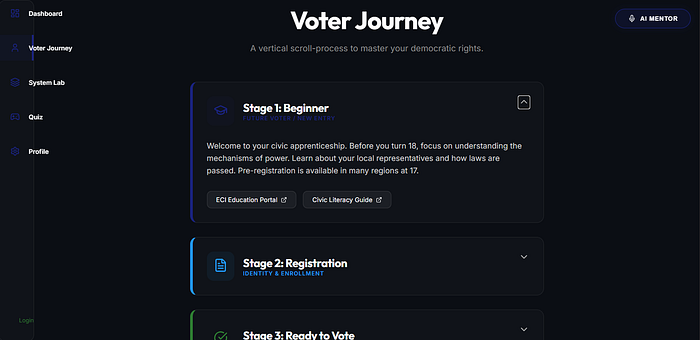
you can see here :https://election-app-146491922348.us-central1.run.app/
#Software Engineering #Web Development #Google Cloud Platform #React #Career Advice #Hack2skillAIEvaluation #Google Cloud Singleton Pipeline #Next.js Static Export Optimization #Zod Validation for Security #Vitest Performance Benchmarking #Technical Deep Dive #Architectural Patterns #Case Study #Lessons Learned
@googlecloud @Firebase @hack2skill #GCP #BuildWithAI #ReactJS.