
But the reality of the internet is very different.
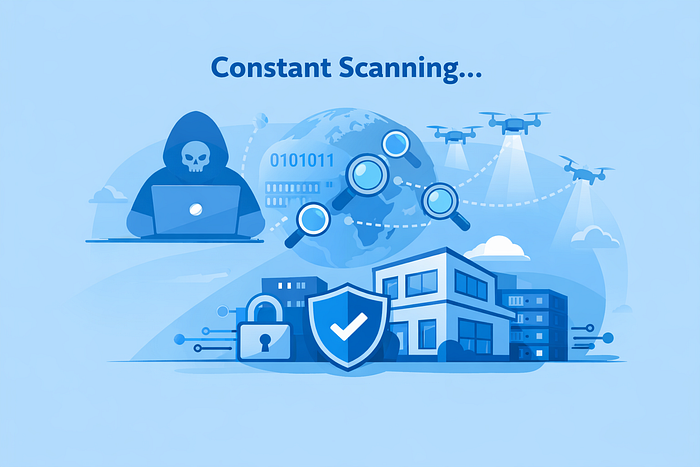
Hackers are not always looking for specific companies. Instead, they use automated tools that scan the entire internet 24/7 searching for vulnerable systems.
Every minute, thousands of bots run scripts to detect open ports, weak authentication systems, outdated software, and misconfigured servers.
They are not choosing a target manually.
They are simply waiting for someone to leave a door open.
The Silent Scanning Happening Every Second
The internet is constantly being scanned by automated bots.
These bots check millions of IP addresses looking for things like:
- Exposed databases
- Open admin panels
- Unsecured APIs
- Weak login systems
- Outdated server software
Once a vulnerability is discovered, attackers can exploit it within minutes.
In many cases, businesses don't even realize their systems were exposed until days or weeks later.
Why Small Businesses Are Easy Targets
Many small and growing companies believe hackers only focus on large corporations.
But automated attacks don't work like that.
Hackers prefer targets that are easy, not necessarily big.
Smaller companies often become victims because:
- Security is not regularly tested
- Servers are not properly configured
- Updates and patches are delayed
- Internal systems grow faster than security controls
When attackers find these gaps, they move quickly.
Security Is Not Just a Tool, It's a Process
Many companies install a few security tools and assume they are protected.
But cybersecurity is not something you install once and forget.
It requires continuous attention.
Systems evolve. Applications change. New vulnerabilities are discovered daily.
Security needs to keep evolving with it.
Organizations that take cybersecurity seriously constantly test their infrastructure, identify weaknesses, and close security gaps before attackers discover them.
Thinking Like an Attacker
One of the most effective ways to improve cybersecurity is to think like a hacker.
If an attacker was trying to break into your system today, what would they try first?
Would they test your login pages? Would they scan your servers? Would they probe your APIs?
Understanding these attack paths allows companies to strengthen their defenses in advance.
The Future of Cybersecurity Is Proactive
Cybersecurity is moving away from simply detecting attacks after they happen.
The real focus now is preventing attackers from finding entry points at all.
This means:
- Continuously testing systems
- Identifying vulnerabilities early
- Closing security gaps quickly
- Reducing the attack surface
When security becomes proactive, attackers move on to easier targets.
Final Thoughts
The internet is not a quiet place.
It is a battlefield where automated bots are constantly scanning for weaknesses.
Your company may never be "targeted" specifically.
But if a vulnerability exists, someone will eventually find it.
And when that happens, the only thing that matters is whether your systems were prepared.
Because in cybersecurity, the safest systems are not the ones that detect attacks.
They are the ones that never allow attackers inside.